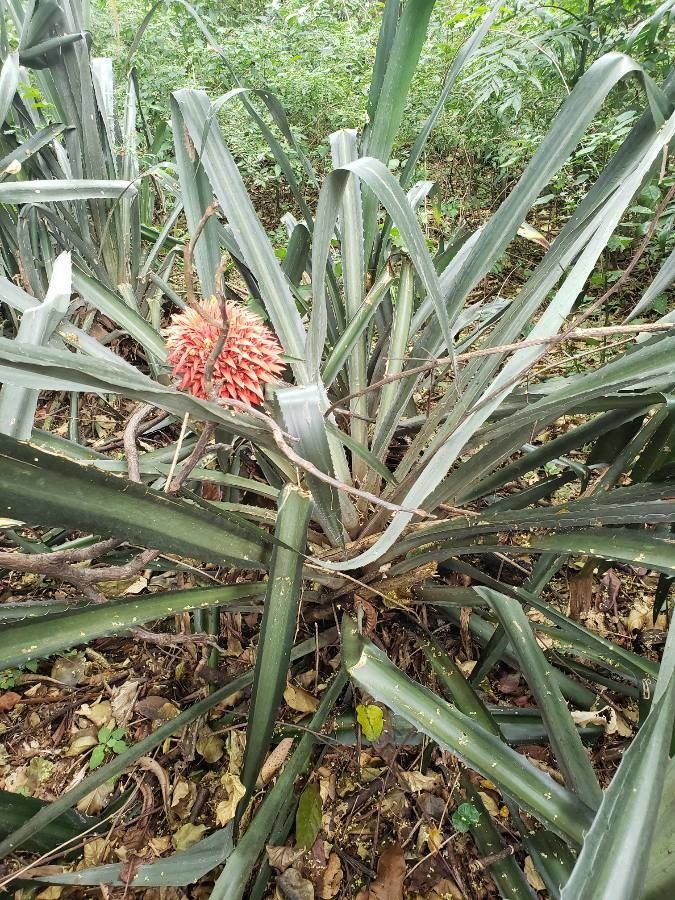
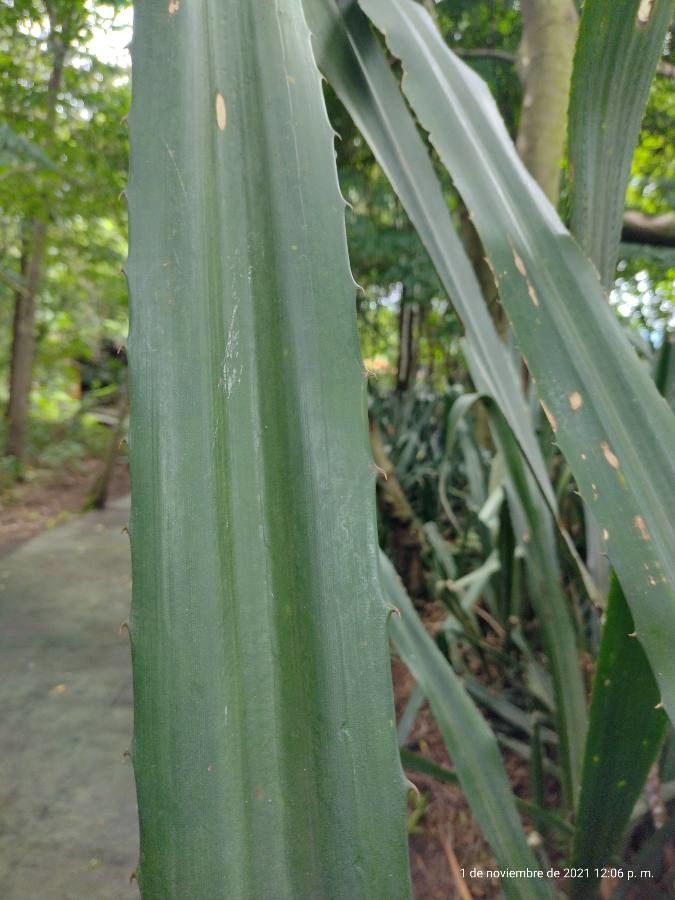
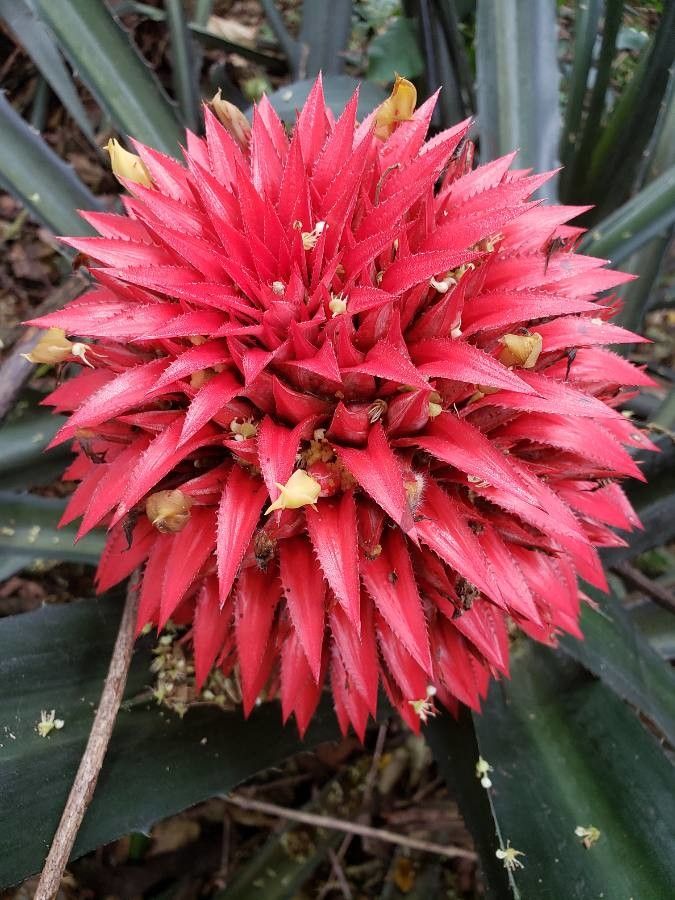
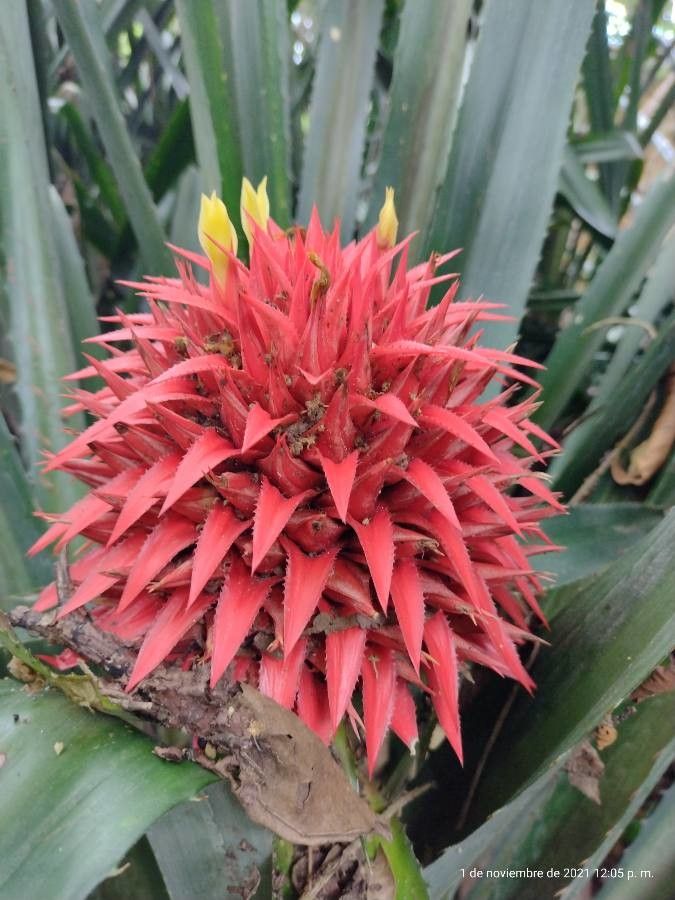
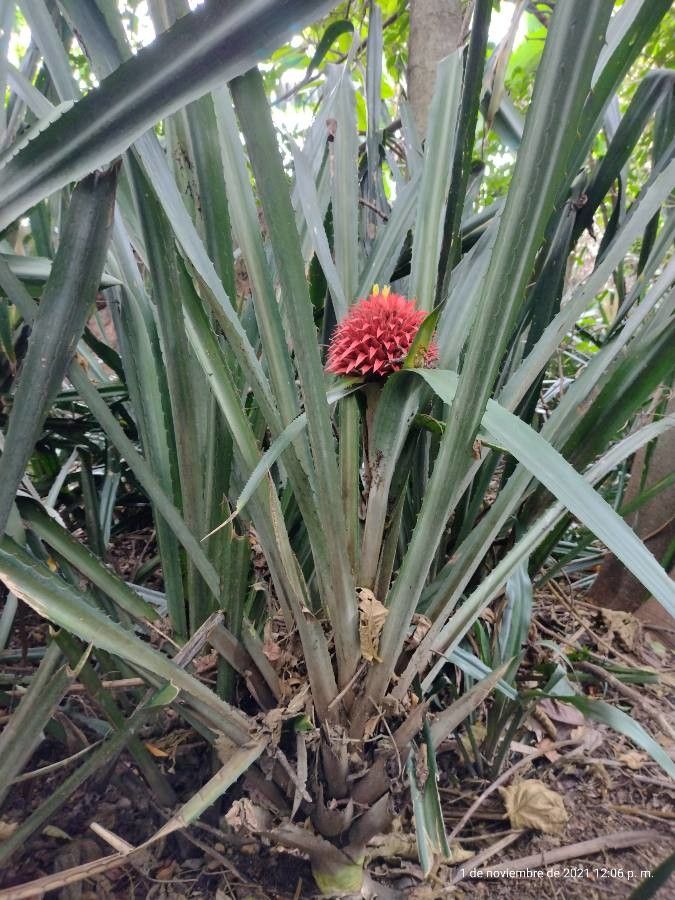
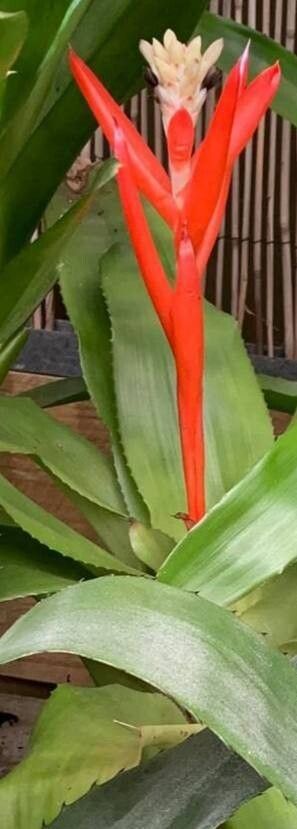
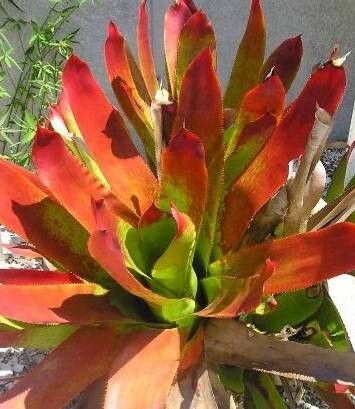
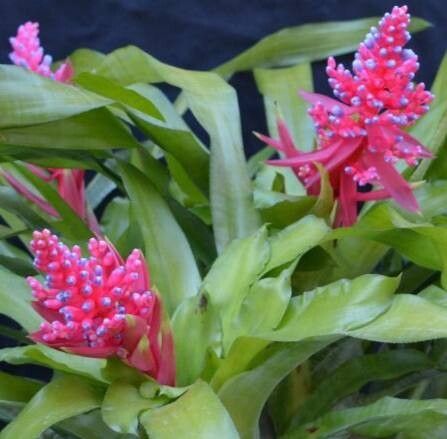
Aechmea magdalenae is a flowering plant in the Bromeliaceae family. It is also known as ixtle. This species is native to Central America, southern Mexico, Colombia and Ecuador. The specific epithet magdalenae comes from the place it was discovered, the Rio Magdalenae Valley in Colombia. The long green leaves feature fierce spines and may reach about 2.5 meters tall. In nature, it is found in moist and swampy woods. The flowers are red and give way to edible fruits.A. magdalenae uses crassulacean acid metabolism, meaning that it takes in carbon dioxide during the night, stores it, and uses it during the day to produce carbohydrates (allowing its stomata to stay closed during the day, which limits water loss).Aechmea magdalenae is grown in southern Mexico for its silky fibers. It is also harvested from the wild for these fibers and for its edible fruit. Many in Central and northern South America use the sap from the leaves to prevent infection in wounds, a practice that is effective because the plant has been found to contain acetic acid, which is strongly antibacterial.
Aechmea magdalenae has moderate disease resistance but is more sensitive to humidity and overwatering. It is also more prone to disease if it lacks light and is overwatered. In terms of care, Aechmea magdalenae is drought-tolerant and can endure long stretches without watering. It needs little fertilizer and only occasional pruning. These characteristics make it suitable for people of all experience levels, especially those who want to spend less time caring for their plants and who may sometimes be away from home for long periods. It is a good option for anyone who does not want to devote a lot of time to plant care but still wants an easy-to-maintain plant.
How to keep Aechmea Magdalenae.
Light
Aechmea magdalenae comes from habitats with dappled light, like the forest understory or rocky sites that offer natural shade. It prefers partial sunlight but can also tolerate full sun.
Temperature
Aechmea magdalenae prefers warm conditions. If temperatures fall too low, growth can stop or the plant may sustain frost damage. It tolerates high heat and humidity and needs a steady level of moisture in its surroundings. Nonetheless, very high temperature and humidity can increase its vulnerability to fungal infections. In dry conditions, regular watering and misting are needed to keep the air adequately humid. The plant is sensitive to abrupt temperature changes, so maintaining a relatively constant temperature is important.
Fertilizer
For Aechmea magdalenae, applying light doses of fertilizer once or twice a year during the growing season is sufficient. Avoid fertilizing in winter and in summer when the plant is dormant. Cut back on fertilizer for repotted plants and wait a couple of months after repotting before fertilizing. Fertilizing supports healthy growth and encourages blooms.
Pruning
Aechmea magdalenae has strap-like leaves and vibrant flower spikes. To promote new growth and prevent disease, prune the plant in early spring by removing dead leaves and spent flower spikes. This practice improves air circulation, reduces pests, and enhances the plant's aesthetic appeal while aligning with its growth cycle.
Botanical profile.
- Plant Type
- Herb, Succulent
- Life Cycle
- Perennial
- Genus
- Aechmea
- Family
- Bromeliaceae
- Hardiness Zone
- 10-12
- Mature Height
- 0.91 m to 2.13 m
- Mature Spread
- 1.52 m to 2.44 m
- Leaf Color
- Green, Dark Green
- Leaf Type
- Evergreen
- Flower Color
- Pink
- Flower Size
- 3.05 cm to 5.08 cm
- Bloom Time
- Summer, Early fall
- Planting Time
- Spring, Summer
- Harvest Time
- Late summer, Fall
- Native Area
- Colombia, Belize, Honduras, Mexico, Guatemala, El Salvador, Nicaragua, Ecuador, Costa Rica, Panama
Other names.