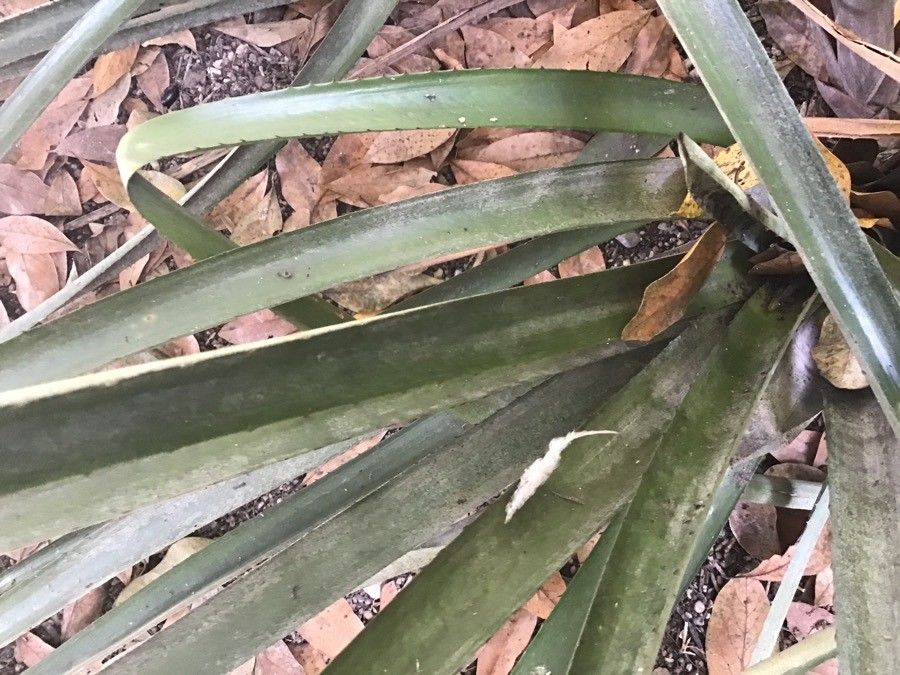
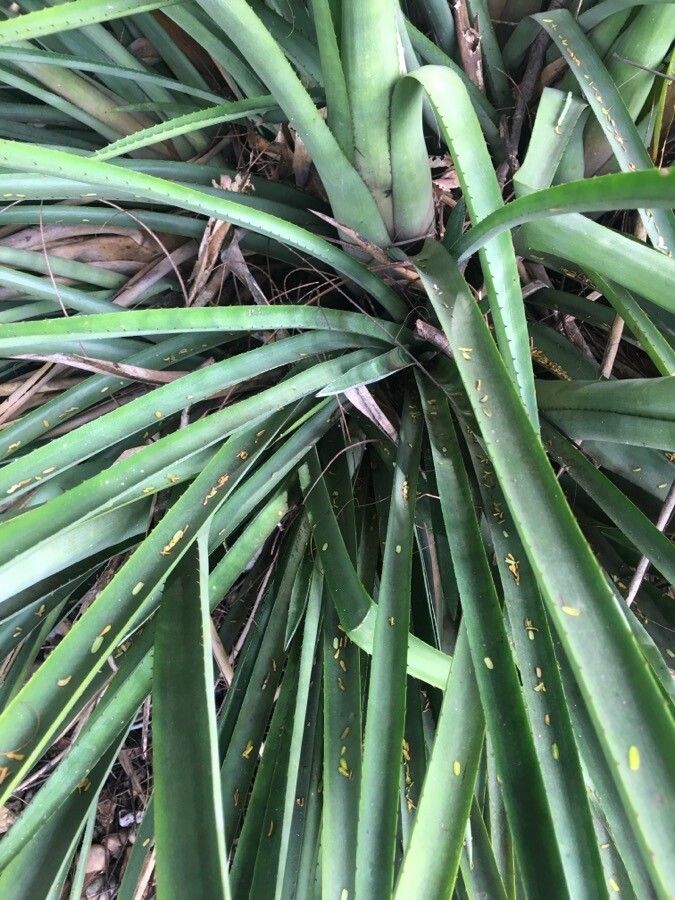
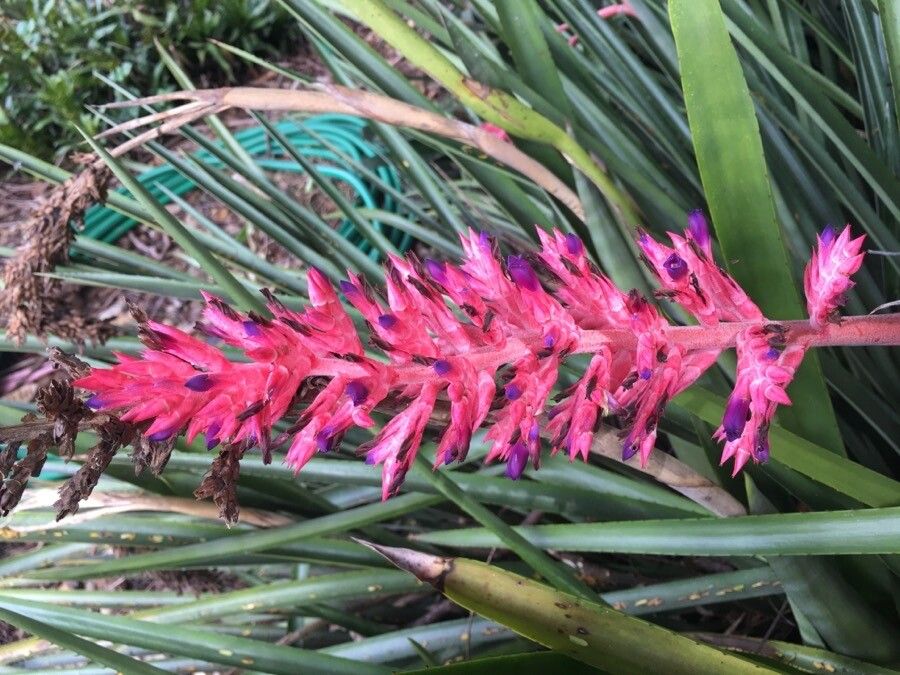
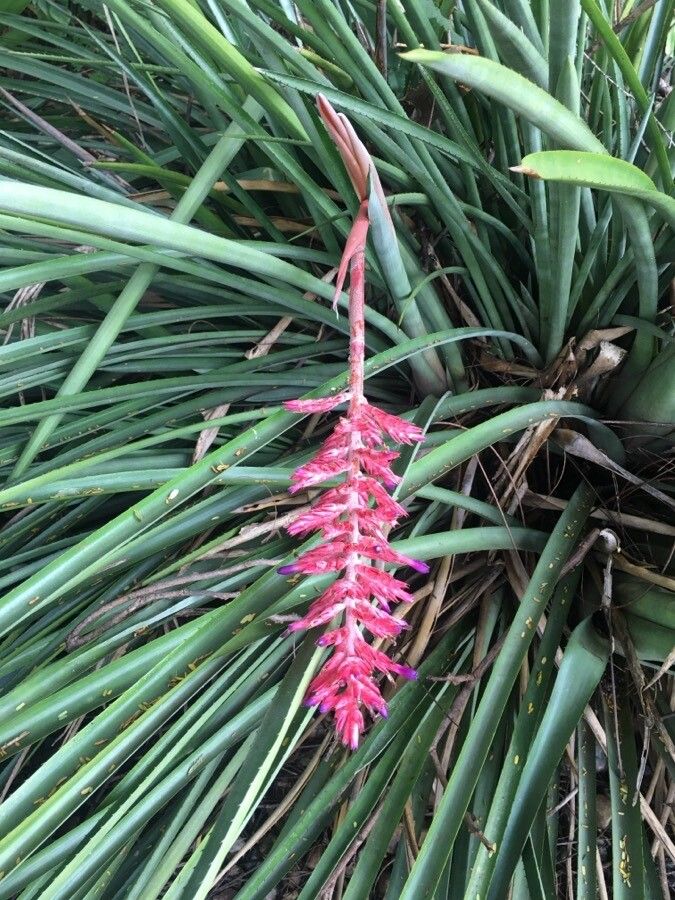
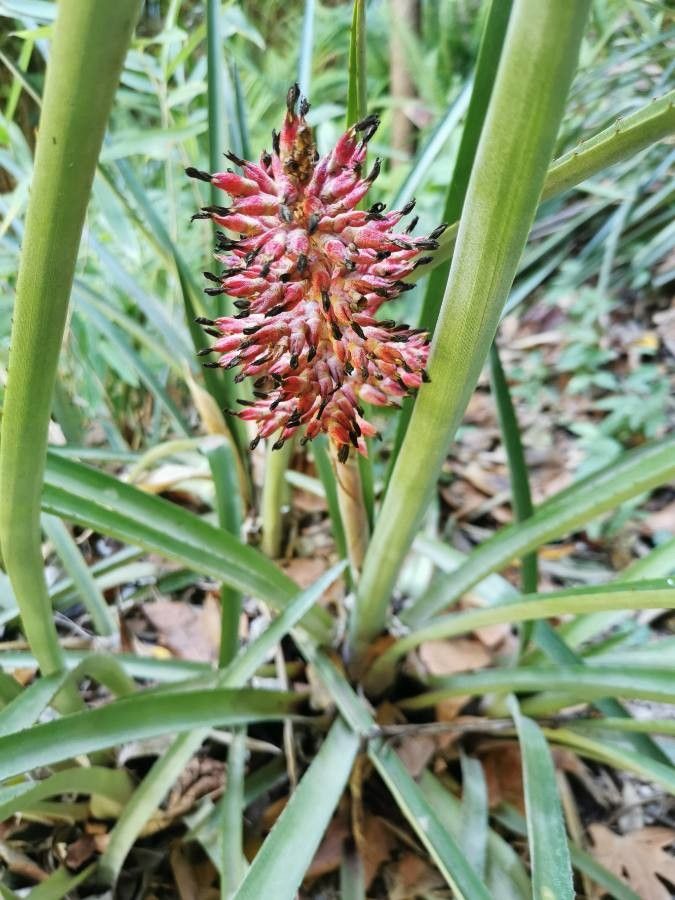
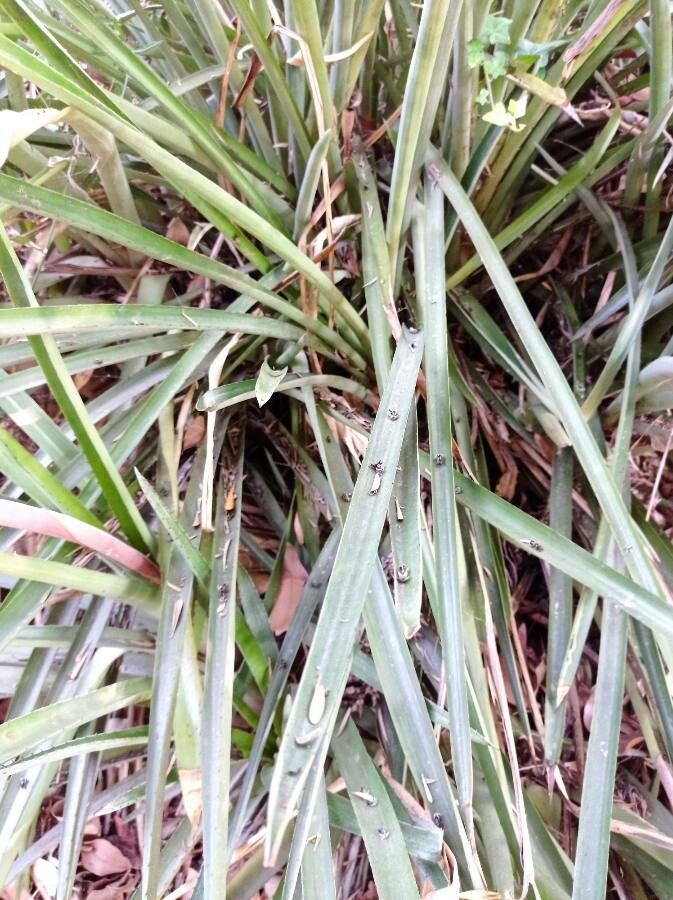
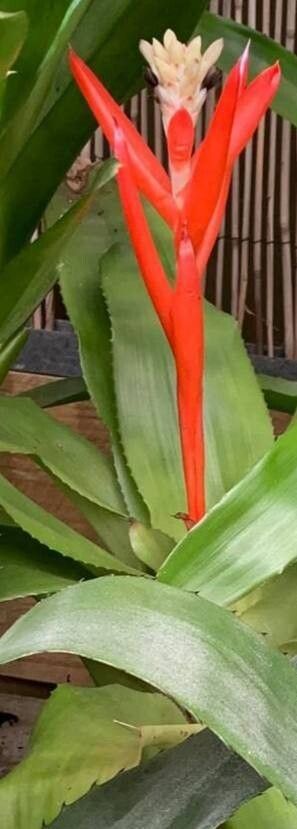
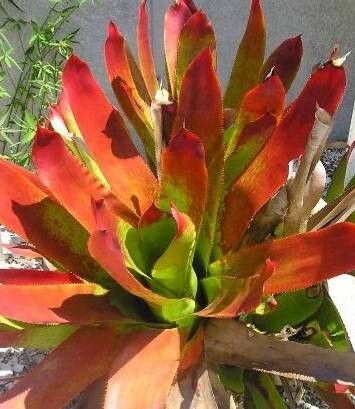
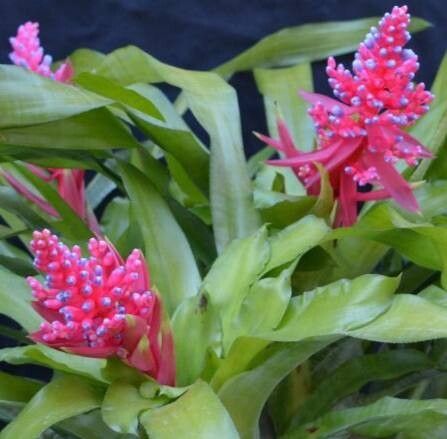
Aechmea distichantha, the Brazilian vaseplant, or vase plant, is a bromeliad typical of Cerrado vegetation in Brazil, which is also native to northern Argentina, Bolivia, Paraguay, and Uruguay. This plant is often used as an ornamental plant. The following varieties are recognized: Aechmea distichantha var. distichantha - Brazil, Argentina, Paraguay, Uruguay Aechmea distichantha var. glaziovii (Baker) L.B.Sm.(1943) - southeastern Brazil Aechmea distichantha var. schlumbergeri E.Morren ex Mez (1892) - Bolivia, Brazil, Argentina, Paraguay Aechmea distichantha var. vernicosa E.Pereira (1979) - Rio de Janeiro State
The Brazilian vaseplant is fairly disease-resistant and generally not prone to problems. However, it can be vulnerable to leaf spots if light and ventilation are inadequate or if it is overwatered. Its care is rated easy — it mainly needs regular watering and little else. The Brazilian vaseplant is well suited to people who do not have the time or energy for frequent maintenance.
How to keep Aechmea Distichantha.
Light
Brazilian vaseplant is native to habitats such as forest understories that provide natural shade. It favors partial sun but can withstand full sun if required.
Water
The Brazilian vaseplant is a tropical evergreen that thrives in humid conditions and requires balanced moisture for optimal growth. To keep it healthy, water the plant weekly and use a container with good drainage that mimics its natural habitat. It is commonly grown indoors, where it adds a touch of lush greenery.
Temperature
The Brazilian vaseplant prefers warm conditions. If the surrounding temperature falls too low, it may stop growing or suffer frost damage. It tolerates high heat and humidity well and needs a steady level of moisture in its environment. However, excessively high temperature and humidity can make it vulnerable to fungal infections. In dry surroundings, regular watering and misting are needed to keep air humidity adequate. The plant is sensitive to sudden temperature changes, so maintaining a relatively stable temperature is important.
Fertilizer
Appropriate fertilization is essential for the Brazilian vaseplant's health and appearance. Apply fertilizer to the Brazilian vaseplant during the summer, repeating the application once a month for the duration of the season. Nutrients fuel growth and sustain the plant's components. Fertilizing improves the Brazilian vaseplant's flower display, helping ensure the best blooms.
Pruning
The Brazilian vaseplant, recognized for its rosette shape and vibrant bracts, benefits from pruning in early spring. To encourage new growth, you should remove any dead or damaged leaves and trim back flower spikes after they have bloomed. This practice not only improves the plant's appearance but also promotes healthy development and helps prevent diseases.
Pot & Repot
When repotting a Brazilian vaseplant, select a pot 1–2 inches (2.5–5.1 cm) larger with good drainage. Use a well-draining potting mix. Repot in spring or fall, making sure the root ball sits slightly below the rim of the flower pot. Water thoroughly after repotting and place in a warm spot with indirect sunlight.
Botanical profile.
- Plant Type
- Herb
- Life Cycle
- Perennial
- Genus
- Aechmea
- Family
- Bromeliaceae
- Hardiness Zone
- 10-11
- Mature Height
- 61 cm
- Mature Spread
- 30 cm to 61 cm
- Leaf Color
- Green
- Leaf Type
- Evergreen
- Flower Color
- Pink, Purple
- Flower Size
- 3.05 cm to 5.08 cm
- Bloom Time
- Summer
- Planting Time
- Spring, Summer, Autumn, Winter
- Harvest Time
- Late summer, Early fall, Mid fall
- Native Area
- Brazil, Bolivia
Other names.