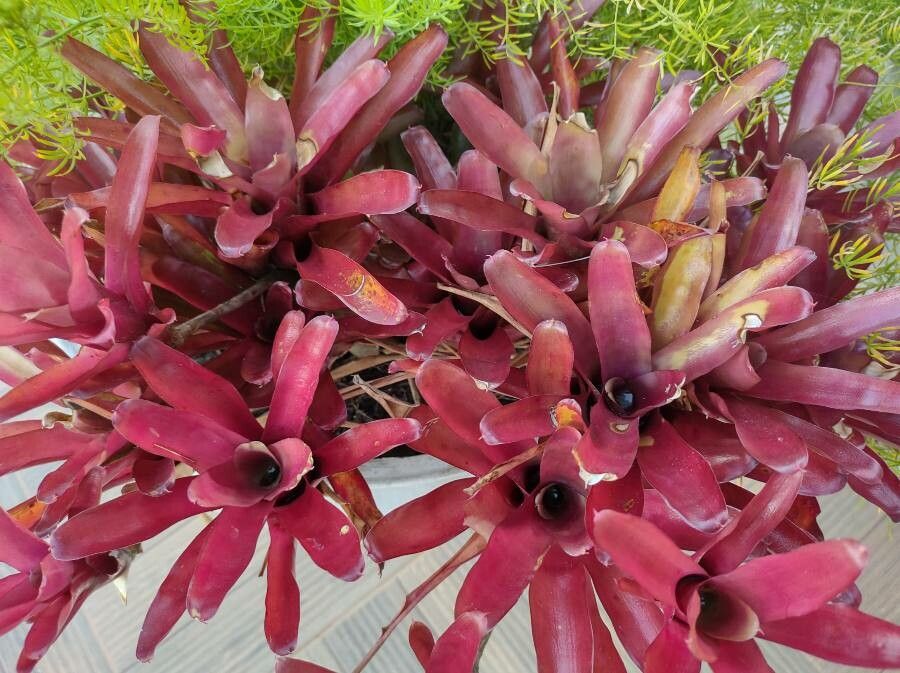
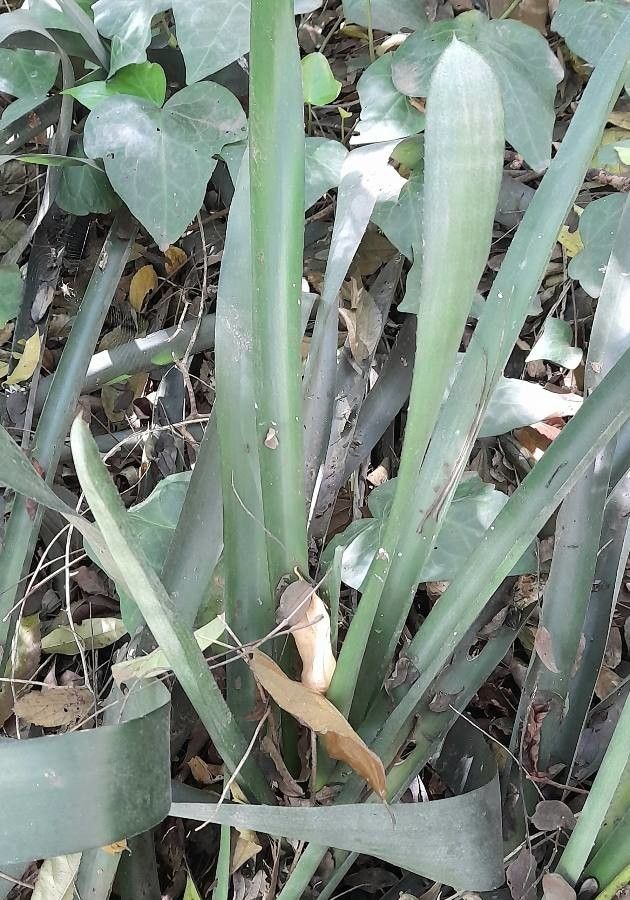
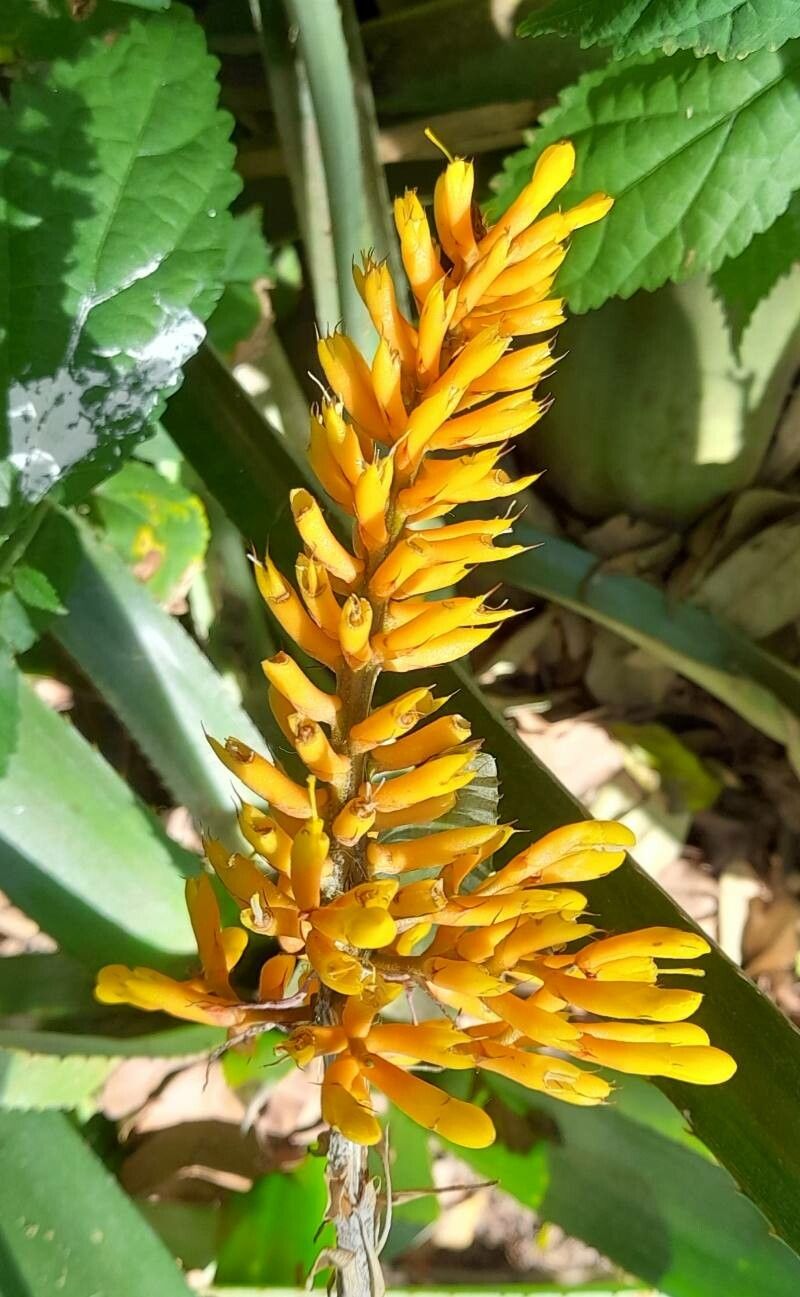
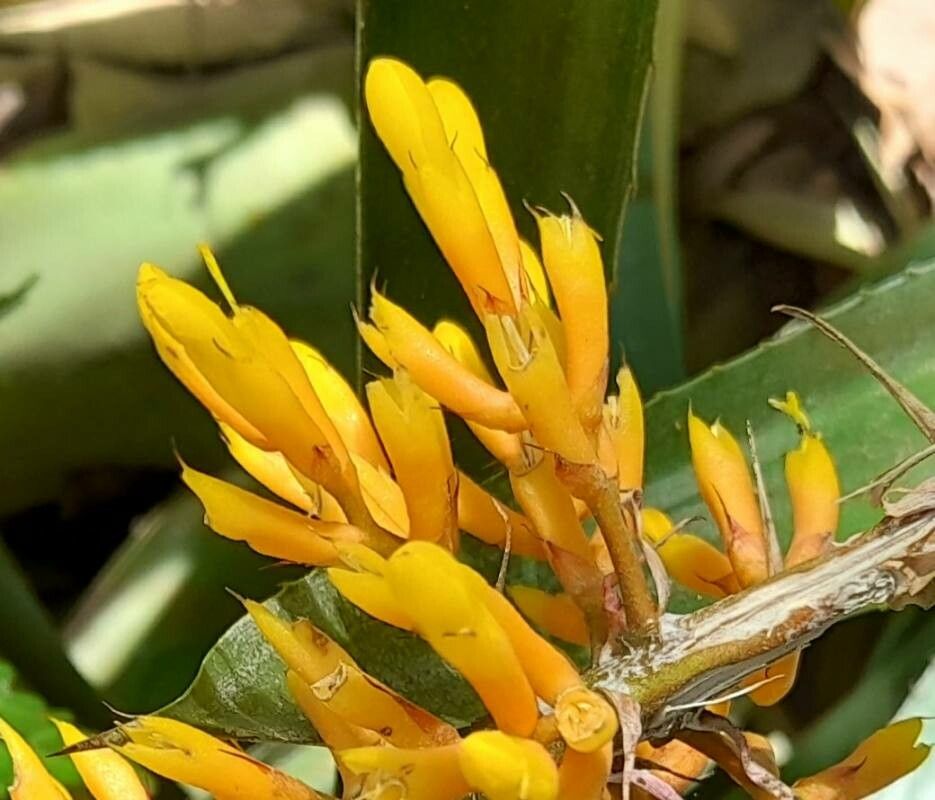
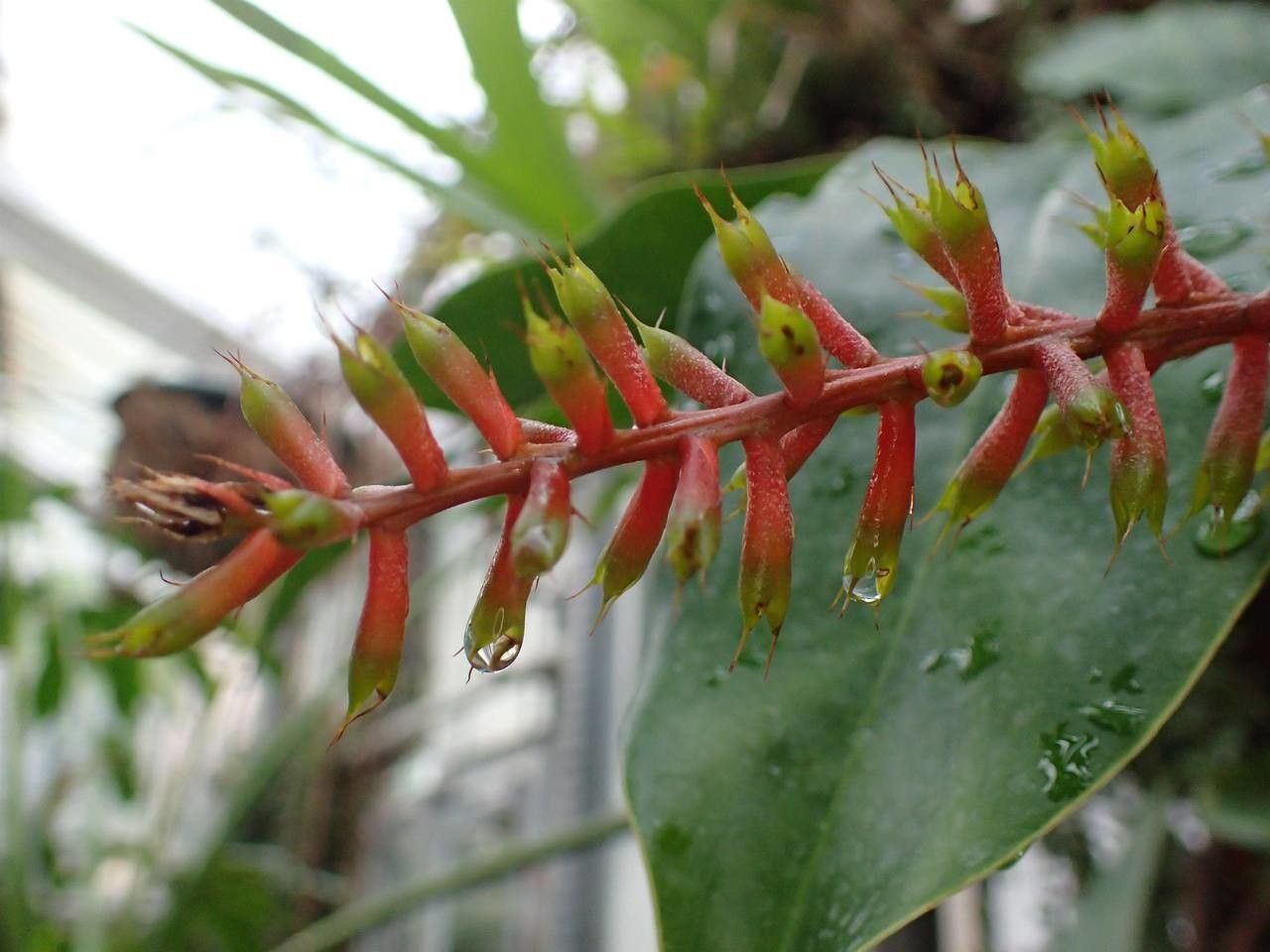
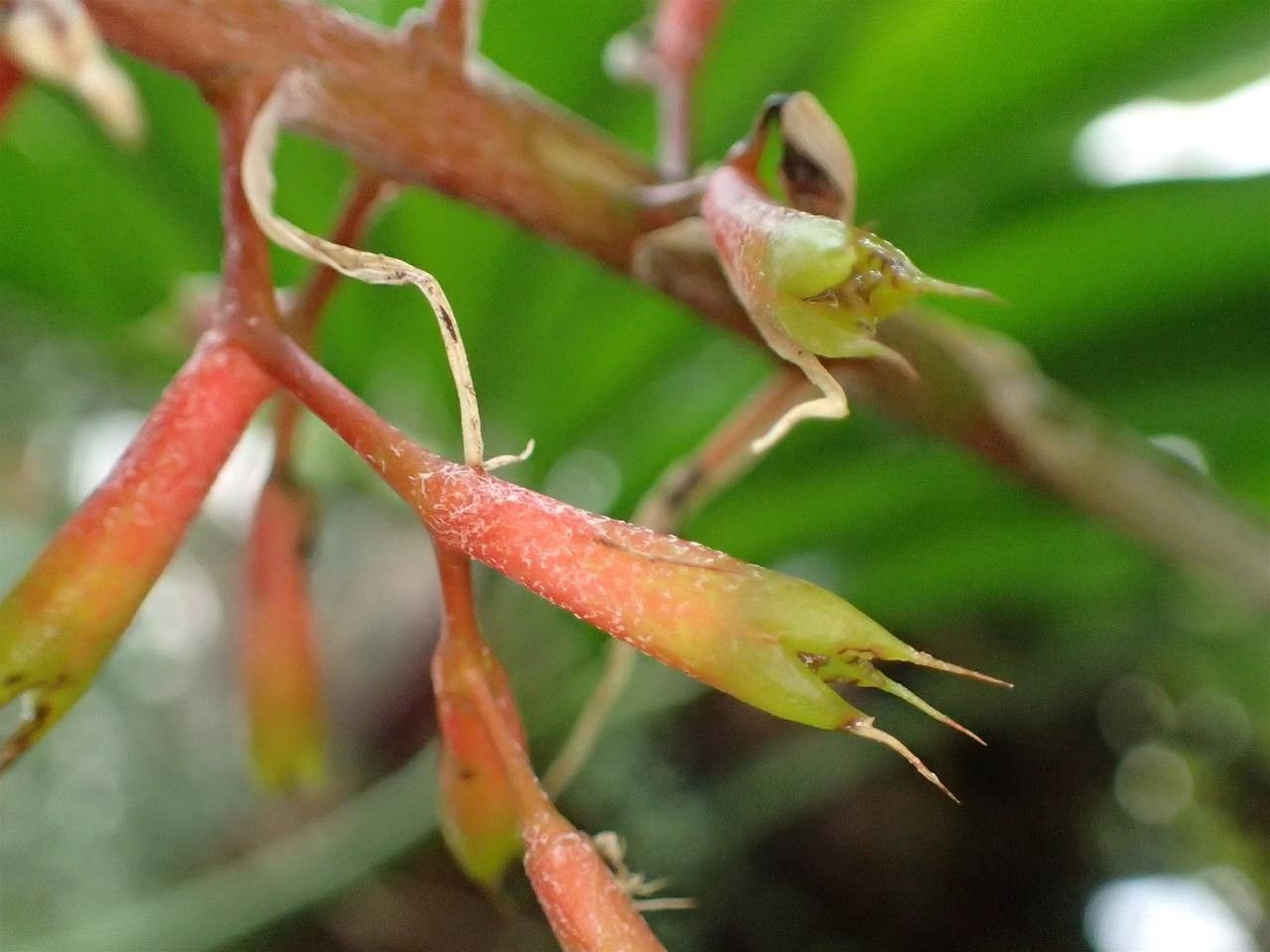
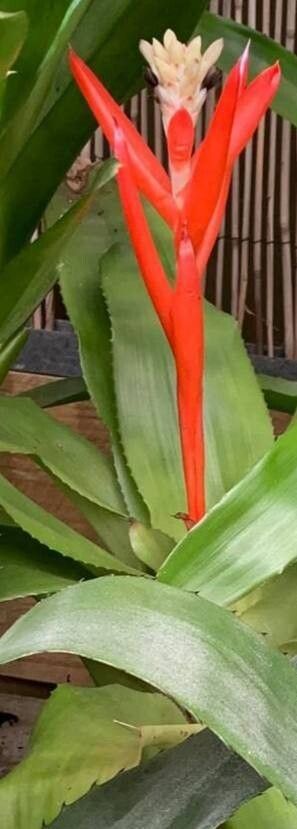
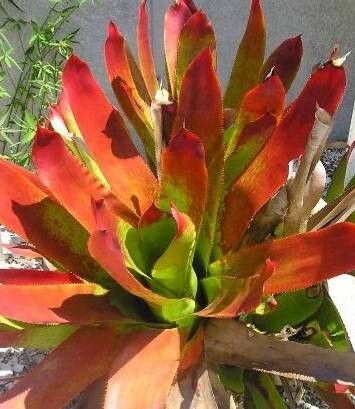
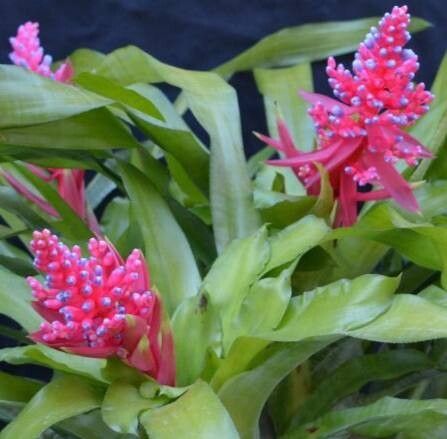
Aechmea caudata, a species in the Bromeliaceae family, is native to Brazil. This epiphytic plant grows on other plants without causing them harm. Its long, narrow leaves feature sharp spines along the edges, while its flowers, pink or red, bloom on a tall stalk that can reach up to one meter in height. Owing to its attractive foliage and flowers, Aechmea caudata is commonly cultivated as an ornamental plant. It thrives in bright, indirect light and well-draining soil, making it a popular choice for both indoor gardening and as an outdoor ornamental plant in tropical climates.
Aechmea caudata has a fairly high resistance to disease and is generally not prone to illnesses. However, if it is kept in a poor environment it can become more vulnerable to disease. This plant also has relatively few insect pests. In terms of care, its needs are moderate. It is important to give it plenty of sunlight, since inadequate light can make it more susceptible to disease and cause thin growth. Because it is often grown indoors, it may need to be moved regularly to a well-lit spot. It does not require frequent watering. Overall, Aechmea caudata is suitable for most people, but it is best for those who can provide good light conditions.
How to keep Aechmea Caudata.
Light
Aechmea caudata comes from habitats such as forest understories that provide natural shade. It prefers partial sunlight but can endure full sun if needed.
Temperature
Aechmea caudata does best in warm conditions. If the temperature falls too low, the plant can stop growing or suffer frost damage. It tolerates high heat and humidity well and needs a steady level of moisture in its environment. However, very high temperature and humidity can make it more prone to fungal infections. In dry air, regular watering and misting are required to keep humidity adequate. The plant is sensitive to sudden temperature swings, so maintaining a relatively stable temperature is important.
Fertilizer
The best time to fertilize an Aechmea caudata is in early spring when it comes out of dormancy. This encourages overall growth and flower development. Fertilizing improves the foliage, stems, and branches, while encouraging flowers that are larger, more vibrant, and longer-lasting. It helps move nutrients from the roots to the flowers and enhances the plant's health and resistance to disease.
Pot & Repot
When repotting Aechmea caudata, select a pot 1-2 inches (2.5–5.1 cm) larger that provides good drainage. Use a well-draining potting mix. Repot in spring or fall, making sure the root ball sits slightly lower than the rim of the flower pot. Water thoroughly after repotting and place the plant in a warm spot with indirect sunlight.
Botanical profile.
- Plant Type
- Shrub
- Life Cycle
- Perennial
- Genus
- Aechmea
- Family
- Bromeliaceae
- Hardiness Zone
- 10-12
- Mature Height
- 49 cm to 76 cm
- Mature Spread
- 61 cm to 91 cm
- Leaf Color
- Green, Dark Green
- Leaf Type
- Evergreen
- Flower Color
- Red, Pink
- Flower Size
- 3.05 cm to 5.08 cm
- Bloom Time
- Summer, Early fall
- Planting Time
- Spring, Summer, Autumn
- Harvest Time
- Late summer, Fall
- Native Area
- Brazil
Other names.