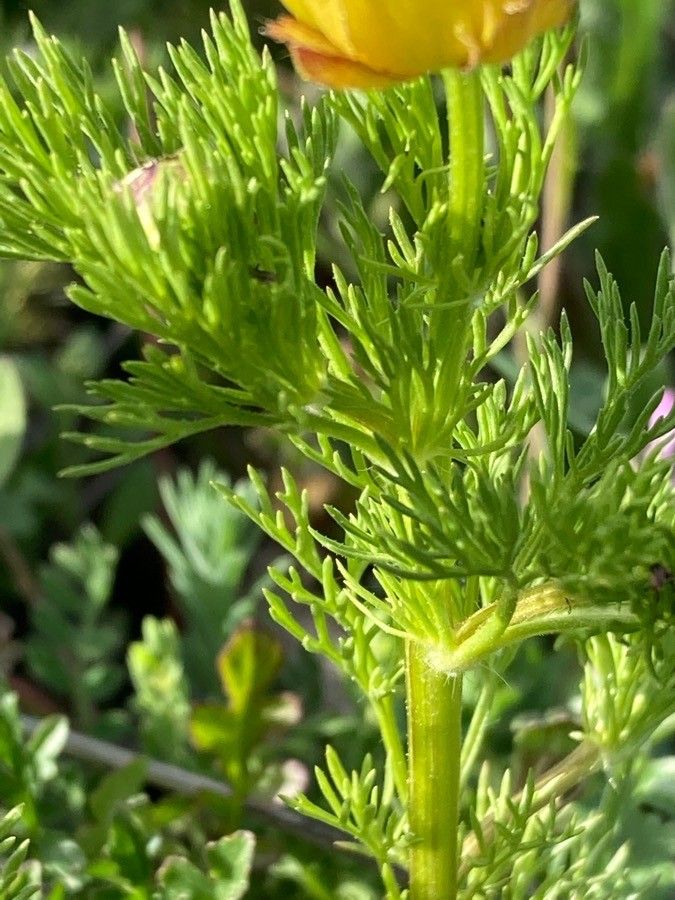
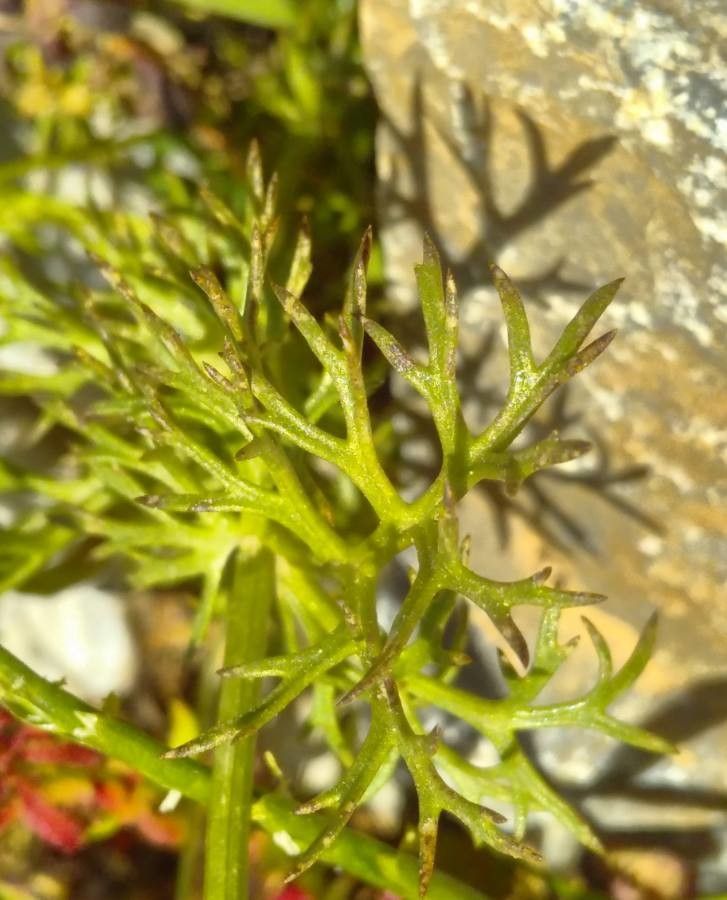
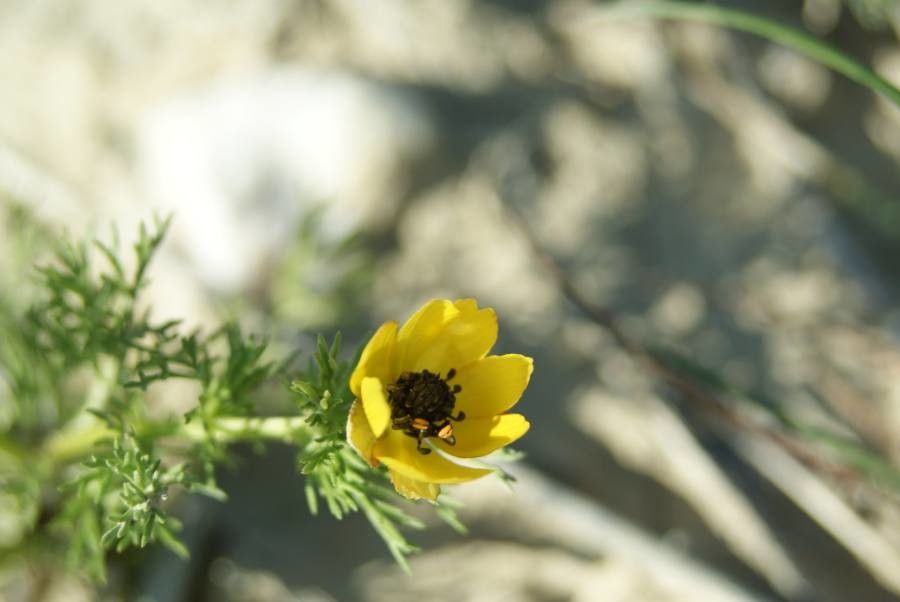
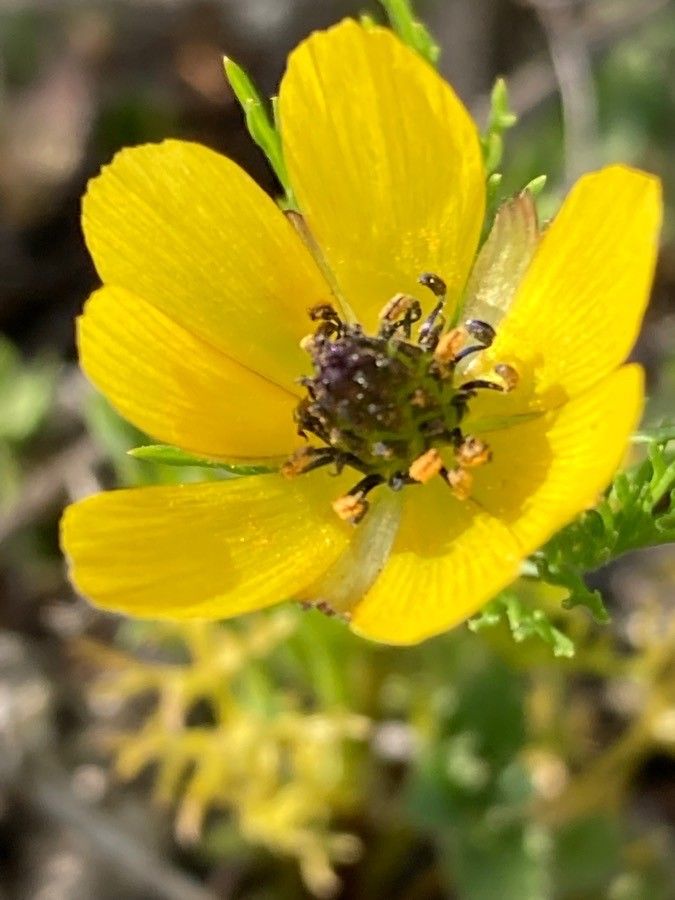
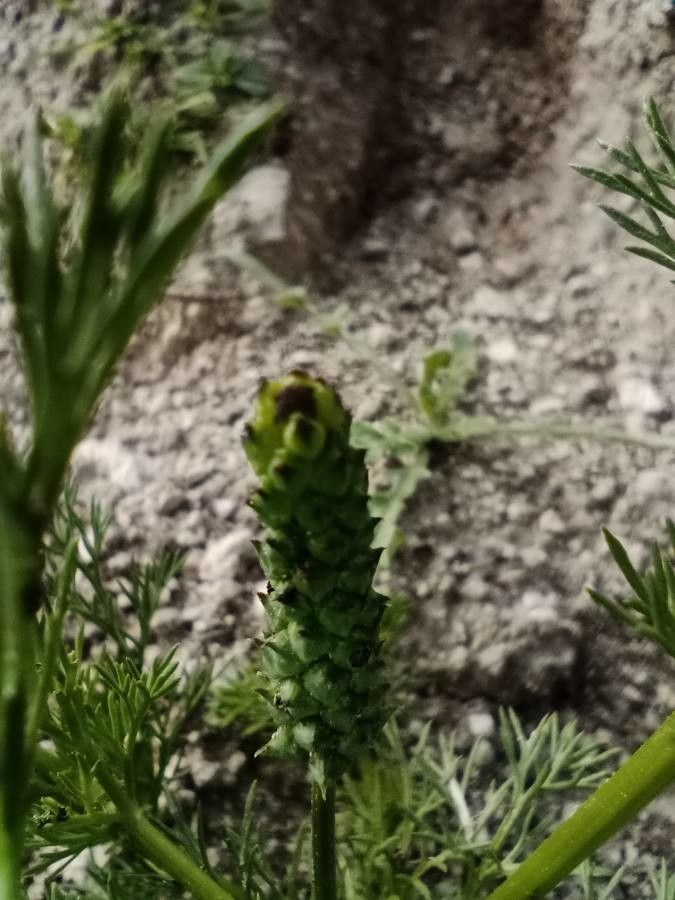
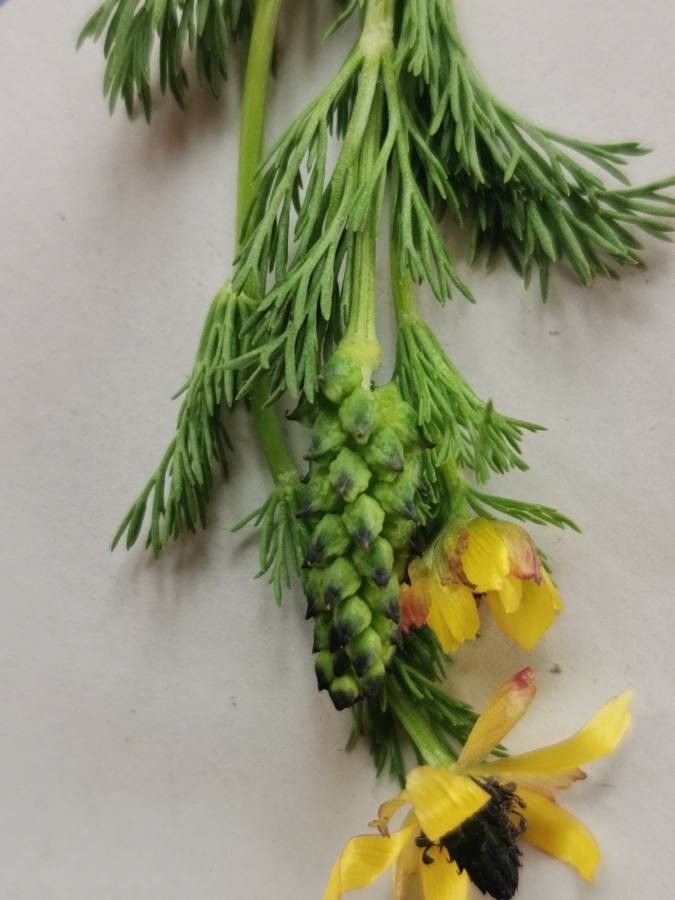
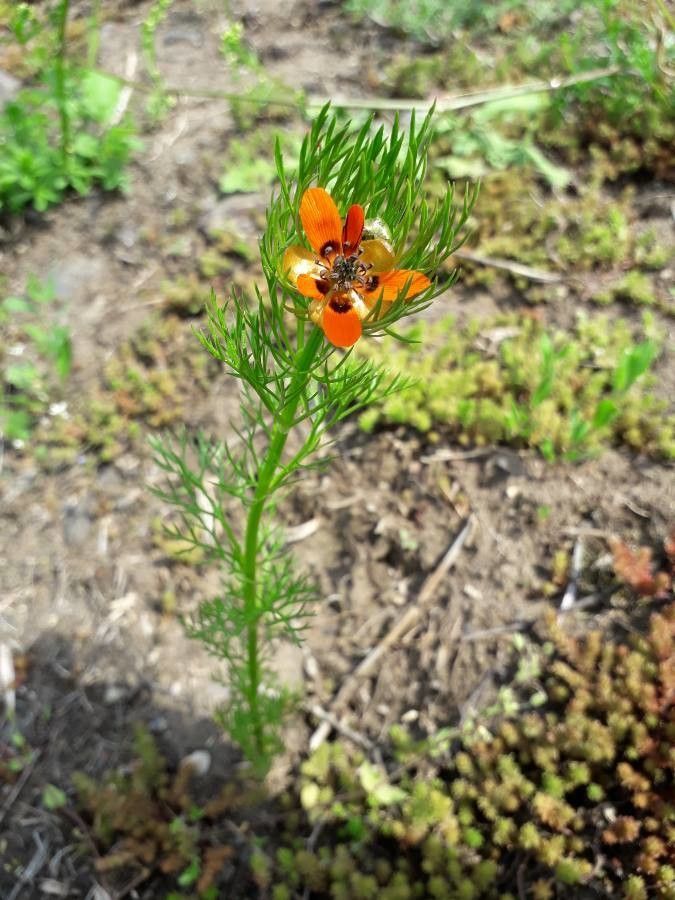
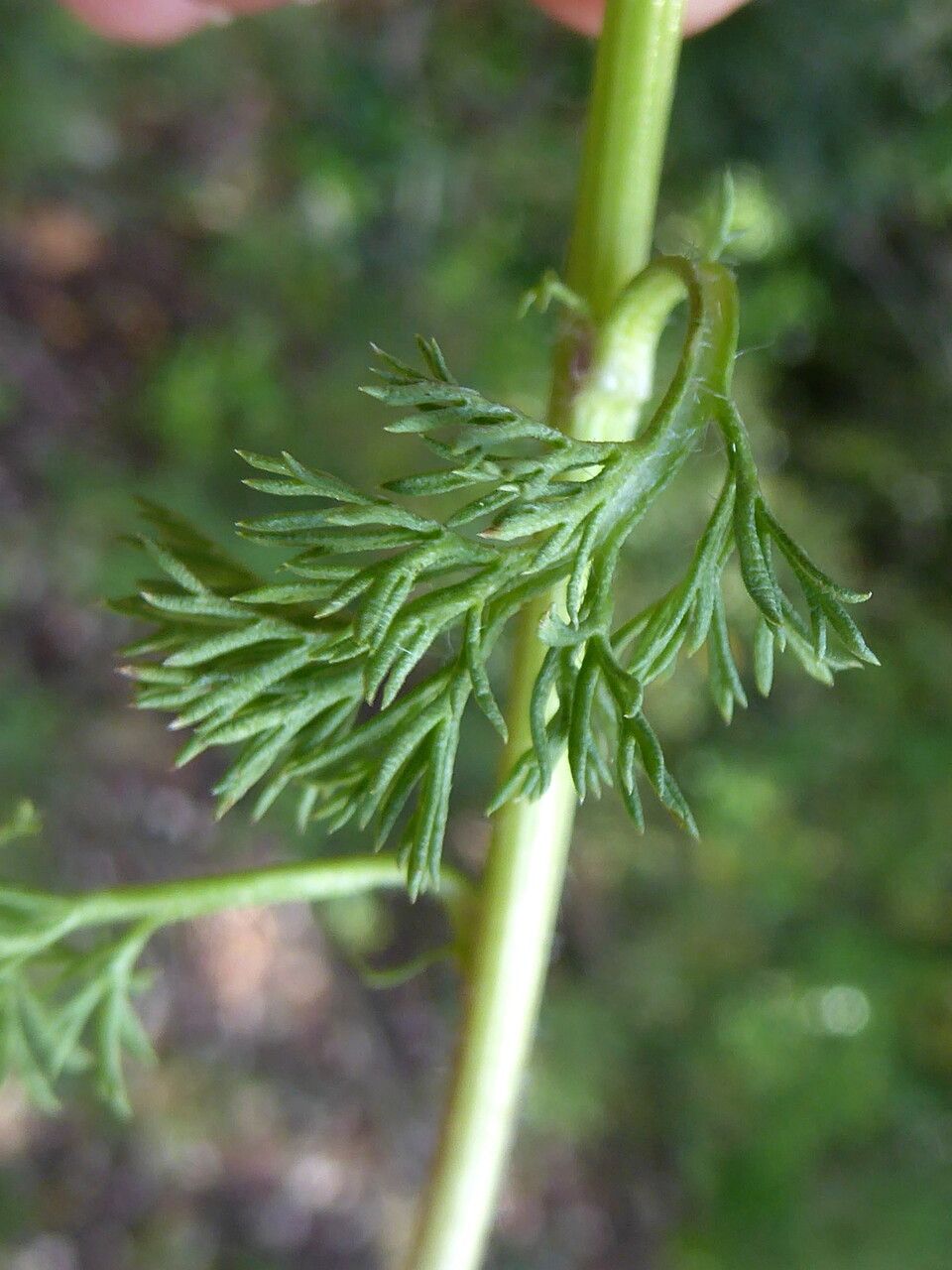
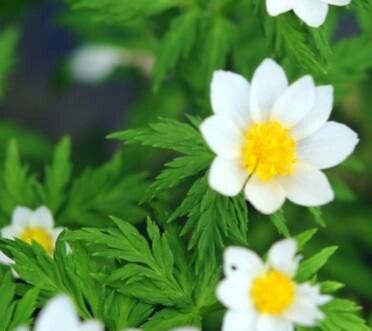
Adonis microcarpa, commonly known as small-fruit pheasant's-eye or red chamomile, is an annual herbaceous plant. The species is native to western Asia and southern Europe and is naturalised in Australia. It grows to 50 cm high, has finely divided foliage and red flowers with black centres.
Small pheasant's-eye is fairly disease-resistant and generally not prone to illnesses. However, it can be affected by pests and diseases present in its surroundings, though these problems are usually mild. In terms of care, the plant requires moderate maintenance. Regular pruning is needed to keep a neat appearance and support healthy growth. Fertilizing can also help encourage flowering. Small pheasant's-eye is suitable for anyone with outdoor space, such as a garden or patio, and does not demand extensive gardening experience. It may need more attention when grown indoors.
How to keep Adonis Microcarpa.
Light
Small pheasant's-eye is a sun-loving perennial herbaceous plant native to open habitats, frequently occurring in meadows and grasslands. It prefers full sun but can also tolerate partial sun.
Water
The small pheasant's-eye plant thrives in moderate climates, where it requires a steady supply of moisture without becoming waterlogged. To maintain its health, it should be watered weekly. Its growth cycles are closely linked to water availability, efficiently making use of rainfall during its active growing season.
Temperature
The small pheasant's-eye is native to temperate regions and thrives best in conditions where temperatures range from 59 to 100.4 °F (15 to 38 ℃). Seasonal temperature changes should closely follow the natural cycle of its native climate.
Fertilizer
The best time to fertilize a Small pheasant's-eye is in early spring, as it comes out of dormancy and begins active growth. Fertilization supplies essential nutrients for healthy growth. Although Small pheasant's-eye has relatively low fertilizer needs, applying fertilizer once a year can improve its survival and encourage better, longer-lasting flowers.
Pruning
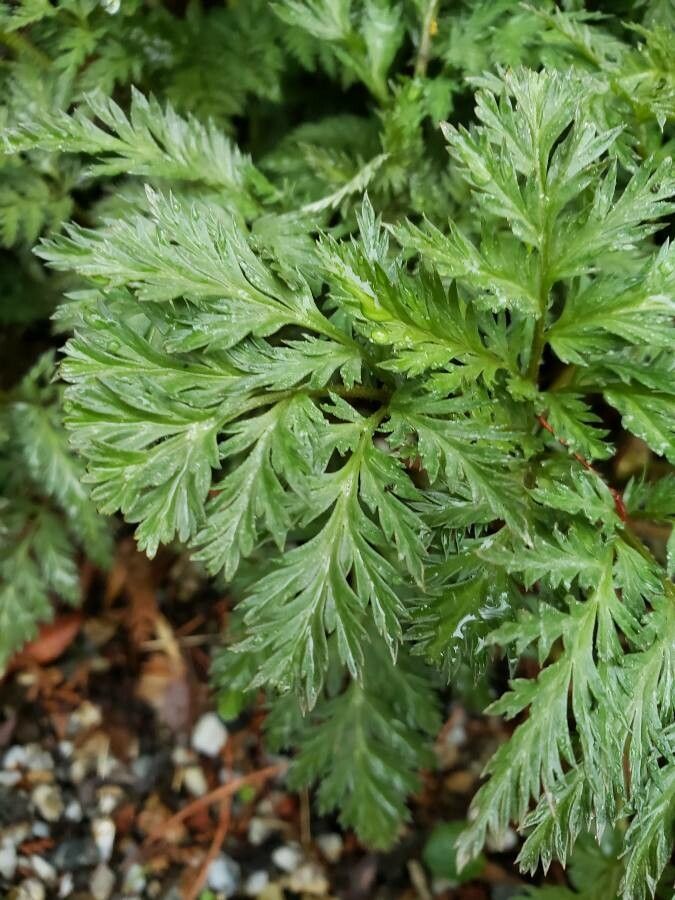
The small pheasant's-eye plant features vibrant red flowers and delicate, feathery foliage. To encourage new growth, prune it between early and late spring, promptly removing any damaged parts. This practice helps enhance blooming, maintain the plant's shape, improve air circulation, and reduce pests. For the best results, use clean, sharp tools to make precise cuts, promoting the plant's overall health.
Botanical profile.
- Plant Type
- Herb
- Life Cycle
- Perennial
- Genus
- Adonis
- Family
- Ranunculaceae
- Hardiness Zone
- 7-12
- Mature Height
- 15 cm to 30 cm
- Mature Spread
- 10 cm to 20 cm
- Leaf Color
- Dark Green
- Leaf Type
- Semi-evergreen
- Flower Color
- Yellow
- Flower Size
- 2.03 cm to 4.06 cm
- Bloom Time
- Early spring, Mid spring
- Planting Time
- Spring
- Harvest Time
- Late spring, Early summer
- Native Area
- Libya, Turkey, Tunisia, Montenegro, Cyprus, Greece, Croatia, Morocco, Serbia, Lebanon, Iraq, Portugal, Syria, Italy, Spain, Iran, Albania, Algeria, France
Other names.
Reader questions.
What are the sunlight requirements for Small pheasant's-eye (Adonis microcarpa)?
Small pheasant's-eye, also known by its botanical name Adonis microcarpa, thrives under specific sunlight conditions. For optimal growth, this plant requires full sun exposure, which means it should receive above 6 hours of direct sunlight daily. However, it can also tolerate partial sun exposure, defined as about 3-6 hours of sunlight per day. It's advised to observe the movement of sunlight through your garden carefully, choosing spots that ensure a perfect balance of light and shade. This careful selection will contribute significantly to the health and happiness of your plants.
What is the native climate of small pheasant's-eye?
Small pheasant's-eye, scientifically known as Adonis microcarpa, thrives in temperate climates. It grows best in environments where temperatures range between 59 to 100.4 °F (15 to 38 °C). To ensure the plant flourishes, seasonal temperature adjustments should closely align with the natural temperature rhythms of its native habitat.