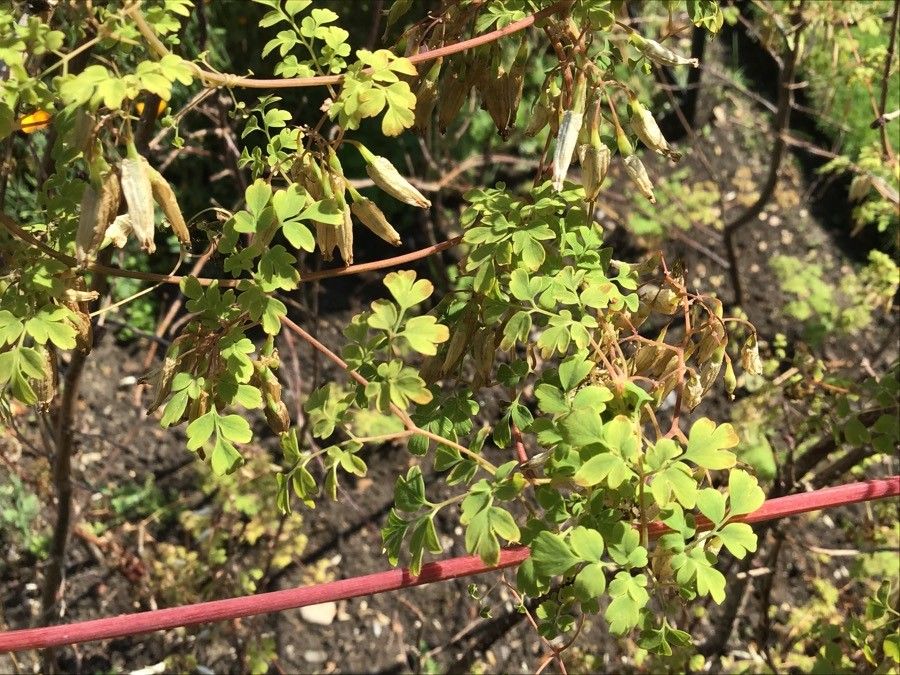
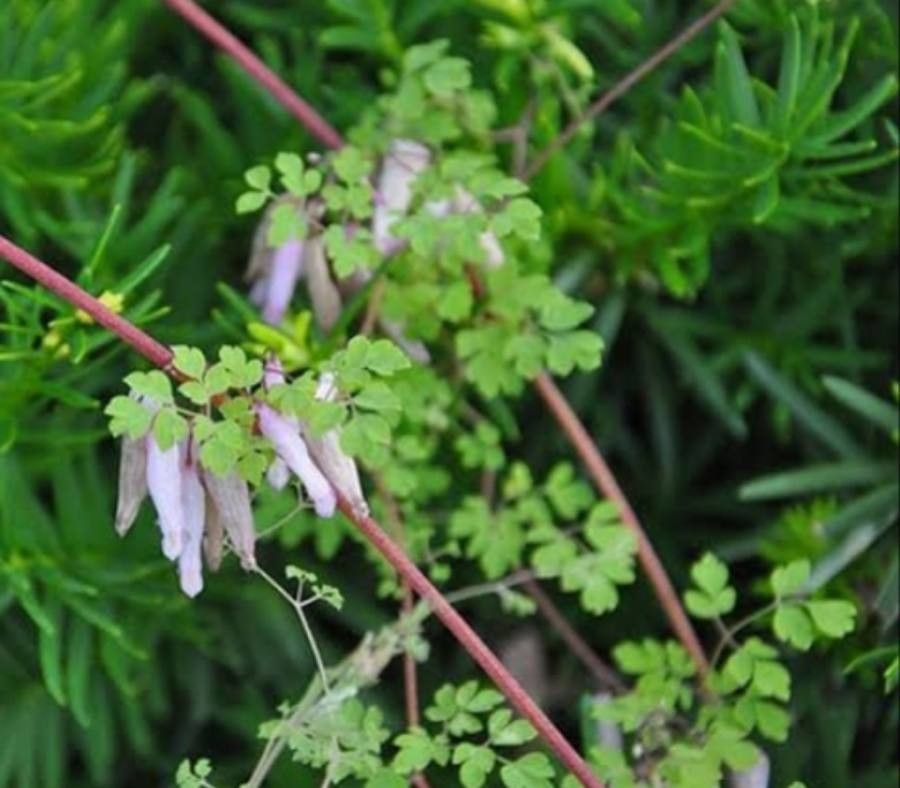
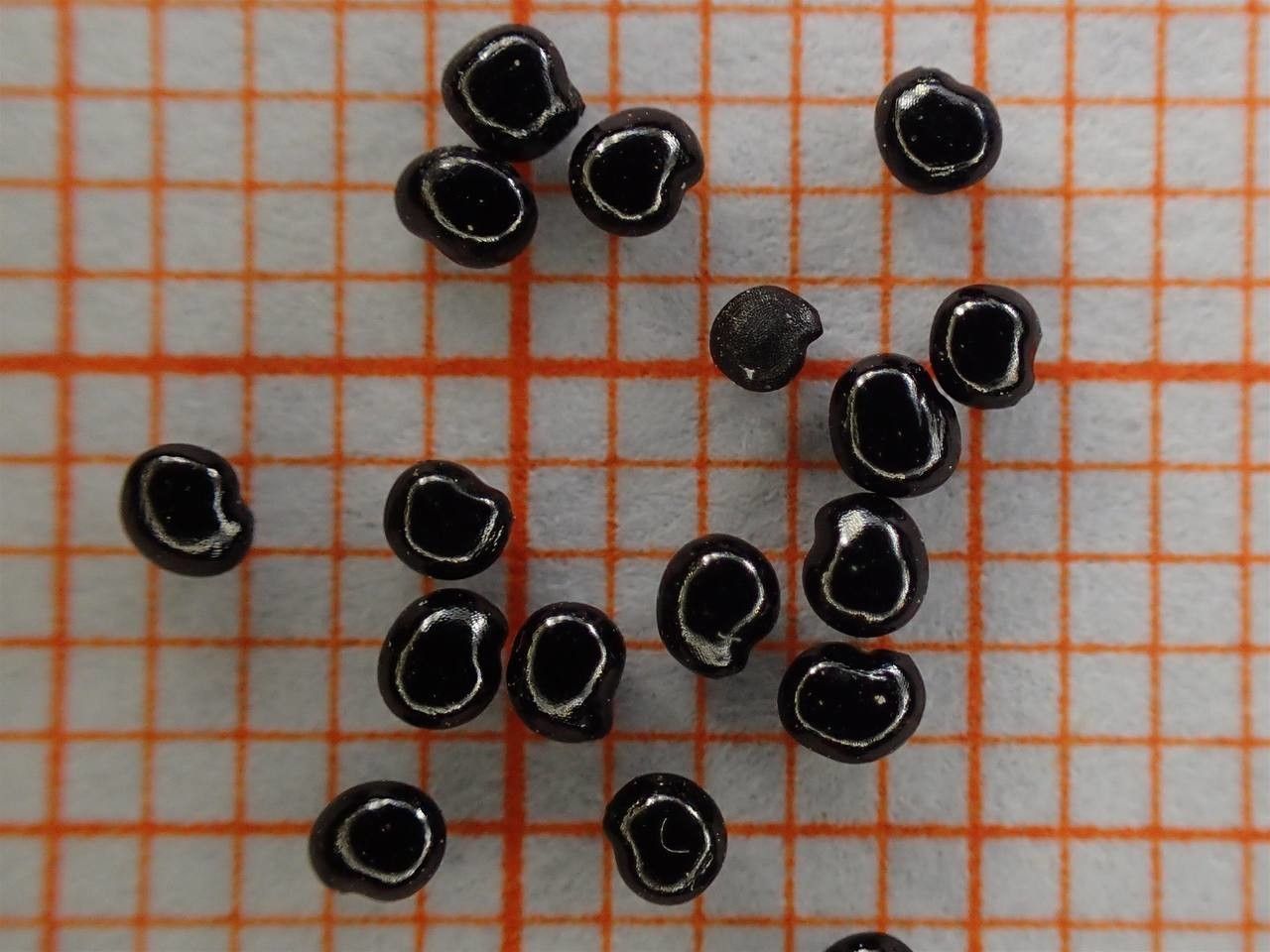
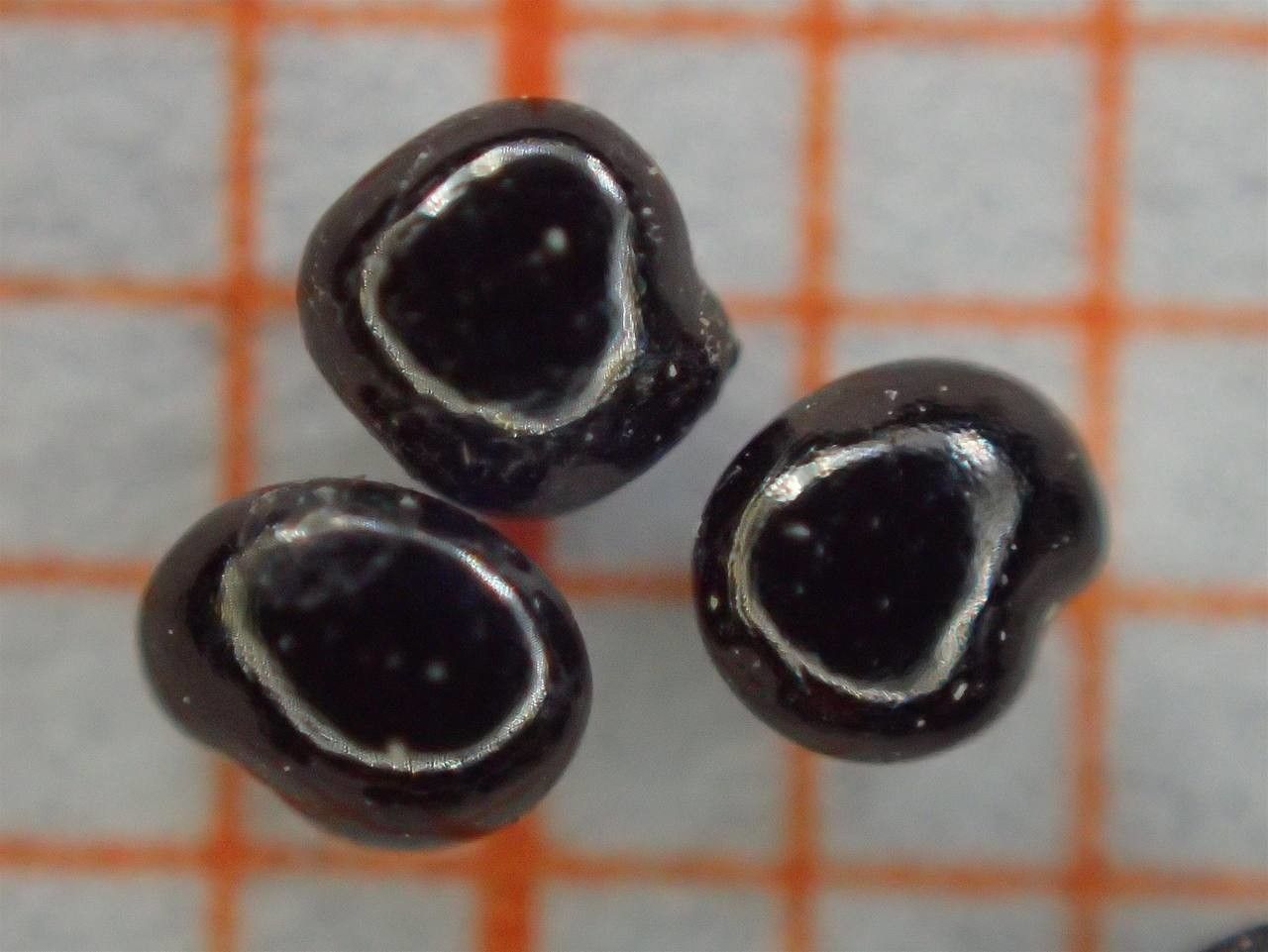
Adlumia fungosa is a species in the Papaveraceae that is commonly known as the Allegheny vine, climbing fumitory, or mountain fringe. It is a herbaceous, creeping, flowering plant and is closely related to the Fumitory genus, Fumaria. Adlumia fungosa is a biennial climbing plant with very slender stems. The leaves are several times pinnately divided, prehensile, and feathery in texture. The white or pinkish flowers grow in large clusters and appear in summer. The plant grows on wet and wooded slopes, and is native to North America, particularly the Allegheny Mountains area. It is a threatened or endangered species throughout its range in northeastern North America, where it has not been completely extirpated. This vine can grow up to twelve feet in length on wooded and rocky slopes. The species name fungosa means 'spongy' in Latin.
Allegheny vine is fairly resistant to disease and usually does not suffer from them. Nonetheless, it can be vulnerable to pests and diseases present in its environment. Such infections are typically not serious. For care, this plant needs moderate maintenance. It requires regular pruning to preserve a neat appearance and healthy growth. Fertilizing can also encourage flowering. Allegheny vine is appropriate for anyone with outdoor space, like a garden or patio, and does not demand extensive care experience. It may need more attention when kept indoors.
How to keep Adlumia Fungosa.
Light
The Allegheny vine grows best in bright spots that receive sunlight for most of the day. It can tolerate locations with some light shade. However, too little or too much sunlight can hinder its healthy growth. Because it comes from areas with plentiful sunshine, it prefers those conditions.
Water
The Allegheny vine flourishes in moist woodland environments, where consistent moisture and high humidity are ideal. To replicate its natural habitat, the vine needs to be watered weekly. During dry spells, applying mulch can help retain moisture, promoting resilience and growth during its active season.
Temperature
Allegheny vine is native to environments with temperatures ranging from 68 to 95 °F (20 to 35 ℃). This plant prefers warmer climates but can adapt. Adjustments to temperature should be made seasonally and when required.
Fertilizer
The Allegheny vine requires regular feeding to encourage blooming but does not tolerate excessive fertilizer. It should be given small, frequent doses of fertilizer throughout its life, especially during its peak growth period and while it is flowering. Continue feeding your Allegheny vine until it stops blooming.
Pruning
The Allegheny vine is a rapidly growing climbing plant with feathery leaves and delicate flowers. To maintain its shape and promote growth, prune it in the spring. Be sure to thin out dense areas for better air circulation. Using sterilized tools to make clean cuts will help prevent disease, promoting healthy blooms and enhancing the plant's overall appearance.
Botanical profile.
- Plant Type
- Herb, Vine
- Life Cycle
- Biennial
- Genus
- Adlumia
- Family
- Papaveraceae
- Hardiness Zone
- 4-8
- Mature Height
- 0.61 m to 3.66 m
- Mature Spread
- 91 cm
- Leaf Color
- Green
- Leaf Type
- Deciduous
- Flower Color
- Pink, White
- Flower Size
- 2.54 cm
- Bloom Time
- Summer
- Planting Time
- Spring
- Harvest Time
- Late summer, Early fall, Mid fall
Other names.
Reader questions.
How should I water my Allegheny vine?
To ensure the health of your Allegheny vine, it is recommended to use filtered water at room temperature or slightly warmer. Tap water may contain harmful particles, so filtering it is preferable. The reason for using room temperature water is that the Allegheny vine is accustomed to warm environments and cold water can be a shock to it. It is also advised to avoid overhead watering to prevent issues with the foliage. Instead, water the plant by pouring filtered room temperature water directly onto the soil until it is completely soaked. This method benefits the plant by providing moisture to the roots, aiding their spread into the soil and nutrient absorption.
Why should I put fertilizer on my Allegheny vine?
Allegheny vine, known for its colorful, leafy foliage, requires nitrogen and potassium to fuel rapid foliage growth and root development for anchoring into the soil. Additionally, nitrogen promotes taller and fuller plants.
How many hours of sunlight does Allegheny vine need each day to grow well?
To ensure the well-being of the plants, it is important to provide them with a minimum of 6 to 8 hours of sunlight each day. Ideally, they would benefit from receiving more sunlight in the morning, especially during the summer. The Allegheny vine, in particular, thrives in full sun and requires as much sunlight as possible. The greater the amount of light these plants receive, the better they will be able to produce food, display stunning blooms, and thrive.
What is the best temperature for Allegheny vine?
The best temperature for Allegheny vine depends on the time of year. Let's discuss two primary seasons: the growing season and the dormancy season. During the growing season, when Allegheny vine starts sprouting, the ideal temperature range is 65~80℉(18~27℃). If the temperature drops below 15℉(-10℃), the plant will suffer, causing browning and wilting of its leaves. However, if the cold snap is short, Allegheny vine may survive with some assistance. On the other hand, during warmer periods, Allegheny vine needs protection from excessively high temperatures. Anything above 95-105℉ (35-40℃) can harm the foliage and blooms, causing wilting, drooping, and even sunburn on the leaves. Recovery from these issues can be challenging for Allegheny vine. Luckily, there are quick and easy ways to address this problem.
What should I do if I give too much or too little water to my Allegheny vine?
Overwatering is a common issue for Allegheny vine plants and can have detrimental effects on their health. When this happens, the stems and leaves may wilt and turn yellow. Overwatering over a long period can also lead to diseases like root rot, mold, and mildew, which can be fatal for the plant. On the other hand, underwatering is less common for Allegheny vine plants, as they have good tolerance to drought. However, when underwatering does occur, the leaves will become brittle and brown. It's important to recognize the signs of overwatering early on to prevent irreversible damage. If you notice these signs, reduce your watering schedule and check the soil drainage. If the soil drains poorly, replace it with a well-draining potting mix. If you observe signs of underwatering, simply water the plant more regularly until the signs subside.
When should I put fertilizer on my Allegheny vine?
Allegheny vine is a type of plant that requires a lot of nutrients because it grows quickly, has large leaves, and contains a lot of water. To support their growth, they need to be fertilized throughout the entire growing season, from when they first start growing until they mature. If they do not receive enough fertilizer, you will start to see signs of nutrient deficiencies and their growth will be affected. In the past, it was believed that when the leaves of Allegheny vine began to change colors in the fall, their nutrient needs decreased significantly, so you could reduce or stop using fertilizer. However, research has shown that giving the plants small amounts of nitrogen fertilizer after they mature can be beneficial. This will not significantly impact the color change of the leaves but will prevent the bottom leaves from turning yellow and falling off.
What kind of sunlight does Allegheny vine require?
The Allegheny vine thrives under full sunlight, so it's important to give them enough space to evenly receive exposure to the sun and prevent the leaves from lacking sunlight. If you plant them in pots, place them in windows that receive direct sunlight throughout the year to ensure they get full sunlight. Avoid placing them in areas with partial or filtered light, as this won't promote strong stems and healthy flowers. Ideally, the Allegheny vine should always be exposed to the sun.
What temperature does the Allegheny vine need in its first year or as a seedling?
If you have just planted an Allegheny vine outside for the first time, it may need some extra care during the coldest months. Frost can cause severe damage to a new Allegheny vine and prevent it from growing back healthy in the spring. To protect the plant, it should be kept at a temperature of 40℉(5℃) or above when it is not yet well-established. This can be done by bringing the vine indoors for a month or two, or by using mulch or fabric barriers to shield it from frost. During the first year or two, it is recommended to plant the Allegheny vine in a shadier area. Smaller and weaker plants have a harder time regulating their temperature in the heat, so limiting direct sunlight to no more than five hours a day is advisable, especially if the temperature rises above 80℉(27℃). To protect the vine from summer heat, you can use shadecloth and provide regular watering or misting.
How often should I give water to my Allegheny vine?
If your Allegheny vine is in a pot, the most precise way to determine if it needs water is to check the soil by inserting your finger. If the top two to three inches of soil are dry, it's time to water it. The same method can be used if you are growing the vine outdoors in the ground. When the top few inches of soil have dried out, it's a signal to water it. In the spring and early fall, watering once a week is often sufficient. However, during extremely hot weather, you may need to increase watering to twice a week or more. It's important to note that mature, well-established Allegheny vines have a good resistance to drought.
When should I not put fertilizer on my Allegheny vine?
Sometimes, fertilizer can actually harm Allegheny vine instead of helping it, especially if the plant is already stressed for some other reason. It is best to avoid fertilizing if the plant is experiencing diseases such as leaf spot, black rot, or blackleg, or if it has insect problems like aphids, spider mites, or whiteflies. If fertilizer is added in such cases, it can weaken the plant's defenses and make it more susceptible to other pest problems or disease infections. It is also important to avoid fertilizing when the soil surface has become hardened or too dry, as this increases the risk of fertilizer burn on the roots. Instead, water the potting soil to get it slightly moist before applying fertilizer.
Can the sun be harmful to plants? How can I protect Allegheny vine from damage caused by sun and heat?
When the temperature rises above 90℉(32℃), the Allegheny vine can be damaged by extreme heat, especially if it receives prolonged sun exposure. To mitigate this, it's best to provide some shade during the afternoon in the summer months. It's important to note that summer sunlight is stronger and lasts 50% longer than winter sunlight. If the Allegheny vine becomes stressed from too much sun, it's recommended to ensure they are well-watered. Water them when the top 2 inches of soil are dry and consider moving them indoors if it's excessively hot outside, particularly if they are planted in containers. It's normal for the plant leaves to wilt during the day and recover at night. However, if the Allegheny vine remains droopy, it indicates rapid water loss and requires immediate watering.
How can I keep Allegheny vine safe from really hot or really cold weather?
To protect Allegheny vine from frost or cold damage during the growing season, there are a few measures you can take. If the temperatures drop below 15℉(-10℃), bringing the potted vine indoors under bright but indirect light until the temperatures rise again is a simple solution. For ground-planted vines, using mulch or horticultural fabric to create a protective barrier around the plant can help shield it from frost and cold wind. On the other hand, when temperatures exceed 80℉(27℃) in the shade, it's important to limit the amount of sunlight the vine is exposed to. Ideally, restrict direct sunlight to six hours or less per day, preferably in the morning. You can achieve this by using shade cloth or fine plastic mesh to reduce the amount of sunlight during the hottest parts of the day. Another option is to install a misting system that provides a slow release of cooling mist around the base of the plant to lower ground temperatures.