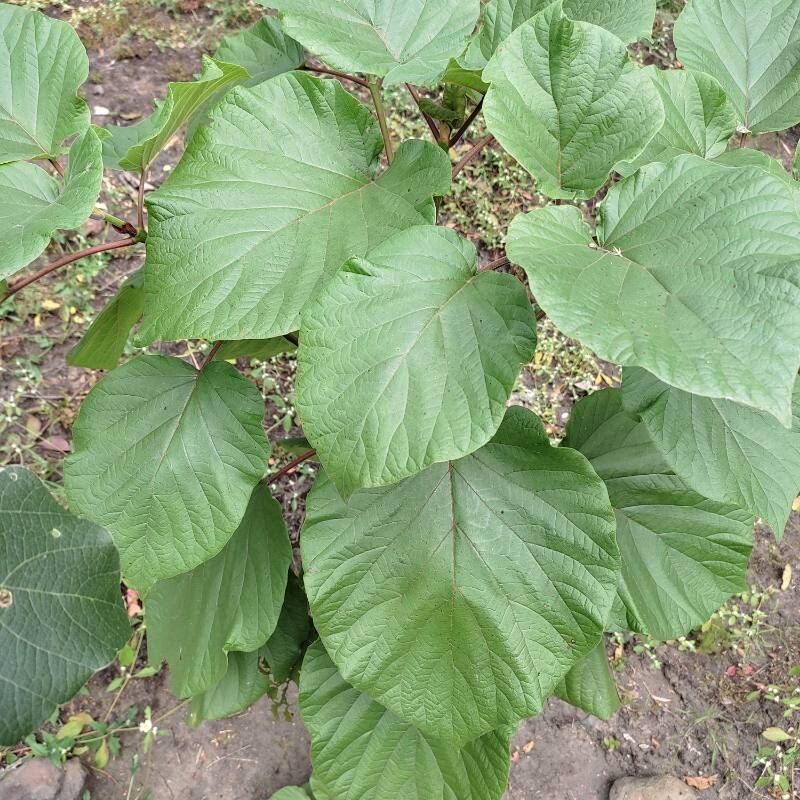
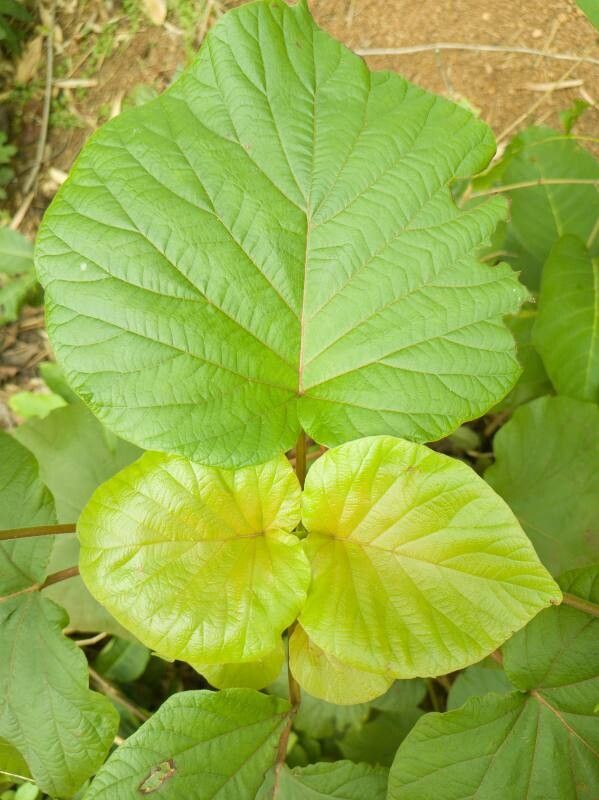
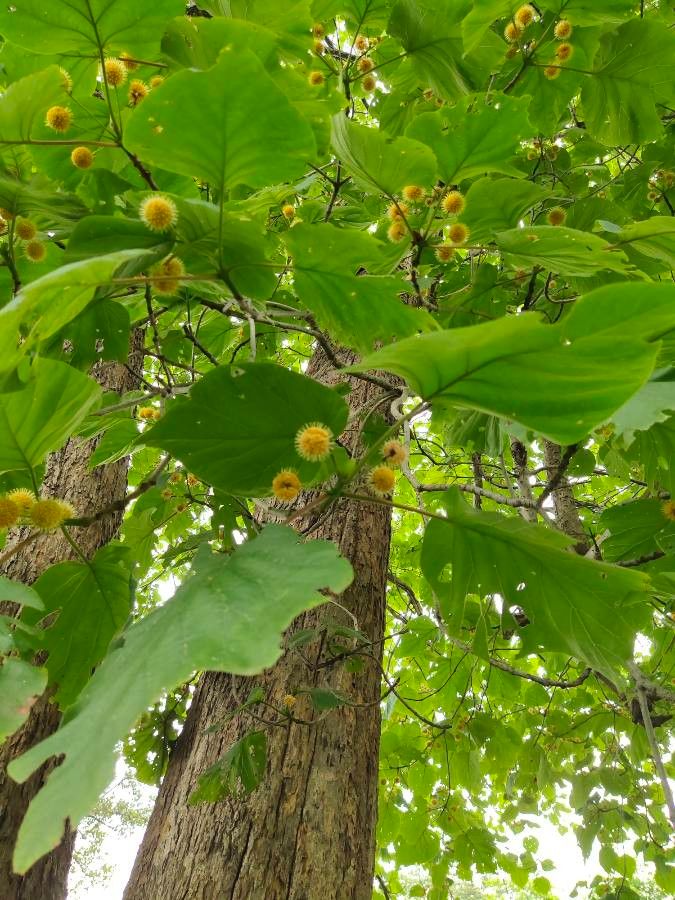
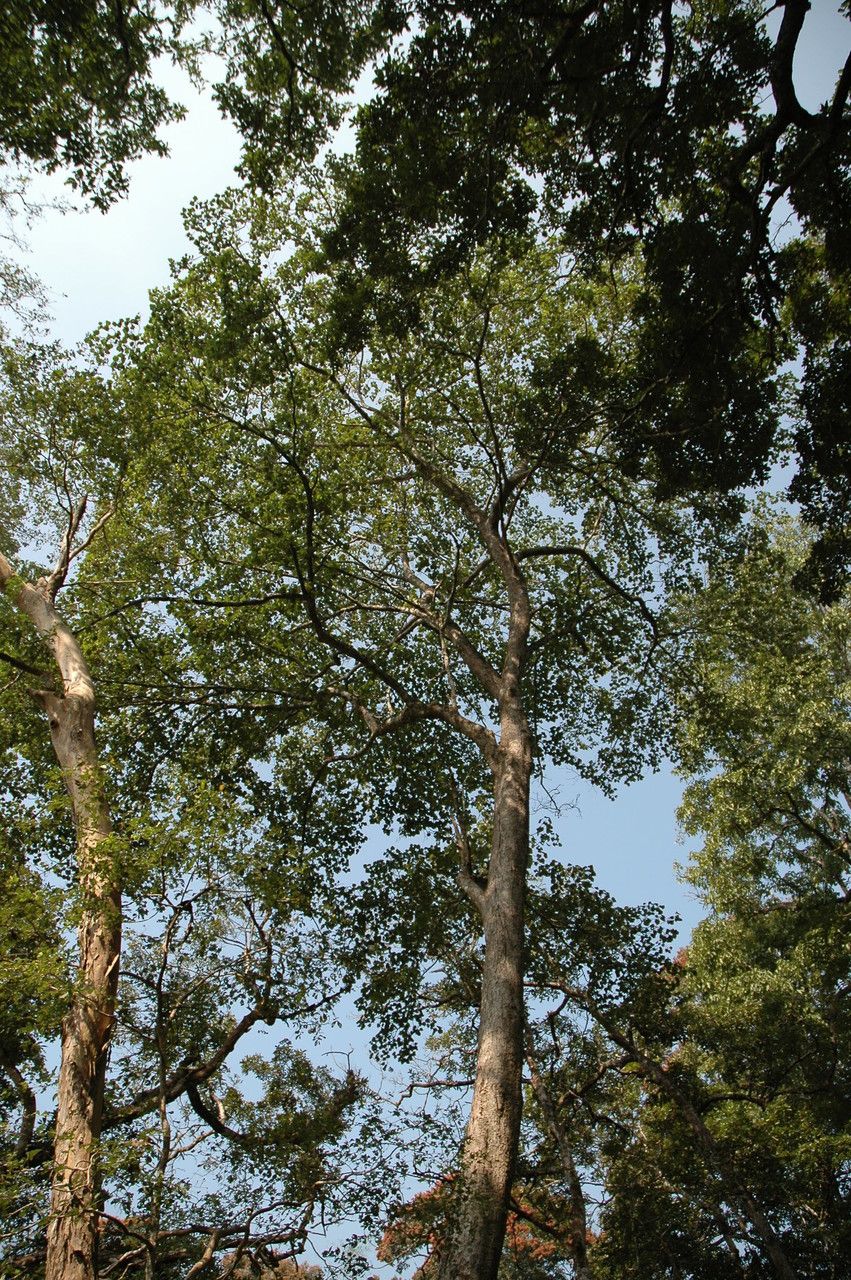
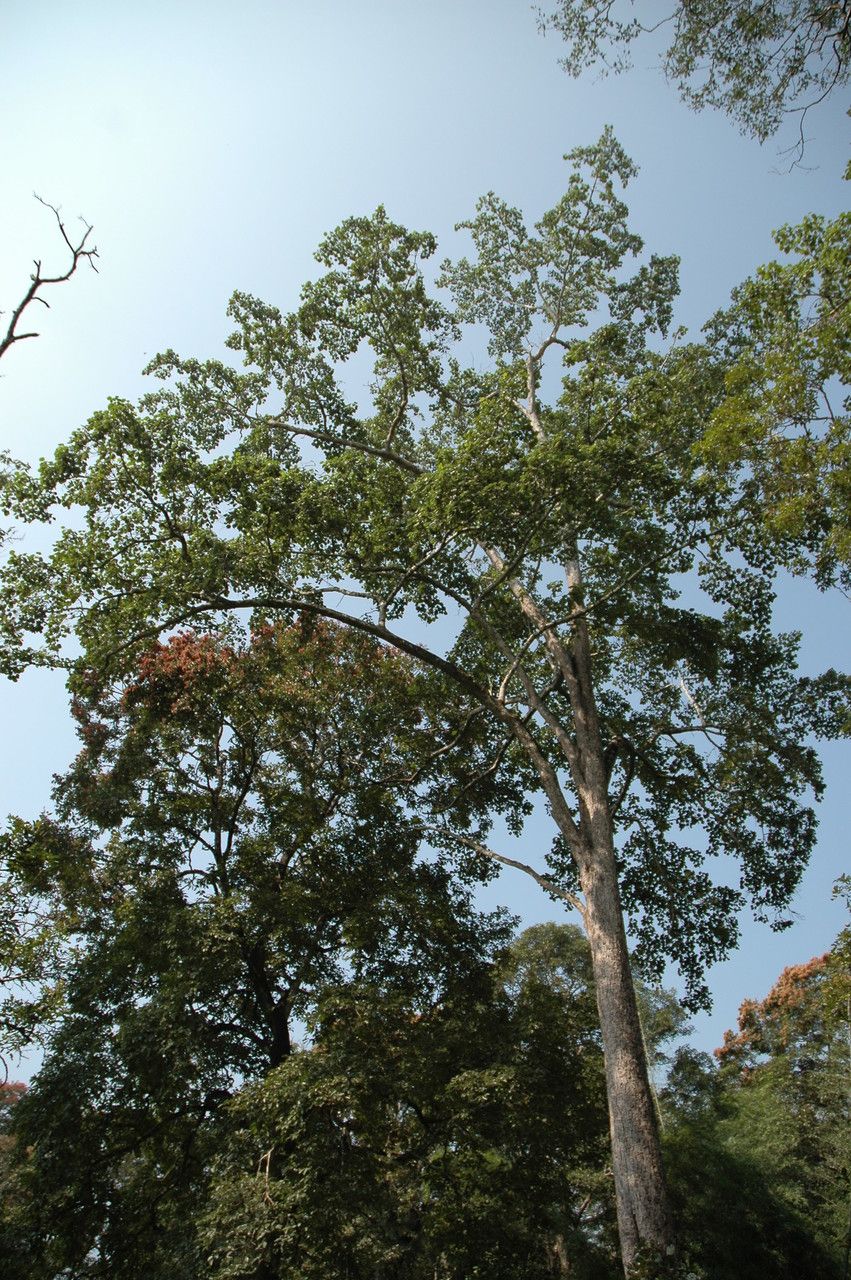
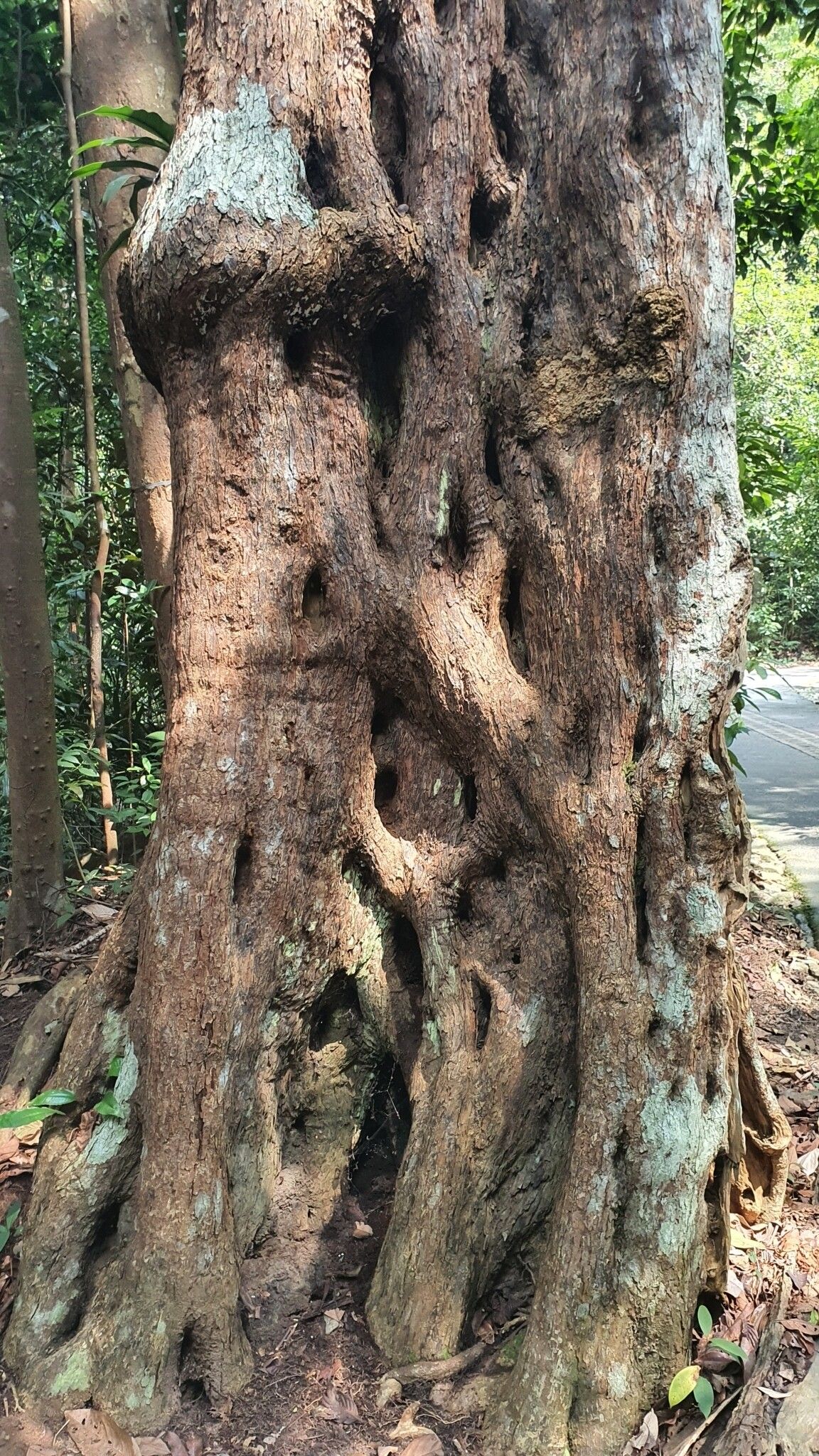
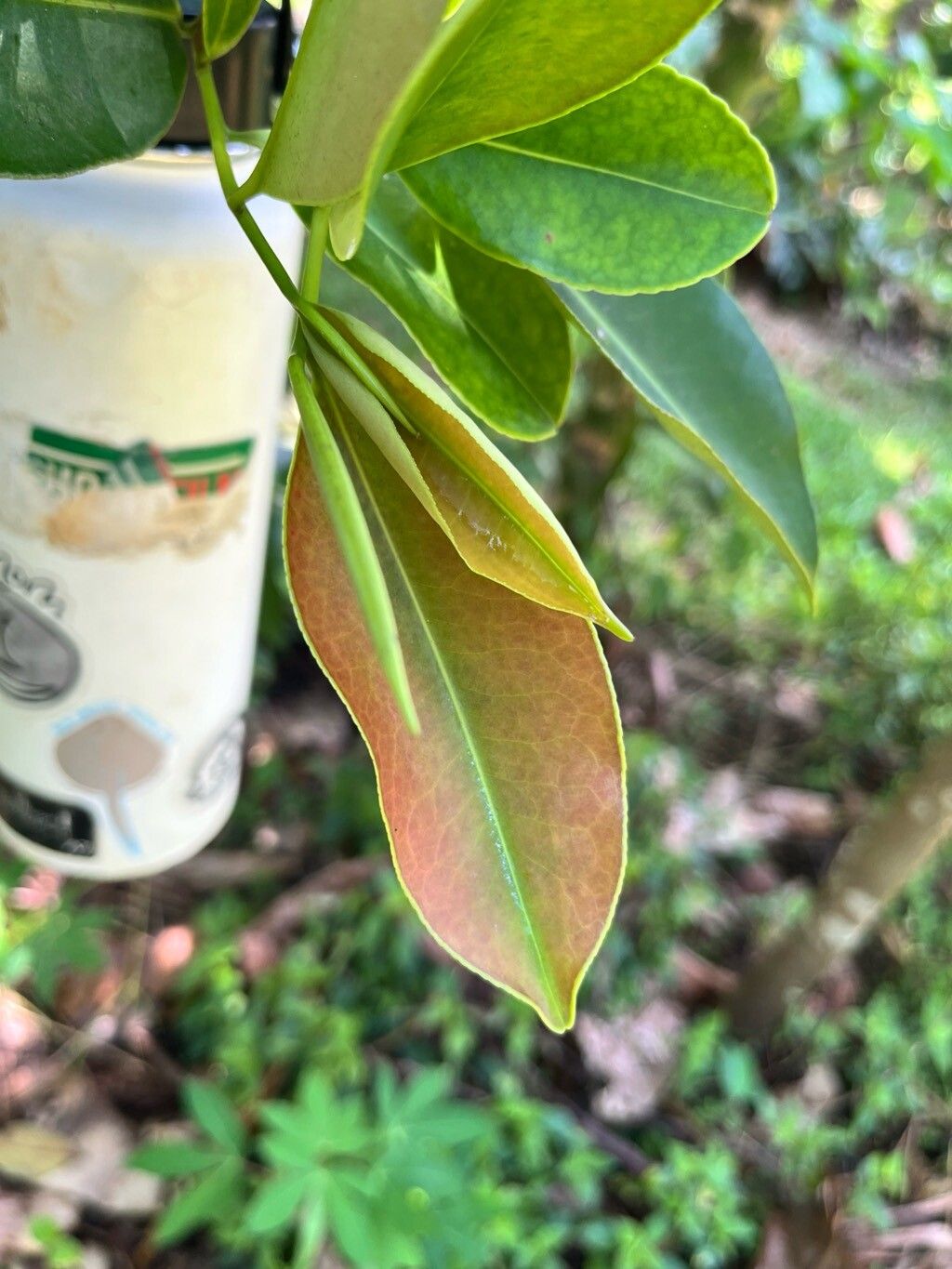
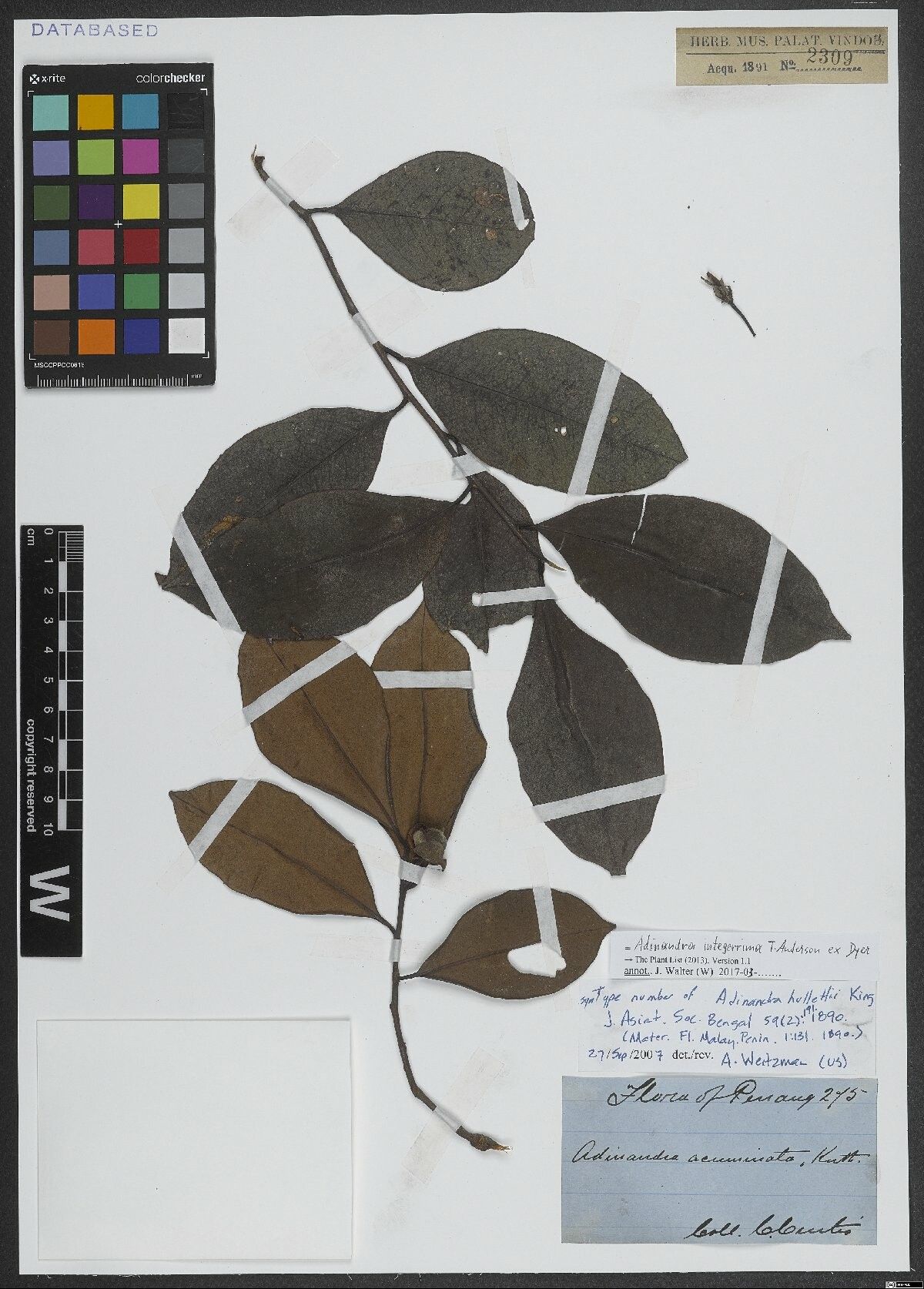
Haldina cordifolia, syn. Adina cordifolia, is a flowering plant in the family Rubiaceae, the sole species in the genus Haldina. It is native to southern Asia, from India east to Yunnan and Vietnam and south to Peninsular Malaysia. It is known as "Haldu", Kadam or Kadamba in Hindi and Gáo tròn in Vietnamese. Haldina cordifolia is a deciduous tree that can grow well over 20 metres high. The flowers may be insignificant individually but can be seen as attractive when they bloom together in inflorescences with a circumference of 20–30 mm. They are usually yellow often tinged with a shade of pink. H. cordifolia usually blossoms during winter (dry season) months. The bark of the tree acts as an antiseptic.
Yellow teak has strong resistance to disease and is typically not prone to illness. In terms of care, this plant is fairly low-maintenance. When grown outdoors it needs only light watering, and larger specimens usually do not require pruning. Smaller plants, however, should be pruned after they have finished blooming. Yellow teak is suitable for people with outdoor spaces, such as a garden or a deck, and does not demand extensive care experience.
How to keep Adina Cordifolia.
Light
Yellow teak is native to open habitats, such as sunny meadows and forest margins, where light is plentiful. It thrives in Full Sun but can also tolerate Partial Sun, showing adaptability to different sunlight conditions.
Water
Yellow teak, a plant native to tropical regions, thrives in high humidity and consistently moist soil. To keep it healthy, water the plant twice a week, making sure the soil stays moist. Although it is usually grown outdoors, yellow teak needs regular watering year-round. This is crucial because it is an evergreen plant that continuously produces foliage.
Temperature
Yellow teak originates from regions where temperatures fall between 68 and 95°F (20 to 35℃). Those temperatures align best with its thermal preferences. In colder seasons, you may need to provide additional warmth to recreate its native conditions.
Fertilizer
Fertilization is essential for caring for Yellow teak. Regular feeding during the growing season maintains the energy needed for its showy leaves and supports overall growth. Neglecting fertilization can lead to unhealthy leaves, reduced ornamental value, and stunted or weak growth that is prone to breakage.
Pruning
The yellow teak is an attractive deciduous tree known for its heart-shaped leaves and yellow flowers. To keep the tree healthy and looking its best, prune it in early spring. This involves removing damaged branches, shaping the tree, and improving airflow. Regular pruning promotes healthy growth, maintains the tree's beauty, and helps prevent pest infestations and diseases, ensuring a vibrant appearance throughout the year.
Botanical profile.
- Plant Type
- Tree
- Life Cycle
- Perennial
- Genus
- Adina
- Family
- Rubiaceae
- Hardiness Zone
- 9
- Mature Height
- 20.12 m
- Mature Spread
- 2.13 m
- Leaf Color
- Green
- Leaf Type
- Deciduous
- Flower Color
- Yellow
- Flower Size
- 2.03 cm to 3.05 cm
- Bloom Time
- Early summer, Mid summer
- Planting Time
- Spring, Autumn
- Harvest Time
- Late summer, Early fall, Mid fall
Other names.
Reader questions.
What are the sunlight requirements for Yellow teak (Adina cordifolia)?
Yellow teak (Adina cordifolia) requires specific sunlight conditions to thrive. It needs 'Full sun,' which means the plant should receive above 6 hours of sunlight daily, or 'Partial sun,' about 3-6 hours of sunlight a day. It's essential to observe the way sunlight moves through your garden to find the ideal location for your Yellow teak, ensuring a healthy balance of light and shade to keep the plant happy.
What is the botanic name of Yellow teak?
The botanic name of Yellow teak is Adina cordifolia.
What are the ideal temperature conditions for Yellow teak?
Yellow teak thrives best in environments where temperatures range between 68 to 95°F (20 to 35°C). These temperature conditions are perfectly suited to its natural predilections, implying that in cooler seasons, it may be necessary to provide additional warmth to replicate its indigenous habitat conditions.