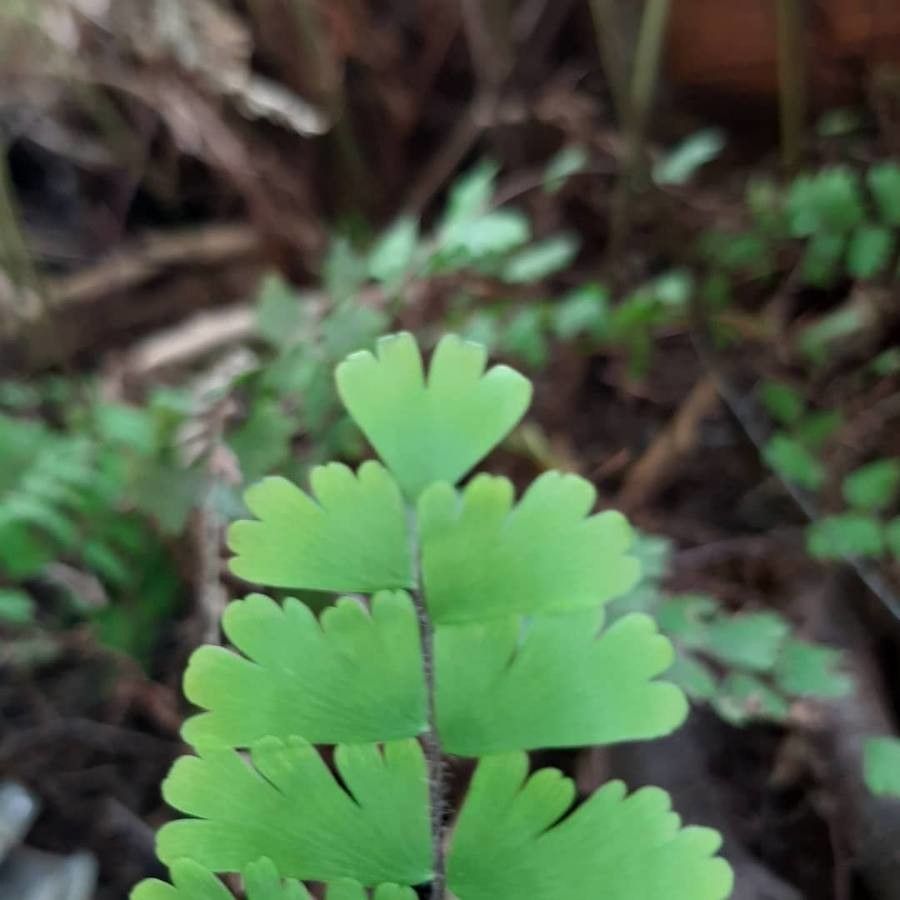
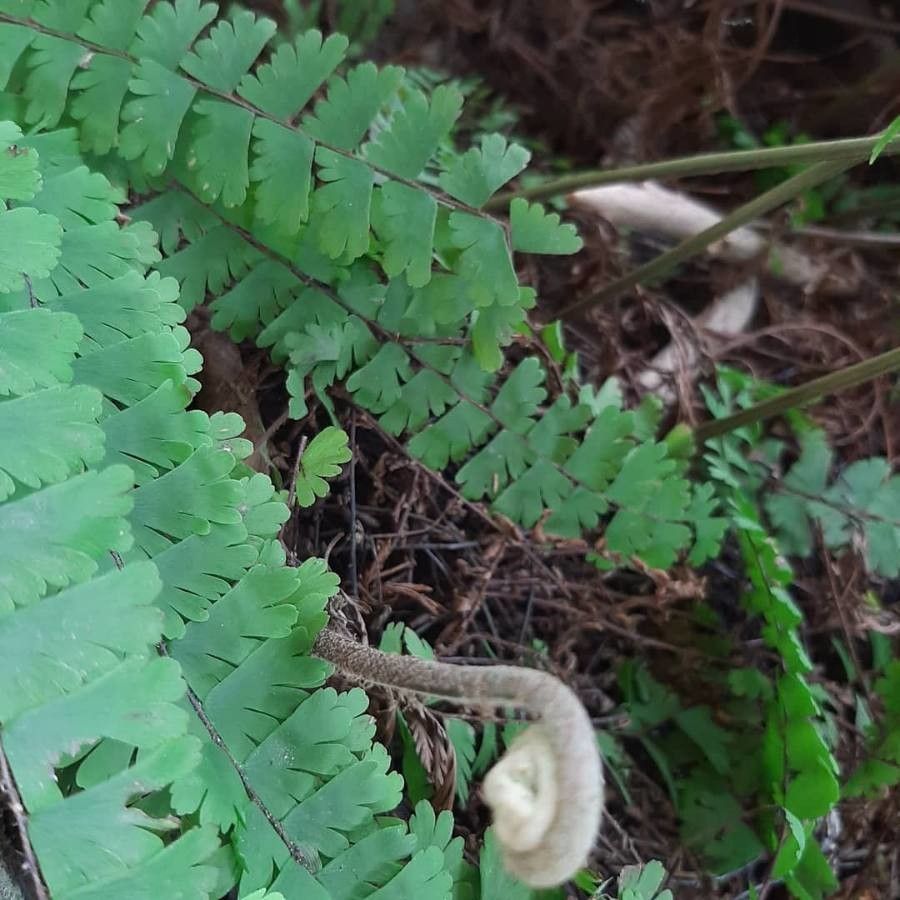
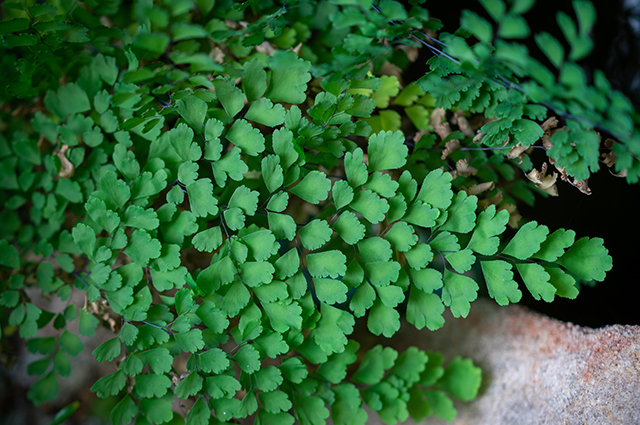
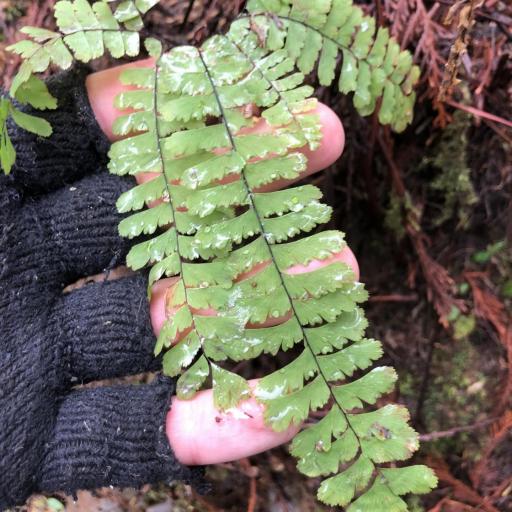
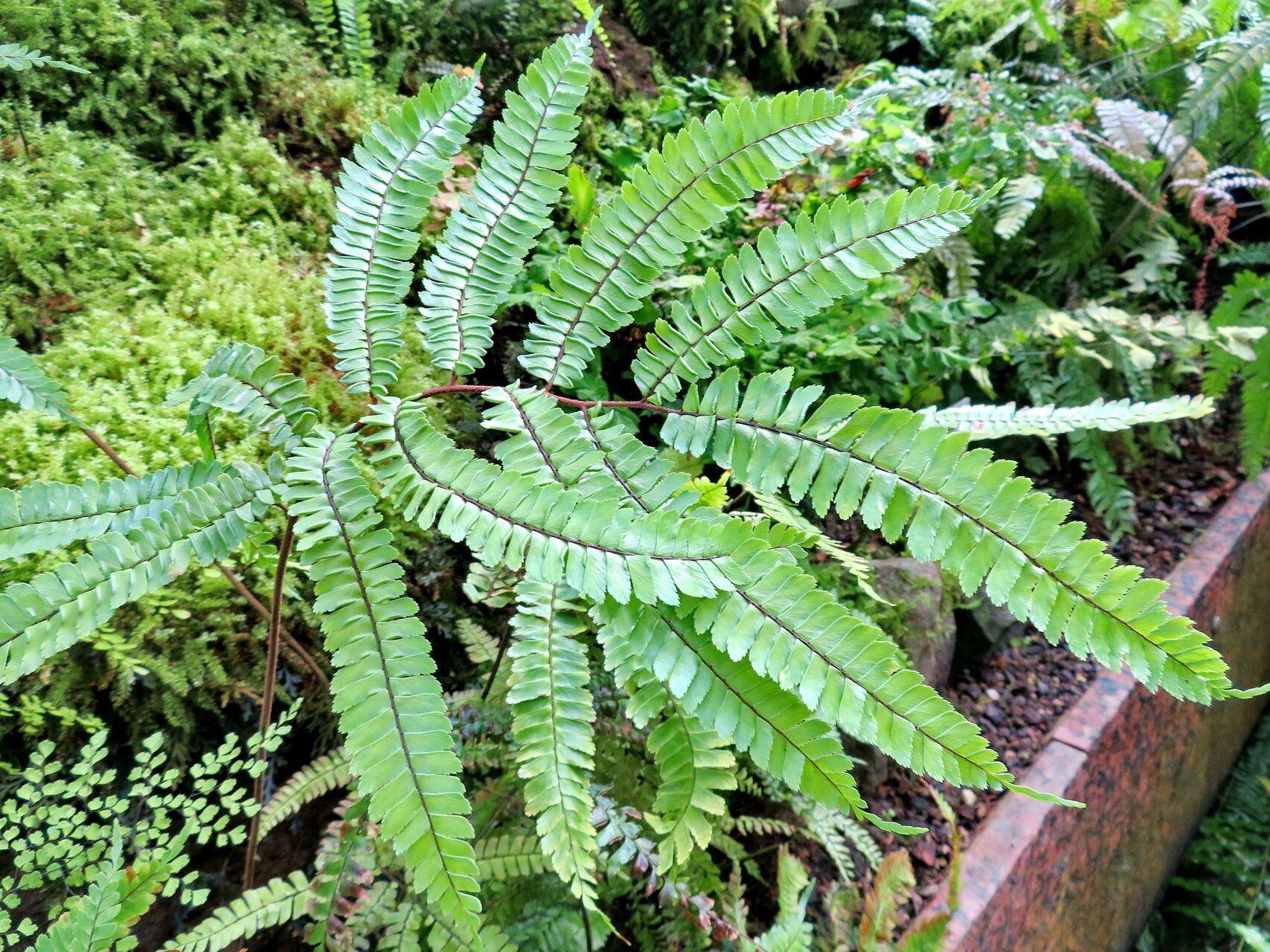
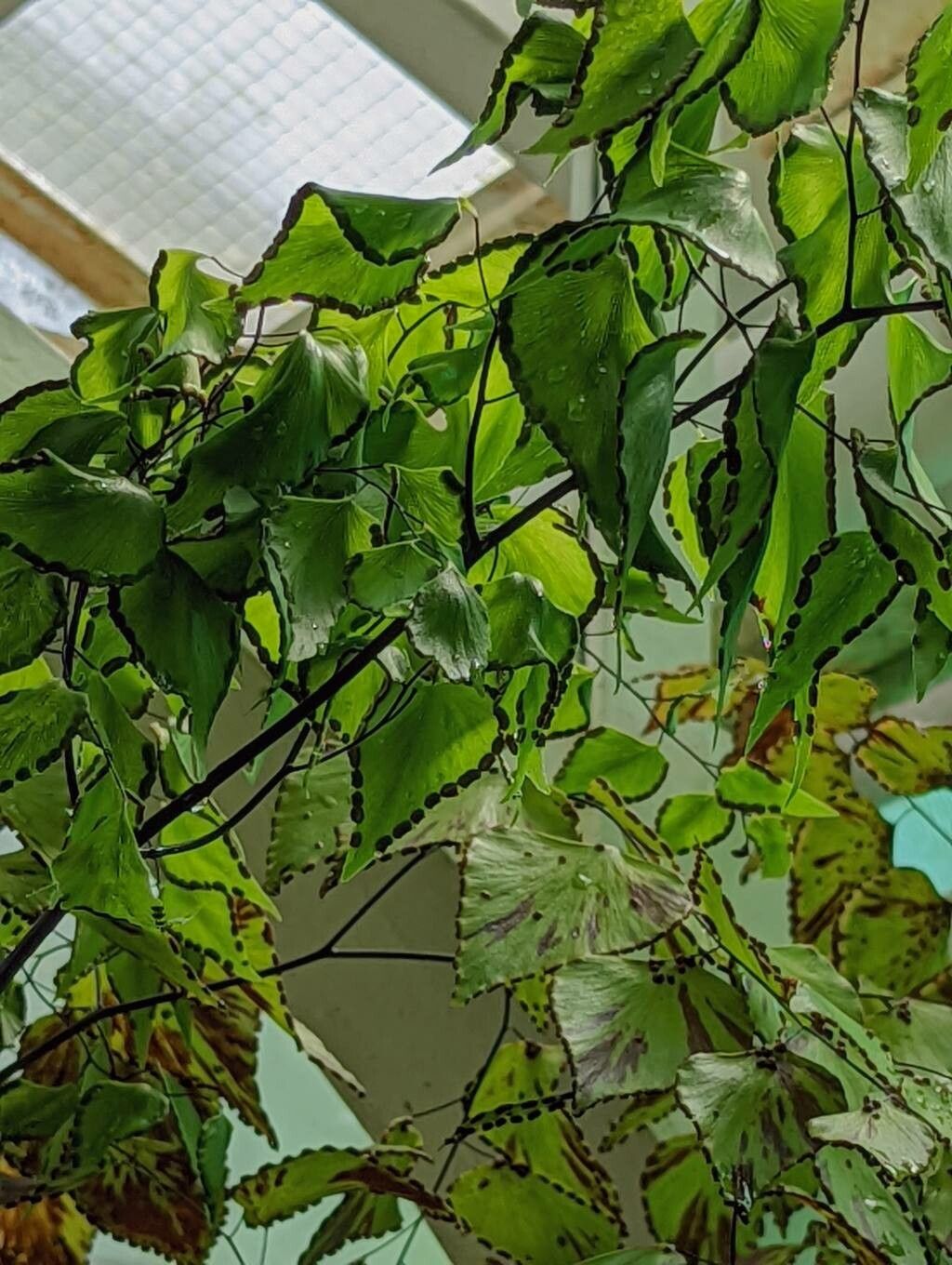
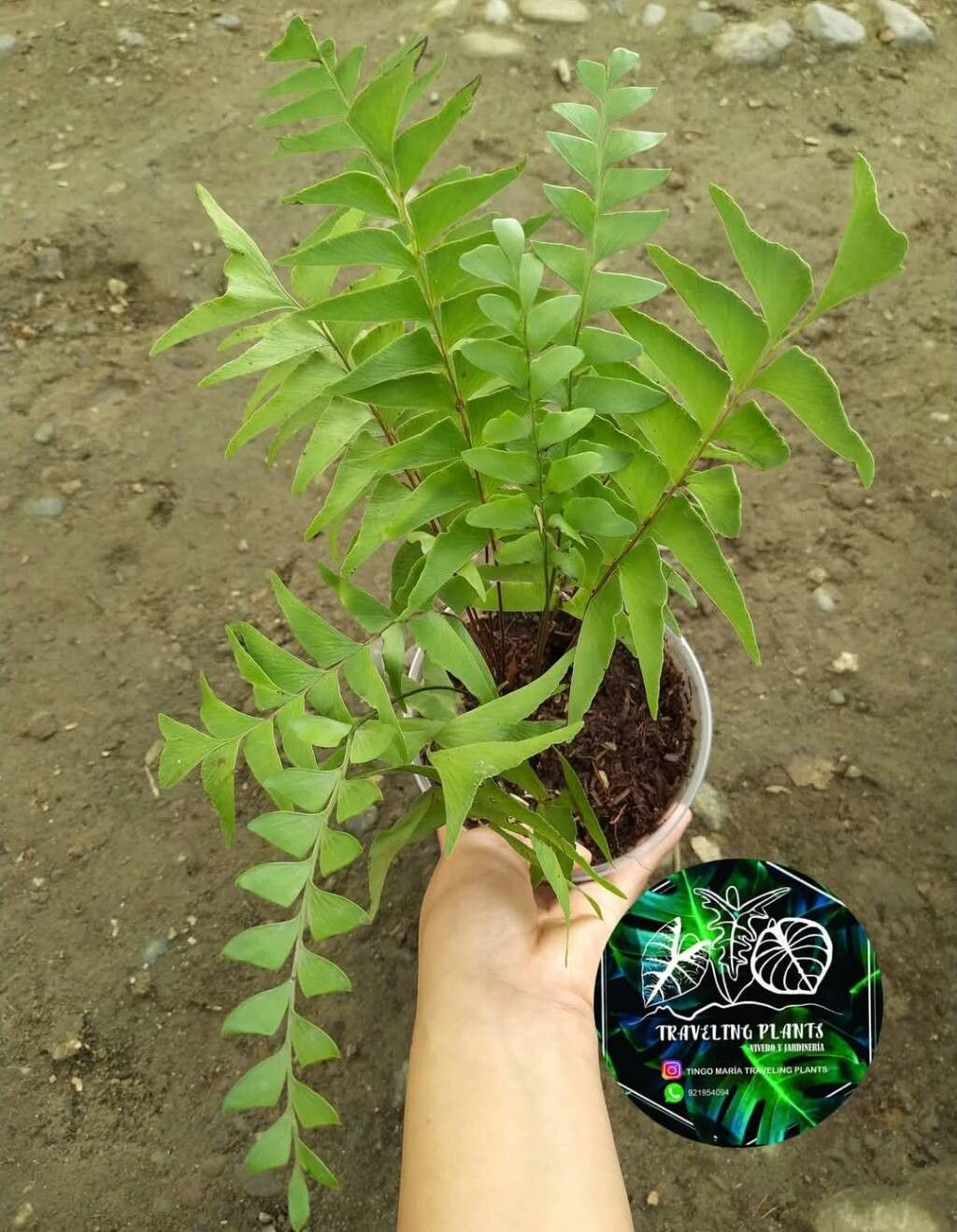
Adiantum aethiopicum, also known as the common maidenhair fern, is a small fern of widespread distribution, occurring in Africa, Australia, Norfolk Island and New Zealand.Adiantum aethiopicum was one of the many species first described by Linnaeus, in this case in his Systema naturae in 1759. The specific epithet aethiopicum in this sense was the Latin term for Africa south of the then known world, that is to say, more or less Africa south of Egypt. In South Africa the species occurs widely, though not generally profusely, mainly on moist sandstone cliffs in full shade. In the Cape Peninsula it is uncommon and grows mainly at the highest locally available altitudes, generally about 600–1,085 m (2,000–3,600 ft).Adiantum aethiopicum grows in spreading clumps of fronds from 10 to 45 cm (4 to 18 in) in height. The rhizomes are wiry and branched. The fronds are horizontal and layered, or upright. They are divided into two or three and have many small wedge-shaped segments, each of which has sori along its margins underneath.A common plant, often seen growing in moist areas. In Australia it is found near by creeks or in open forest, where it may form a large colony.The 1889 book 'The Useful Native Plants of Australia’ records that "This plant is said to possess medicinal properties, being slightly astringent and emetic. It has been used in Europe in making "Sirop de Capt'llaire," a demulcent drink, employed in diseases of the chest."
Delta maidenhair fern typically has good resistance to disease and encounters relatively few insect pests. Its care is considered difficult because it needs a moist environment and frequent watering. The roots, however, are susceptible to rot if the plant is overwatered or if the environment lacks proper ventilation. Delta maidenhair fern is suited to people with some growing experience, as most individuals can keep it alive for a period of time. Still, the plant may struggle to thrive and its leaves can dry out and become less healthy over time.
How to keep Adiantum Aethiopicum.
Light
For the delta maidenhair fern to grow healthily, a balanced amount of sun exposure is required. The plant does best with moderate sunlight but can also perform well in low-light conditions. Too much sunlight can harm its growth, while too little may slow its development.
Water
Maidenhair ferns thrive in humid environments and need consistent moisture, much like the conditions found in tropical rainforests. To keep their foliage lush, water them twice a week. These plants are ideal for indoor settings and do best in well-draining soil. Use containers that avoid waterlogging yet maintain stable moisture levels.
Humidity
This plant will thrive in moderate humidity, which is probably the level in your home. However, misting it a few times a week can be very beneficial. Make sure the room has good ventilation.
Temperature
Delta maidenhair fern originates from moderate climates and prefers temperatures from 68 to 100 °F (20 to 38 °C). In warmer seasons, provide cooler indoor conditions, and in colder seasons, maintain a warmer position to keep it within this comfort zone.
Fertilizer
It's not necessary to fertilize fern, as the plant will do just fine without it. However, if you wish to provide it with an added dose of nutrients, feed with a balanced, diluted blend once a month, avoiding any feed with too much nitrogen (200 ppm or less), which can cause the tips of the leaves to burn. Additionally, regular trimming and the removal of browned leaves can also help the fern grow denser foliage.
Pruning
Maidenhair plants thrive in humid environments and benefit greatly from pruning in early spring. To promote healthy growth and better air circulation, remove any dead fronds. Regularly thinning the plant helps prevent overcrowding, and using sterilized tools reduces the risk of disease. Pruning not only encourages vigorous regrowth but also helps maintain the plant's overall health and appearance.
Pot & Repot
When repotting Delta maidenhair fern, select a pot 1-2 inches (2.5–5.1 cm) larger with good drainage. Use a well-draining potting mix. Repot in spring or fall, ensuring the root ball sits slightly below the rim of the flower pot. Water thoroughly after repotting and place it in a warm spot with indirect sunlight.
Botanical profile.
- Plant Type
- Fern
- Life Cycle
- Perennial
- Genus
- Adiantum
- Family
- Pteridaceae
- Hardiness Zone
- 10-11
- Mature Height
- 30 cm to 61 cm
- Mature Spread
- 30 cm to 46 cm
- Leaf Color
- Green
- Leaf Type
- Evergreen
- Planting Time
- Spring, Autumn
- Native Area
- Mexico, Guatemala, Peru, Trinidad and Tobago, Jamaica, Uruguay, Colombia, Paraguay, Argentina, Bolivia, Venezuela, Brazil, El Salvador, Nicaragua, Ecuador, Costa Rica, Congo (DRC)
Other names.
Reader questions.
What should I do if I give too much or too little water to my Maidenhair?
Maidenhair plants can be overwatered if they are left sitting in water or if their planter lacks drainage holes. Overwatering can prevent the roots from getting nutrients and moisture, and can also lead to the development of fungal or bacterial diseases. Signs of overwatering include wilted and yellow leaves, drooping or mushy stems. However, make sure to check for other causes of these symptoms, as overwatering can be difficult to confirm. On the other hand, underwatering can also be an issue for Maidenhair plants. Without proper vigilance, the plant can become too dry, especially if not using a self-watering planter. In dry conditions, the plant can quickly change from lush and green to brown and crispy. If the plant dries up completely, there might still be a chance to save it if some roots are healthy. Trimming off dry and dead stems, thoroughly watering, and returning the plant to its original location can help revive it. Although it may take a few months, with proper care, the plant can recover and grow new fronds.
Why should I put fertilizer on my Maidenhair plant?
Fertilizing Maidenhair is necessary because it provides extra nutrients for healthy new growth and supports the health of old growth. Additionally, it can help your plant defend against diseases and pests.
What kind of sunlight does Maidenhair require?
To ensure healthy growth, Maidenhair plants need a daily dose of indirect light. The shaded light that filters through a tree canopy is ideal for them. It's important to limit their light exposure to a maximum of three hours per day. If they receive too much light or if the light is too direct, they can burn, dry out, and ultimately perish.
What temperature is best for Maidenhair?
Plants are affected by colder temperatures because they are the same temperature as the air. When exposed to sunlight, plants can warm up, but this doesn't happen in winter. The Maidenhair plant can tolerate temperatures between 70~85℉(21~30℃). It might withstand temperatures as low as 20~30℉(-6~0℃), or even 15℉(-10℃), but not for long due to the risk of frost damage. Ideally, the maximum temperature for the Maidenhair is 70~85℉(21~30℃). To prevent wilting, remember to water them occasionally and provide some shade.
How should I properly water my Maidenhair plant?
To best care for your Maidenhair plant, it is important to keep the soil consistently moist, similar to its natural environment. This may require watering every one or two days. It is crucial to prevent the soil from drying out, so as soon as the top layer feels slightly dry, it is time to water. When watering, make sure to thoroughly soak the soil until water drains out from the bottom of the pot. Afterwards, it is recommended to remove any excess water to avoid the pot sitting in a puddle. This method will help maintain the soil's moisture level and prevent it from getting too dry.
What is the ideal time to fertilize my Maidenhair plant?
The feeding schedule of Maidenhair depends on where it is growing. It doesn't need much food, but some additional nutrients are needed. Outdoor plants should be fertilized once in the spring, while indoor plants should be fed monthly from spring to summer.
Should I make sure Maidenhair doesn't get too much sun?
To ensure the well-being of your Maidenhair plant, it is important to be cautious about its sunlight exposure. Avoid exposing it to direct sunlight for extended periods of time, and refrain from sudden changes in lighting conditions. Morning and afternoon sunlight is generally better tolerated compared to midday sunlight, which is the hottest and most intense. If you are growing your Maidenhair indoors, make sure it is not placed where it can receive direct light from a window. Instead, find a spot that receives indirect light throughout the day, similar to what it would receive if grown outdoors. It is ideal to find the right balance of sunlight from the beginning, whether indoors or outdoors. However, if you notice that your Maidenhair is getting too much light, immediately move its container or transplant it to a more shaded area if it is planted in the ground.
Do I need to change the temperature for Maidenhair as it grows?
To grow Maidenhair successfully, it is important to research and ensure the right temperature conditions. Some growers may choose to lower the thermostat during the growing season to save on HVAC costs. However, it is crucial to understand how temperature can impact flowering, pest management, and plant quality. During winter, certain species of Maidenhair may enter a dormant state, causing growth to cease. As the season changes and temperatures rise, the base temperature for Maidenhair increases and promotes faster growth. Species that naturally thrive in warm habitats have higher optimal temperatures compared to those adapted to cooler climates. Exposing Maidenhair seeds to cooler temperatures can lead to a decrease in uniformity and delays. Lowering the temperature during flowering may be beneficial, but other growth phases require different temperature adjustments. Cooler temperatures at night also reduce water requirements, so irrigation should be adjusted accordingly.
What do I need to think about when watering my Maidenhair?
The frequency of watering your Maidenhair depends on the humidity level in the air. Higher humidity means less watering. Do not place the plant near heating or cooling vents as this will dry it out quickly. Choose a draft-free location. Maidenhair prefers dappled and indirect sunlight, and temperatures between 55-80 degrees F (13-27 degrees C). Avoid placing the fern in a warm and sunny spot on a windowsill as it can become dehydrated. Rainwater or distilled water is best for this plant, but tap water usually works fine in most places. Tap water may cause brown leaf tips due to minerals and chemicals. Small pots can dry out quickly, so give this plant more space in the pot. Consider using a self-watering planter for Maidenhair. It keeps the soil consistently moist, eliminating the need for constant watering. This is beneficial for the roots as they prefer a constant supply of water rather than alternating between dry and wet.
When should I not give fertilizer to my Maidenhair plant?
To avoid excessive growth before winter, do not fertilize after early autumn. Additionally, refrain from fertilizing Maidenhair during hot and dry periods as dry soil is not as effective at delivering fertilizer. Fertilizing during this time can stimulate growth, which requires more water that may not be readily available. It is advisable to fertilize earlier in the season when temperatures are cooler. Lastly, be cautious about unintentionally giving ferns a double-dose of fertilizer as Maidenhair can absorb fertilizer applied to nearby plants or lawns.
What will happen if Maidenhair doesn't get enough sunlight?
The Maidenhair plant doesn't need much light, but it still requires a few hours of light to grow well. If it doesn't get that indirect light, its foliage color may fade and its growth may be stunted. However, the Maidenhair is more likely to suffer from too much sunlight than from a lack of sunlight because it prefers shady conditions.
How can I make sure the Maidenhair plant stays warm during cold seasons?
To help the plant endure colder temperatures, stop applying fertilizer to prevent new growth. Instead, allow the existing foliage to become hardy. To protect the plant from the cold, you can create structures like cages or trellises around it. Another option is to use heat mats to warm the soil, as they can consistently maintain an ideal temperature range for the plant.