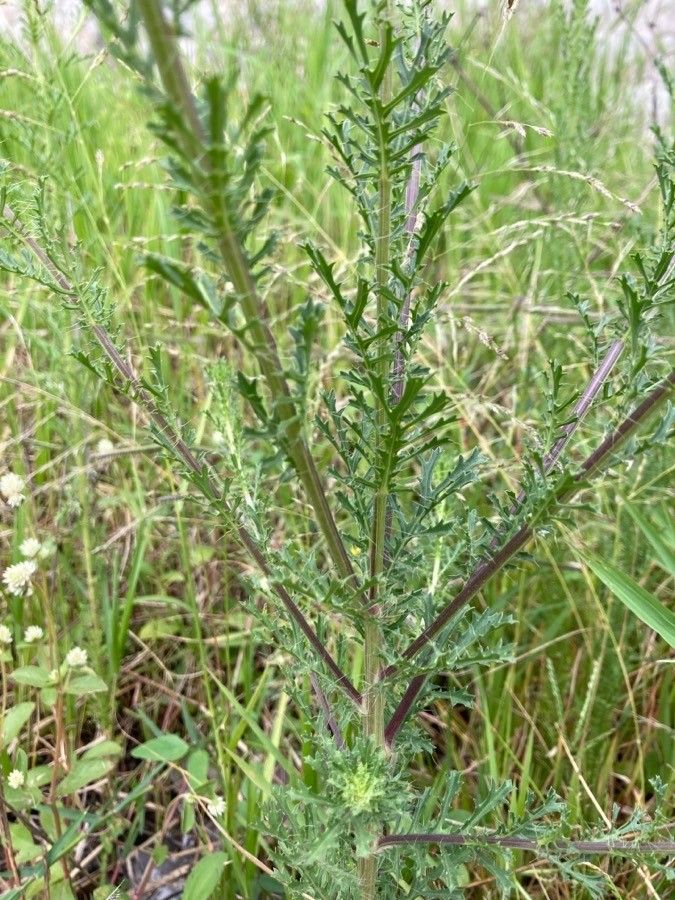
Adenophyllum porophylloides is a species of flowering plant in the family Asteraceae known by the common names San Felipe dogweed and San Felipe dyssodia. It is native to the Sonoran and Mojave Deserts of the southwestern United States (Arizona, California, Nevada) and northwestern Mexico (Sonora, Baja California, Baja California Sur).Adenophyllum porophylloides is an aromatic desert subshrub with several branching stems reaching a maximum height near 60 centimeters. The sparse, clawlike leaves are divided into sharply pointed linear lobes that bear prominent resin glands. The foliage has an unpleasant scent. The inflorescence is borne on a peduncle several centimeters long. The flower head is cylindrical and lined with phyllaries with large resin glands on them. The tip of the head blooms with bright yellow to reddish orange disc florets. There are sometimes short, stubby yellow to reddish ray florets along the rim. The fruit is an achene about 5 millimeters long with a bristly, scaly pappus.
San Felipe dogweed has strong resistance to diseases and typically does not suffer from them. Still, it can be vulnerable to the pests and illnesses present in its environment. When infections do occur, they are generally mild. Regarding maintenance, this plant is moderately demanding. It should be pruned on a regular basis to preserve an attractive appearance and encourage healthy growth. Applying fertilizer can also aid in stimulating blooms. San Felipe dogweed is well suited for people who have outdoor areas like a garden or patio and does not demand extensive gardening experience. If cultivated indoors, it may need a higher level of care.
How to keep Adenophyllum Porophylloides.
Light
San felipe dogweed is a sun-loving perennial herbaceous plant native to open habitats, often flourishing in meadows and grasslands. It prefers full sun but can also tolerate partial sun.
Water
Native to arid regions, San Felipe dogweed is highly drought-tolerant and thrives with minimal moisture. It should be watered once a week, allowing the soil to dry out between watering sessions. This plant is perfect for rock gardens and desert landscapes, as it flourishes in full sunlight and can benefit from the occasional rainfall.
Temperature
San felipe dogweed comes from tropical areas, where the climate is generally warm and humid. For that reason it is well suited to high temperatures and humidity. It does not tolerate abrupt temperature changes and prefers a consistent temperature, so avoiding fluctuations indoors is important. It typically cannot endure cold temperatures and needs warmer conditions to grow. If the surrounding temperature falls too low, the plant may stop growing or even die.
Fertilizer
San felipe dogweed needs the most fertilizer during its active growth period, which takes place mainly in spring, summer, and early fall. Fertilization is required to supply essential nutrients the soil might be missing, encouraging healthy root and stem growth as well as the attractive foliage that is a notable trait of this plant.
Pruning
San Felipe dogweed is known for its vibrant foliage and pleasant aroma. To encourage healthy growth, prune the plant in early spring by removing dead stems and lightly trimming the outer growth. This improves airflow and reduces the risk of disease. Be sure to use sharp, clean tools for precise cuts to maintain optimal plant health.
Botanical profile.
- Plant Type
- Herb
- Life Cycle
- Perennial
- Genus
- Adenophyllum
- Family
- Asteraceae
- Hardiness Zone
- 9-11
- Mature Height
- 61 cm
- Mature Spread
- 61 cm
- Leaf Color
- Green
- Leaf Type
- Evergreen
- Flower Color
- Yellow
- Flower Size
- 0.76 cm to 1.27 cm
- Bloom Time
- Mid spring, Late spring, Summer, Early fall
- Planting Time
- Summer
- Harvest Time
- Summer, Fall
- Native Area
- Mexico
Other names.
Reader questions.
How should I water my San felipe dogweed?
To properly water the San Felipe dogweed, it is recommended to use filtered water at room temperature. Tap water may contain harmful particles that can negatively impact the plant's health. This plant prefers warmer water as it is accustomed to a warm environment, so using cold water should be avoided as it can potentially shock the plant. Additionally, it is best to avoid overhead watering to prevent leaf problems. Instead, simply pour the filtered room temperature water onto the soil until it is completely soaked. This method benefits the plant by ensuring the roots receive ample moisture and can effectively spread through the soil to obtain necessary nutrients.
What kind of sunlight does San Felipe dogweed require?
San Felipe dogweed is a type of plant that requires full sun every day. In order to maintain healthy leaves, roots, and blooms, these plants need at least six hours of sunlight. While it is generally true that most perennials also require six hours of sunlight per day, there are some exceptions. For instance, plants such as the Orange Daylily or Giant Coreopsis can survive with as little as three hours of sunlight each day. However, it is important to note that even though these flowering perennials can tolerate three hours of direct sunlight, they will not reach their full potential and thrive as they would in sunnier conditions.
What should I do if I give my San Felipe dogweed too much water or too little water?
Both overwatering and underwatering can harm the health of your San felipe dogweed, but overwatering is more commonly seen. When this plant receives excessive water, its stems and leaves may wilt and turn yellow. Overwatering for an extended time can also cause diseases like root rot, mold, and mildew, which can be fatal. Underwatering is less likely for the San felipe dogweed due to its decent drought tolerance. However, it is still possible, and in such cases, the leaves may become brittle and brown. It is important to quickly recognize the signs of overwatering when caring for your San felipe dogweed. Some diseases resulting from overwatering, such as root rot, may be irreversible if not addressed promptly. If you notice early signs of overwatering, reduce your watering schedule immediately. Additionally, assess the soil quality in which your San felipe dogweed is growing. If the soil drains poorly, replace it with a loose, well-draining potting mix. Conversely, if you observe signs of underwatering, simply water more regularly until those signs disappear.
Can the sun harm San Felipe dogweed? How can you keep San Felipe dogweed safe from sun and heat damage?
In warm climates, some Perennial Flowering Plants may struggle with excessive heat and suffer from sun damage. They can wilt, dry out, or even experience growth problems if they are consistently exposed to the intense afternoon sun. However, not all plants require protection from the light afternoon sun. For those that are harmed by intense afternoon exposure, it is recommended to provide them with some shade in warmer climates. Gardeners can achieve this by planting these plants in areas that do not receive direct heat during the afternoon, such as under trees or behind bushes.
How often do I need to water my San felipe dogweed plant?
If your San felipe dogweed is in a pot, you can check if it needs water by sticking your finger into the soil. If the top two to three inches of soil are dry, it's time to water it. The same method applies if you grow it in the ground outdoors. During spring and early fall, watering once a week is usually enough, but during hot weather you may need to water it twice or more per week. However, mature and well-established San felipe dogweed can survive drought quite well.
Should I make sure that the San Felipe dogweed doesn't get too much sun?
Certain perennial plants require ample sunlight to reach their maximum bloom. However, in warmer climates, some of these plants actually benefit from less sun. For instance, individuals residing in hotter regions might find it beneficial to shade their flowering perennials during the intense afternoon sun, especially during summer months. Although many perennial flowering plants prefer partial shade in the hottest climates, there are exceptions. Take the Giant Coreopsis, for example, as it is not bothered by excessive sun exposure. These plants can flourish even when placed in the full sun during scorching weather.
How much water does my San Felipe dogweed plant need?
To properly water your San Felipe dogweed, it's important to give it a generous amount of water. Make sure the top two to three inches of soil are dry before watering. When watering, saturate the soil completely, allowing excess water to flow out of the drainage holes in the bottom of the pot. If you don't see water draining out, you might not have given enough water. However, be careful not to let water accumulate in the soil, as this can harm the plant. On the other hand, if water doesn't drain properly, it may indicate that the soil is not well-draining, which can also be harmful to the plant. If the dogweed is outdoors, 1 inch of rain per week should be enough.
What will happen if the San Felipe dogweed doesn't get enough sunlight?
If your San Felipe dogweed isn't receiving enough sunlight, you'll see signs that its needs are not being met. The plants won't produce as many blooms as they would with full sun exposure. While some plants may develop dry spots on their leaves, most will still bloom, although the flowers will be smaller and less full.
How do I water my San Felipe dogweed when it's growing at different stages?
The water needs of the San felipe dogweed can vary depending on its growth stages. When the plant is in its early years or has just been transplanted, it requires more water than usual. During these stages, the plant focuses on growing new roots, which require extra moisture to support future growth. However, as the plant matures, it will require less water. Another stage that may require more water is during the bloom period when the plant is developing flowers, which utilize a significant amount of moisture.
Do San Felipe dogweed plants need extra attention to how much sunlight they get in each stage of growth?
San Felipe dogweed is a great flower for gardens, and it blooms best when it receives at least six hours of sunlight each day. However, during extremely hot periods, it is beneficial to provide partial shade to help the flowers stay fresh for longer. For young San Felipe dogweed plants, it is important to ensure they receive ample sunlight without being exposed to intense afternoon heat. On the other hand, fully mature plants should be given plenty of sunlight to support their growth properly.
How do I water my San Felipe dogweed throughout the year?
The San felipe dogweed has different water needs depending on the season. In the hottest months of the year, particularly during the peak of summer, it will require more frequent watering. You might need to water it more than once per week, depending on how quickly the soil dries out. However, during the winter, the plant goes into a dormant phase and needs much less water. In fact, you may not need to water it at all during this time. If you choose to water it in winter, do so sparingly, around once per month. Overwatering at this time can increase the risk of disease for the San felipe dogweed.
How much light does the San Felipe dogweed need to make food?
The San Felipe dogweed requires at least six hours of light for optimal photosynthesis. These flowering plants rely on sunlight for their foliage and blooms to thrive. On the other hand, perennial flowering plants like the Giant Coreopsis need between eight to twelve hours of full sun daily to sustain their large flowers and healthy foliage.