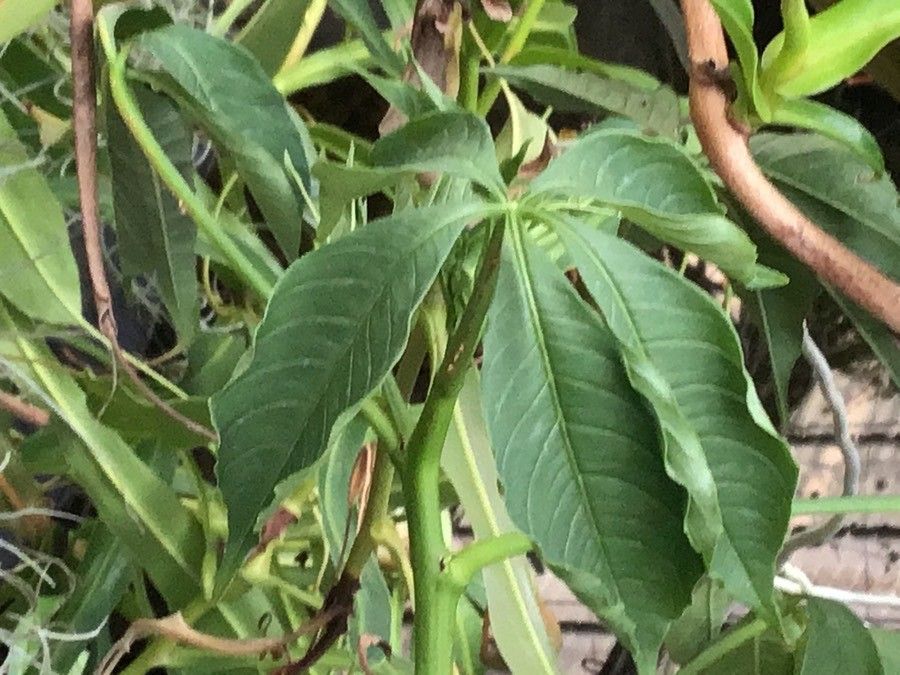
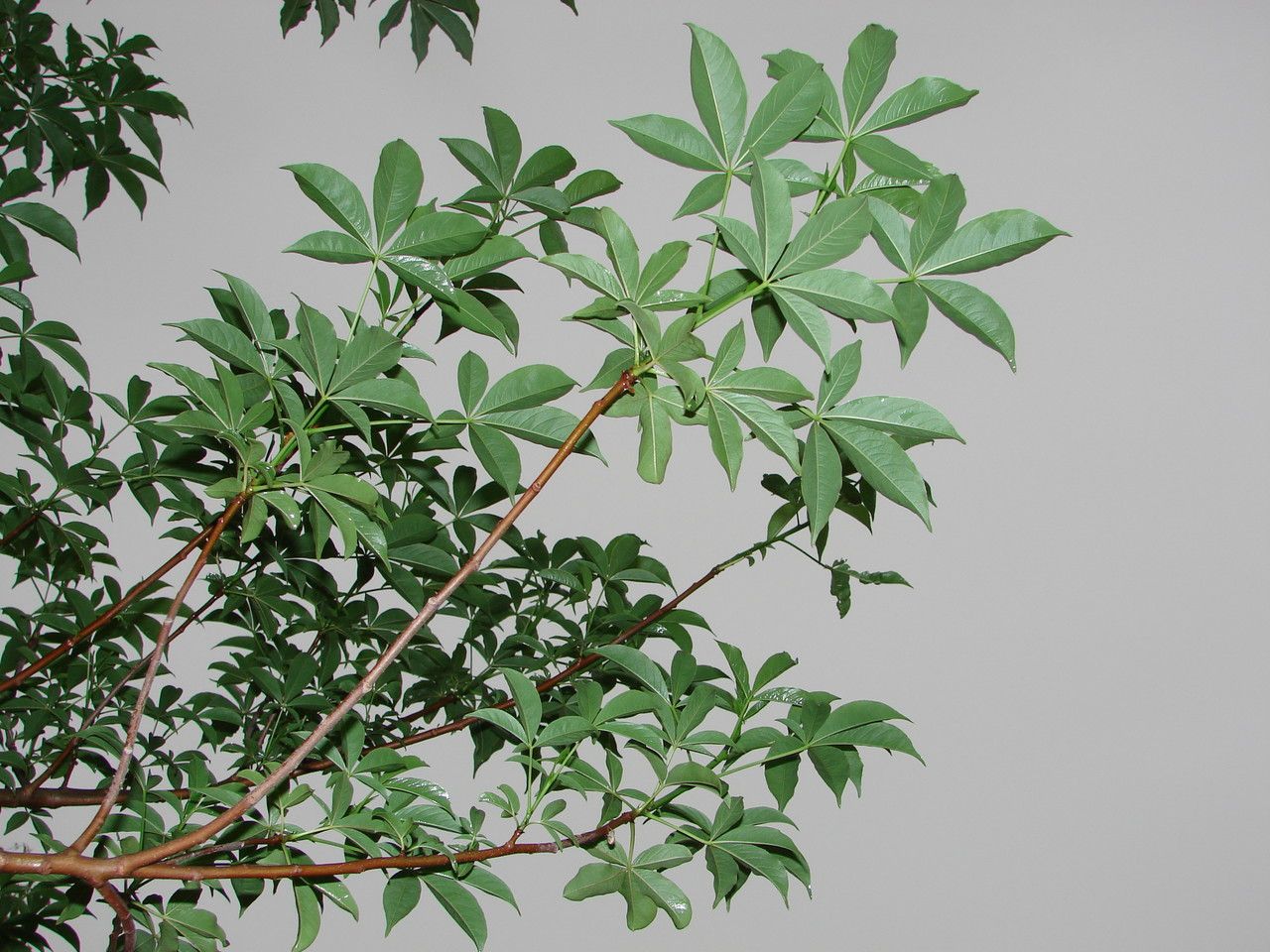
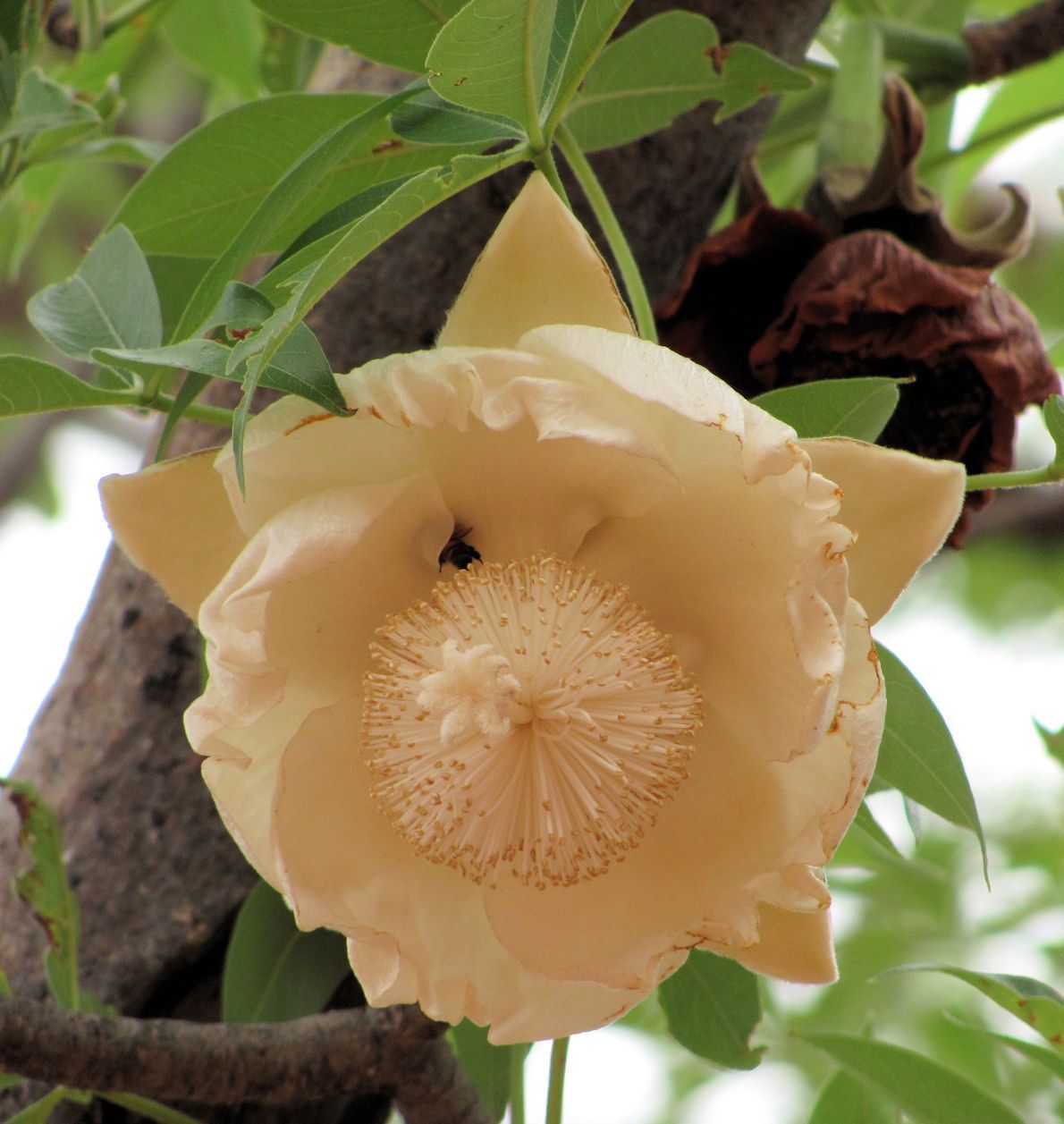
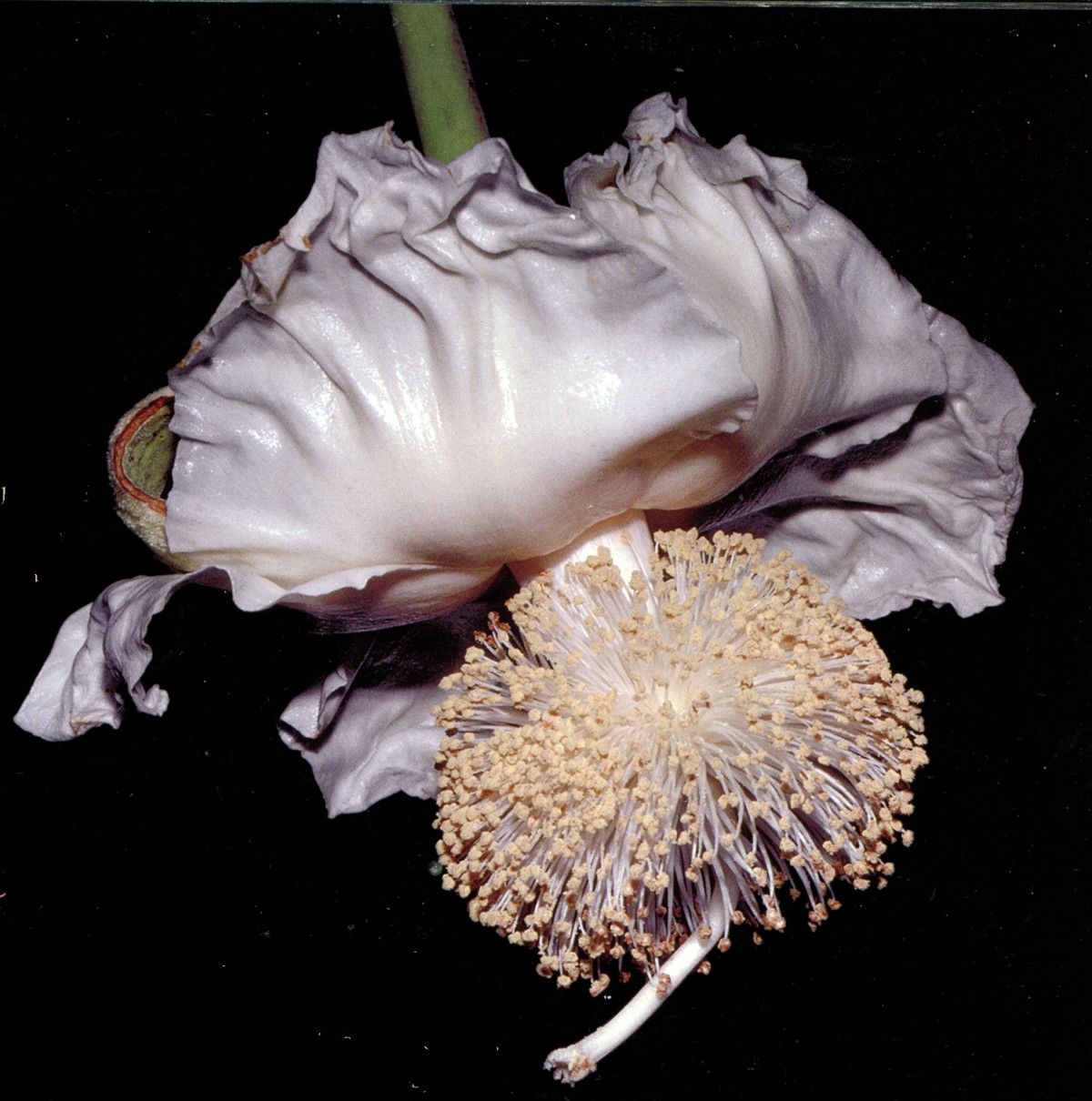
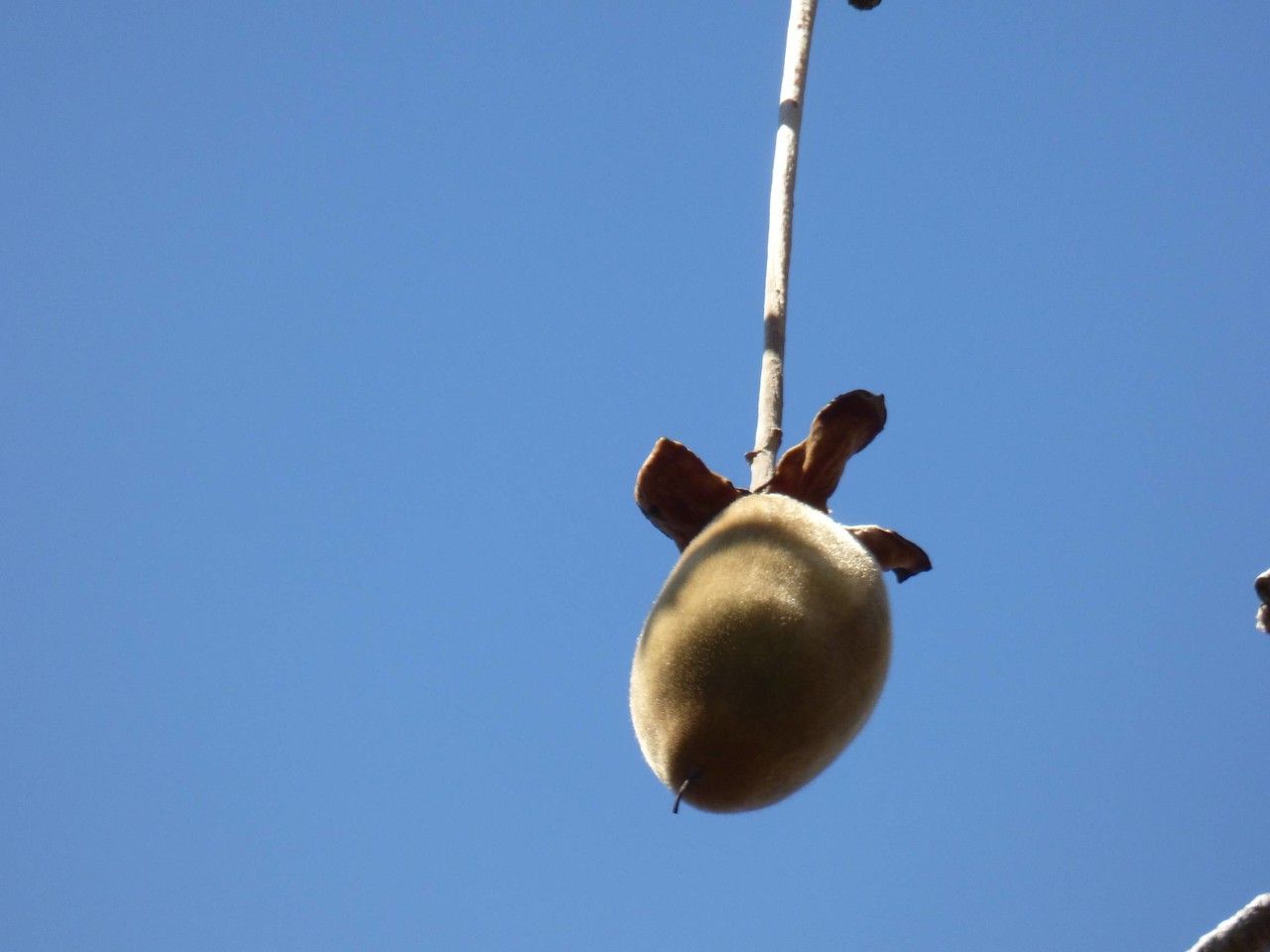
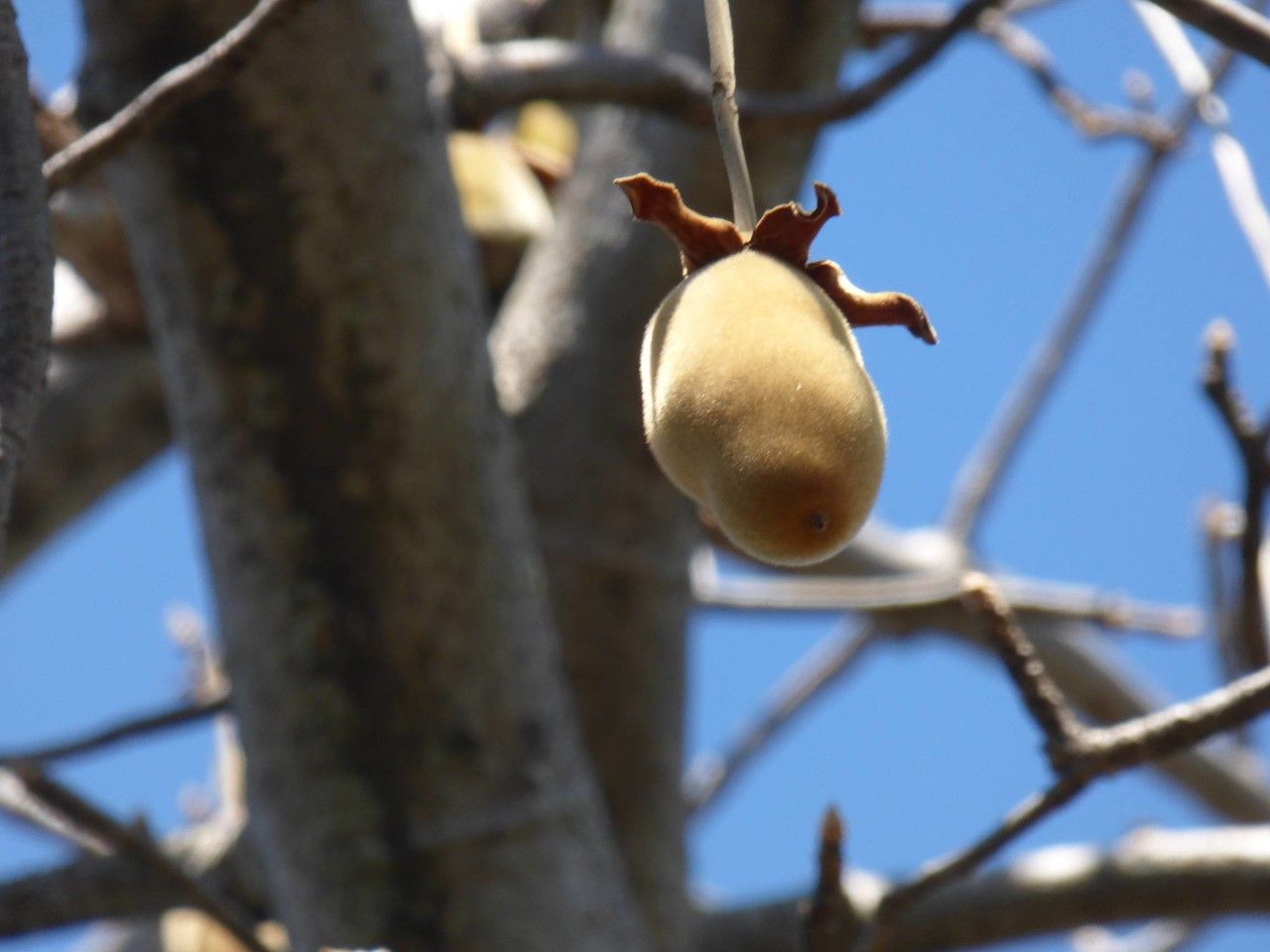
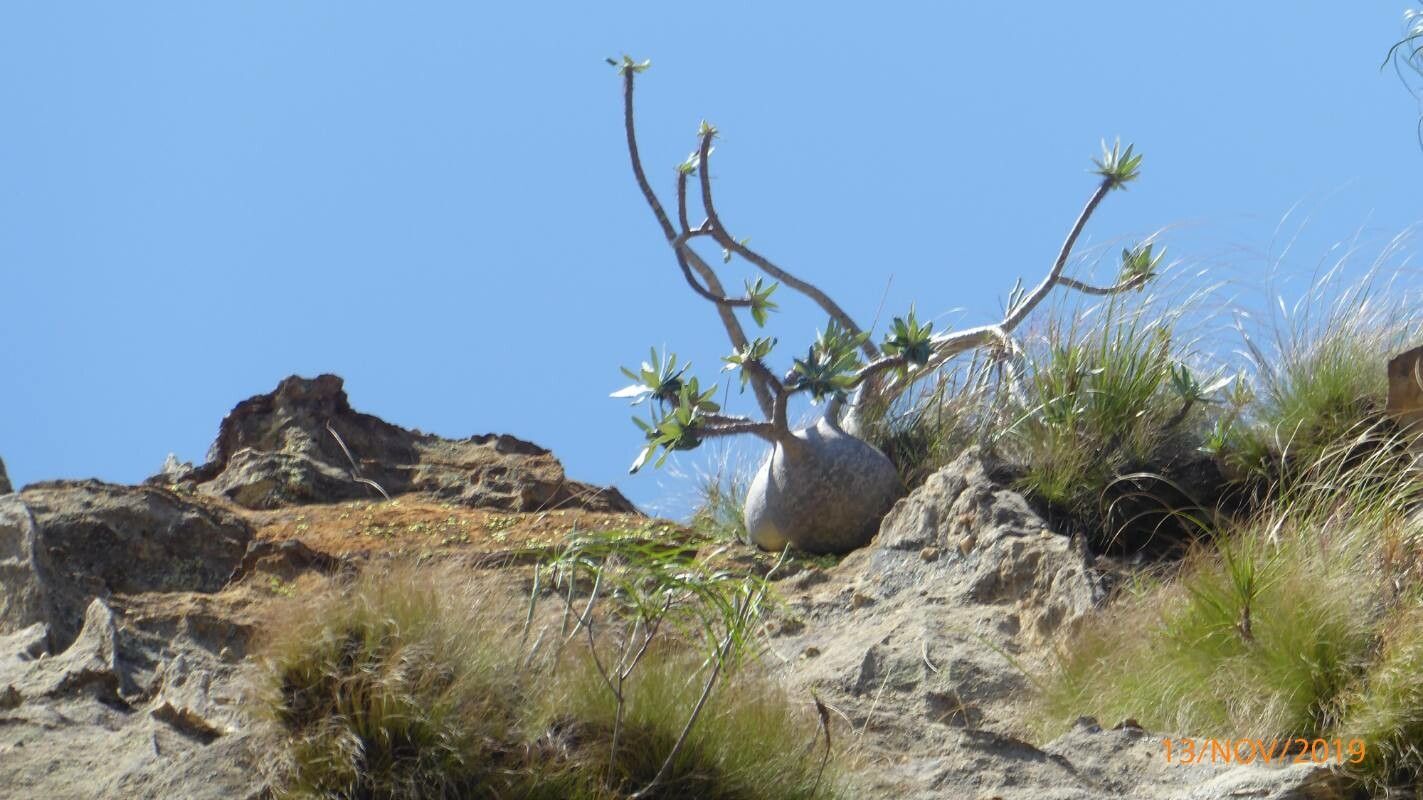
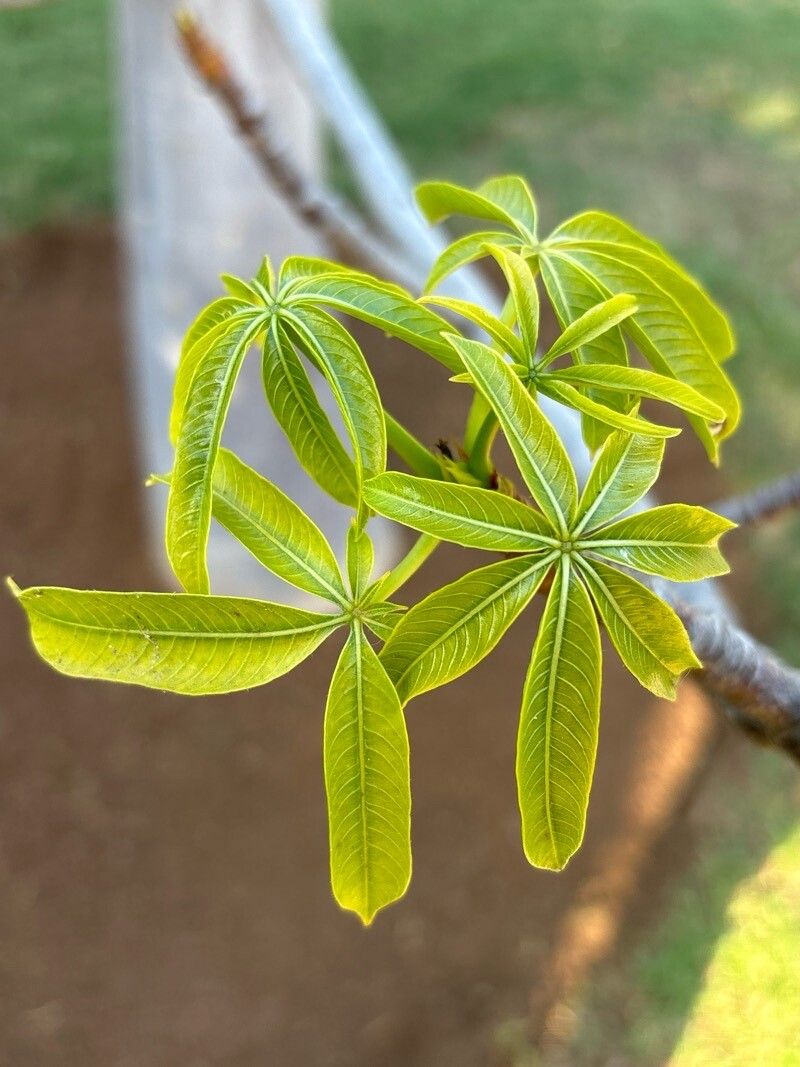
Adansonia digitata, commonly known as the baobab tree, is a large and iconic species native to Africa. Recognizable by its distinctive appearance, the tree boasts a thick trunk that can reach up to 10 meters in diameter and branches that resemble roots. Baobab trees can live for thousands of years and are well-adapted to survive in harsh, low-water environments. The leaves of the baobab tree are compound and deciduous, meaning they fall off during dry seasons. The tree's large, white or cream-colored flowers have five petals, bloom at night, and are pollinated by bats or moths. The baobab tree produces a large, capsule-like fruit filled with pulp and seeds coated in a powdery substance. This nutrient-rich pulp has been used for centuries by African communities as a food source. Beyond its nutritional value, the baobab tree holds cultural significance and its bark has been used medicinally to treat various ailments, including fever and diarrhea. Today, Adansonia digitata faces threats from deforestation fueled by human activities such as logging and agricultural expansion. Conservation efforts across Africa aim to protect this iconic species from further decline.
Baobab has strong resistance to diseases and is generally not susceptible to them. In terms of care, the plant is fairly low-maintenance. When grown outdoors it needs little watering, and larger specimens usually do not need pruning. However, smaller plants should be pruned after they have bloomed. Baobabt is appropriate for anyone with an outdoor area, such as a garden or deck, and does not require much experience in plant care.
How to keep Adansonia Digitata.
Light
The baobab needs a considerable amount of light and does best in places where bright sunlight is present throughout the day. Coming from a habitat with abundant sun, it copes poorly in reduced light. Both too little and too much light can hamper its healthy development.
Water
The baobab tree is well-suited for arid environments because it stores water in its thick trunk, which helps it survive during droughts. It prefers infrequent watering, about once every four weeks, to mimic its natural dry habitat. While it is usually grown outdoors, the baobab thrives during seasonal rains that support its growth cycles.
Temperature
Baobab prospers in its native balmy climates, preferring temperatures between 68 and 100 °F (20 and 38 °C). Seasonal adjustments are seldom needed, since baobab is well adapted to heat and can withstand high temperatures.
Fertilizer
Use organic fertilizers (for example, fish emulsion or compost) instead of chemical fertilizers for Baobab. Give young plants higher levels of nitrogen and phosphorus in spring. Mix compost or fertilizer into the soil either before or after planting. For mature trees, add a balanced fertilizer or one targeted to specific deficiencies in spring. Nutrient shortages lead to small leaves, short branches, yellow or bronze foliage, acidic fruits, early fruit drop, and fruit splitting.
Pruning
The baobab tree is known for its distinctive swollen trunk and long lifespan. To keep the tree healthy, it is best to prune it in late winter. Focus on removing dead or crowded branches to enhance airflow and allow more sunlight to reach the tree. Pruning carefully promotes healthier growth, but be cautious not to over-prune, as this can stress the tree. For more detailed advice, consider consulting an expert.
Toxicity
Almost all tree parts are considered safe and edible as they are used in plenty of foods and medicines in Africa.
Further reading →
The toxicity and danger assessments provided are for reference only. We do not assure their accuracy, so it's crucial not to depend on them. Seek professional advice when necessary for accurate guidance.
Botanical profile.
- Plant Type
- Tree
- Life Cycle
- Perennial
- Genus
- Adansonia
- Family
- Malvaceae
- Hardiness Zone
- 10-13
- Mature Height
- 4.57 m to 24.38 m
- Mature Spread
- 14.94 m
- Leaf Color
- Green
- Leaf Type
- Deciduous
- Flower Color
- White
- Flower Size
- 12.70 cm to 15.24 cm
- Bloom Time
- Early summer, Mid summer
- Planting Time
- Spring, Autumn
- Harvest Time
- Spring, Late summer, Fall, Winter
- Native Area
- Burkina Faso, Somalia, Angola, Namibia, Eritrea, Nigeria, Yemen, Kenya, Niger, Uganda, Tanzania, Zimbabwe, Mali, Guinea-Bissau, Benin, Sierra Leone, Cameroon, Mozambique, Oman, Ghana, Ethiopia, Botswana, Congo, Central African Republic, Malawi, South Africa, Zambia, Sudan, Mauritania, Guinea, Chad, Togo, Senegal, Gambia, Congo (DRC)
Other names.
Reader questions.
How should I water my Baobab tree?
To promote excellent root development in your plants, it's best to use a garden hose at the base of the plant. Avoid spraying water directly on the leaves, as this can be detrimental. If your plants are outdoors and exposed to direct sunlight, keep in mind that the leaves may require more water. Using bubblers or soaker hoses can help moisten the roots effectively. When adding or removing plants, consider using soaker hoses that cover the entire garden or bed to ensure deep root watering. After watering, make sure to drain any excess water and allow the soil to dry before watering again. It's recommended to water at ground level to prevent diseases. Additionally, on a sunny day, you may opt to spray the entire bush with water. Whether your Baobab plant is potted or in-ground, remember that it prefers deep watering rather than light sprinkling.
Why should I put fertilizer on my Baobab plant?
Fertilization is crucial for the overall health and well-being of a Baobab tree. By providing the necessary energy and nutrients, your Baobab will develop a healthy foliage and sturdy stems and branches. Gardeners often value the flowers of a Baobab the most, and luckily, fertilization plays a key role in helping the plant produce large, vibrant, and long-lasting flowers. The right type of fertilizer improves the transport of fuel from the roots to the flowers through the stems, resulting in better flower growth. Additionally, proper fertilization maintains the plant's overall health, enhancing its ability to resist diseases.
What are the sunlight requirements for a Baobab plant?
The Baobab plant requires full sun, meaning it needs more than 6 hours of sunlight daily to thrive best. It's essential to observe the movement of sunlight through your garden or space to ensure your Baobab gets a perfect balance of light and shade. This ensures the plant's happiness and optimal growth. Originating from environments with abundant sunlight, the Baobab does not perform well in low-light conditions, and both insufficient and excessive light exposure can impair its healthy growth.
What is the origin and preferred climate for Baobab?
Baobab originates from tropical regions, which means it thrives in warm and humid climates. It is well-adapted to high temperatures and humidity, preferring a stable temperature environment without sudden changes. Since Baobab is not tolerant of cold temperatures, it requires warmer conditions for growth. It is essential to keep the plant indoors in a consistent warm environment, especially if the external temperatures drop significantly.
What should I do if I give Baobab tree too much or too little water?
An overwatered Baobab can exhibit several signs of distress. Its leaves may turn yellow, drop off, and wilt, giving the plant a dull and unhealthy appearance. Mushy stems may also be present. If these symptoms manifest, it is advisable to adjust your watering schedule accordingly. It is important to note, however, that wilting can also indicate under watering. In such cases, the leaves may become crispy and dry, contrasting with the soft, wilted leaves of an overwatered plant. To address this issue, check the soil for dryness and provide a thorough watering when necessary. Although adequate water can facilitate the Baobab's recovery, the plant may still display dryness and yellowing leaves due to root damage for a few days. Once the plant returns to normal, the yellowing of leaves should subside. When growing a Baobab indoors, always monitor the moisture levels in the pot and avoid overwatering. Keep an eye out for the presence of black spots, which could indicate excessive watering. In such instances, allow the soil to dry out by refraining from watering for a few days. Overwatering can lead to root rot, and if identified, it may be beneficial to transfer the plant to a different pot, especially if the roots appear discolored and slimy. It is crucial to prevent root rot by avoiding excessively soggy soil. When planting a Baobab outdoors, ensure that the soil is sufficiently moist. If the soil feels excessively dry when checked with your fingers, it could be an indication of under watering. In such cases, providing adequate watering is necessary to aid the plant's recovery.
When should I put fertilizer on my Baobab tree?
To ensure optimal growth and flower development, it is best to fertilize your Baobab during early spring when it is emerging from its dormant phase and preparing to blossom. This provides the plant with the necessary energy for overall growth. However, it is not only during this time that feeding is beneficial. A smaller feeding at the end of the season in the fall can also benefit the plant. Some gardeners may choose to fertilize while planting, but this is not always required.
How can artificial lighting benefit indoor Baobab plants?
For indoor Baobab plants, artificial lighting can compensate for the lack of natural sunlight, especially in winter or less sunny spaces, promoting faster and healthier growth. LED lights are recommended because they can be tailored to provide specific light wavelengths needed by plants. Full sun plants require 30-50W/sq ft of artificial light, partial sun plants need 20-30W/sq ft, and full shade plants need 10-20W/sq ft. The light source should be placed 12-36 inches above the plant, mimicking natural sunlight as closely as possible. The duration of exposure should replicate natural daylight hours, with most plants needing 8-12 hours of light per day.
How should I care for Baobab during colder seasons?
During the colder seasons, it's recommended to bring outdoor-grown Baobab plants indoors to protect them from the cold. You should place the plant near a bright window to ensure it gets enough sunlight but keep it at a certain distance from heaters to avoid overheating. Maintaining indoor temperatures above 20\u00b0C is crucial for the health of the Baobab during winter. Exposing the plant to temperatures near or below 5\u00b0C can be detrimental and potentially lead to the plant's death.
How often do I need to water my Baobab tree?
The Baobab tree prefers deep and infrequent watering, especially when in pots. To ensure proper hydration, soak them with a gallon of water each time. Potted plants have limited water storage and the soil dries out faster, so watering every 3 to 5 days is necessary in cold regions. Watering in the morning is best, when the soil is dry, both indoors and outdoors. You can also check the soil to see if it needs watering. If the top 2-3 inches of soil are dry, it's time for a full watering. During hot days, check the moisture daily as the heat can dry out the soil quickly in pots. For gardens, irrigation is also necessary. In hot climates, watering once a week is recommended. Only water when the soil is about 2-3 inches dry, both indoors and outdoors. Take into account the amount of rainwater received to avoid overwatering and prevent root rot. If there is abundant rainfall, additional watering may not be needed. Baobab trees usually grow during spring and fall. When outdoors, adding a 3 to 4-inch deep layer of mulch helps conserve water. The type of soil also determines watering frequency. Sandy soil drains faster, so more frequent watering is required. With clay soil, watering can be less frequent, allowing the plant to dry for 2-3 days without risking root rot. To keep track of watering, mark the dates on a calendar. If you notice the leaves starting to droop, it may be an indication that watering is needed soon.
When is it not a good idea to put fertilizer on my Baobab?
During the winter, Baobab plants are in a dormant phase and do not require fertilization. As with many plants, they do not need a lot of energy from the soil to grow during this time. Fertilizing in winter can lead to the negative effects of overfertilization. The best times to feed a Baobab are in early spring and fall. Therefore, during most of spring and summer, fertilizer is not necessary. It is also advised to avoid feeding the plant if it is experiencing excessively hot or dry conditions.
What symptoms indicate a Baobab is receiving insufficient sunlight?
When a Baobab doesn't receive enough sunlight, it may exhibit symptoms such as smaller new leaves, leggy or sparse growth, faster leaf drop, slowed or ceased new growth, lighter-colored new leaves, and symptoms of overexposure like chlorosis, sunscald, leaf curling, wilting, and leaf scorching. These symptoms reflect the plant's struggle with inadequate sunlight, affecting its chlorophyll production, nutrient absorption, and overall health.
What are the symptoms of Baobab under low temperature conditions and how can they be treated?
When exposed to temperatures below its tolerance level, especially below 1\u00b0C, Baobab's leaves may lighten in color before turning brown or black as frost damage sets in, accompanied by wilting and drooping. To treat frost damage, trim off the frost-damaged parts and move the plant to a warmer environment indoors immediately. It's crucial to place the plant near a south-facing window for ample sunlight, and avoid placing it directly near heaters or air conditioning vents to prevent the air around it from becoming excessively dry.