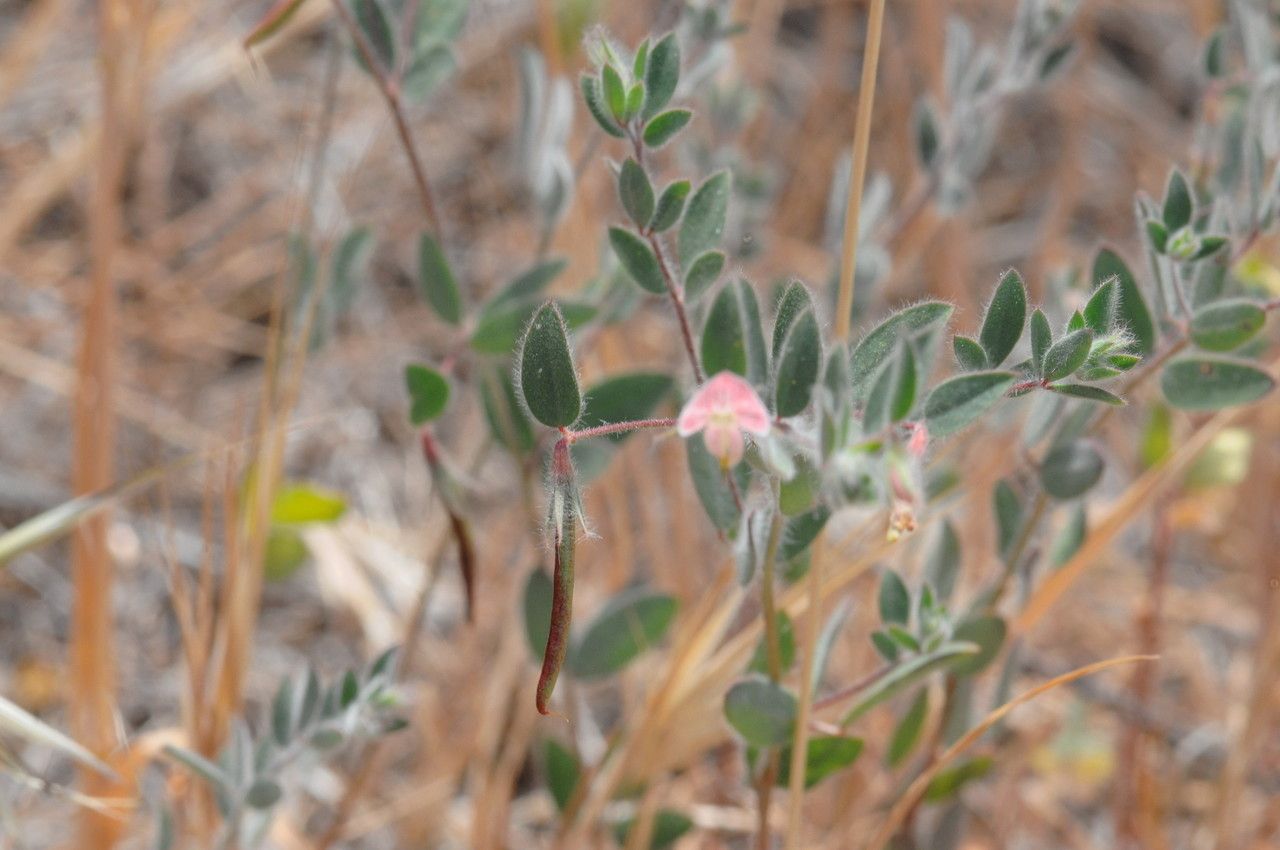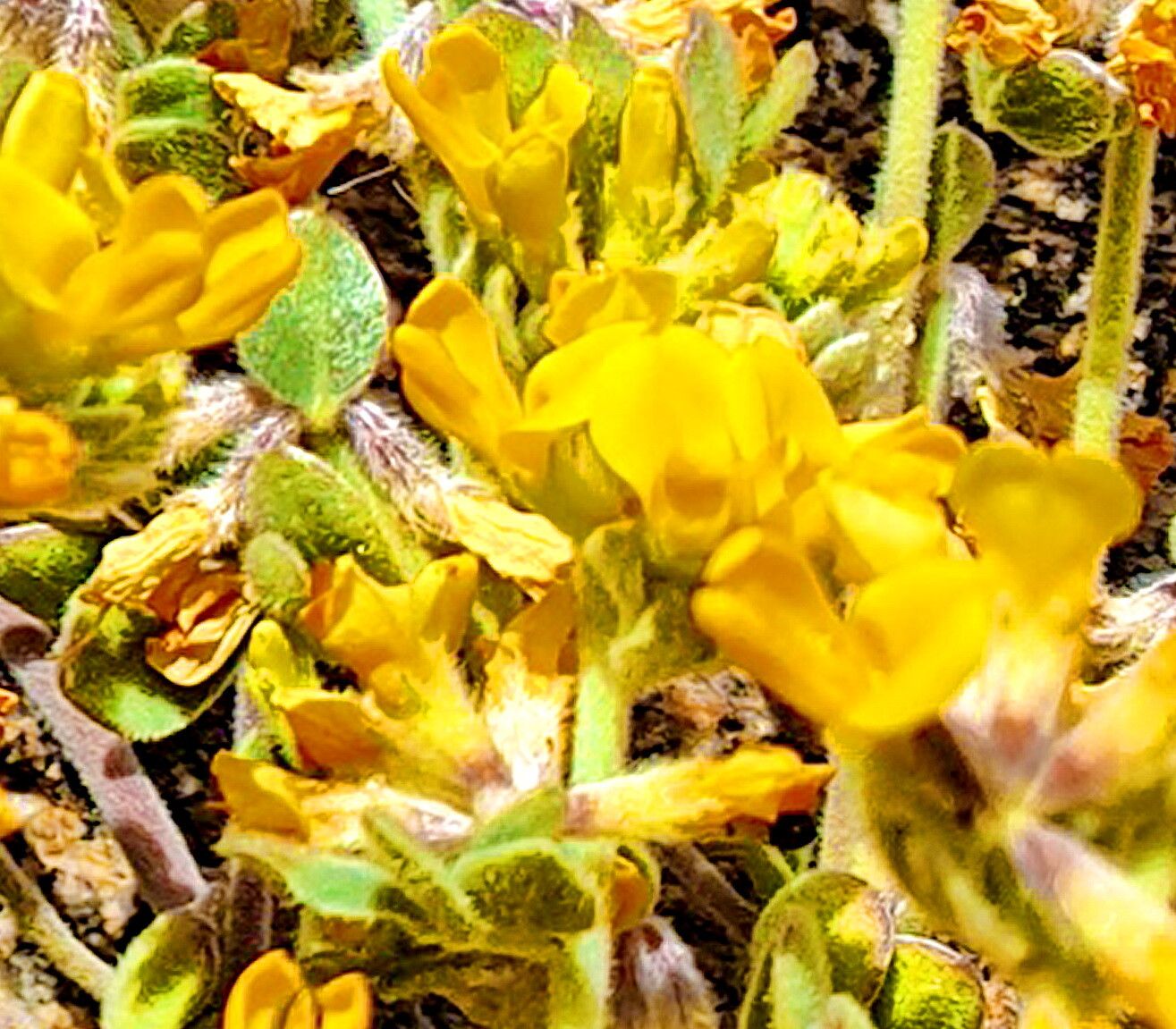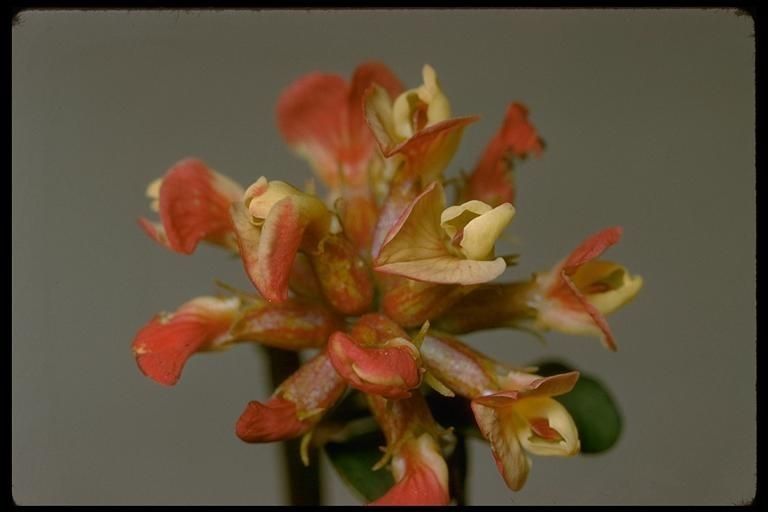
Acmispon brachycarpus is a species of legume known by the common name foothill deervetch. It is native to western North America from Idaho to Texas to northern Mexico, where it is known from many types of habitat. It is an annual herb spreading upright or taking a clumpy or matted form. It is lined with leaves each usually made up of four hairy, somewhat fleshy leaflets each up to about 1 cm long. Solitary yellow, pea-like flowers appear in the leaf axils. The fruit is a legume pod variable in size and shape.
Hill lotus is fairly disease-resistant and usually does not suffer from illnesses. However, it can be affected by pests and diseases present in its environment. These problems are generally mild. Regarding care, this plant needs moderate maintenance. It should be pruned regularly to keep a good appearance and support healthy growth. Fertilizing can also aid in encouraging flowering. Hill lotus is suitable for anyone with outdoor space, such as a garden or patio, and does not demand extensive care experience. It may need more attention when grown indoors.
How to keep Acmispon Brachycarpus.
Light
Hill lotus comes from bright, open environments and performs best in full sun. It can tolerate partial sun but favors direct sunlight for optimal growth. This plant, which is annual or biennial, is recognized for its sun-loving nature.
Temperature
The Hill lotus is capable of adjusting to a variety of temperature circumstances, but its spread may still be restrained by different permutations of water and heat environments. This plant flourishes in hot weather during the summer, provided there is sufficient rainfall or irrigation. Long spells of overcast and rainy conditions, in addition to prolonged high temperatures, can heighten the chances of the Hill lotus perishing. In the winter season, effective safeguarding from the cold can enhance the plant's likelihood of survival.
Fertilizer
Hill lotus benefits from regular, diluted applications of fertilizer to encourage healthy leaf development. Fertilize Hill lotus roughly once a month during the summer. Nitrogen is important for foliage, and providing nitrogen-rich sources helps the Hill lotus thrive.
Botanical profile.
- Plant Type
- Herb
- Life Cycle
- Annual
- Genus
- Acmispon
- Family
- Fabaceae
- Hardiness Zone
- 8-10
- Mature Height
- 20 cm to 61 cm
- Mature Spread
- 30 cm to 49 cm
- Leaf Color
- Green
- Leaf Type
- Deciduous
- Flower Color
- Yellow
- Flower Size
- 0.51 cm to 0.76 cm
- Bloom Time
- Spring
- Planting Time
- Spring, Summer
- Harvest Time
- Late spring, Early summer, Mid summer
- Native Area
- Honduras, Mexico