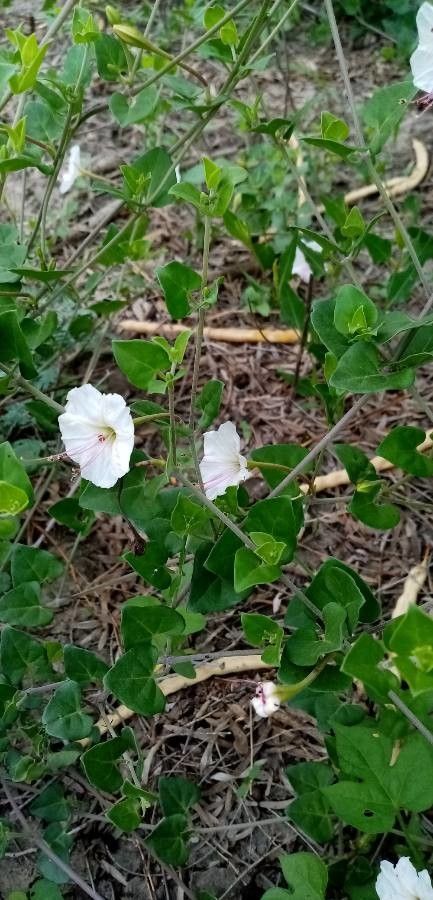
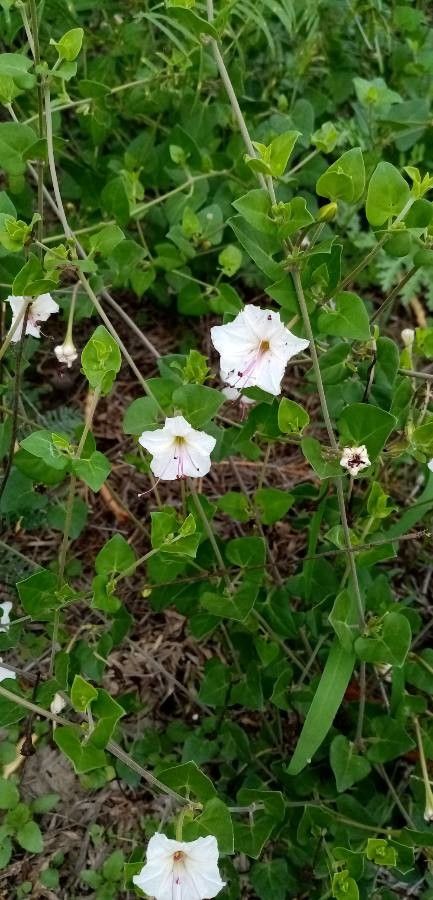
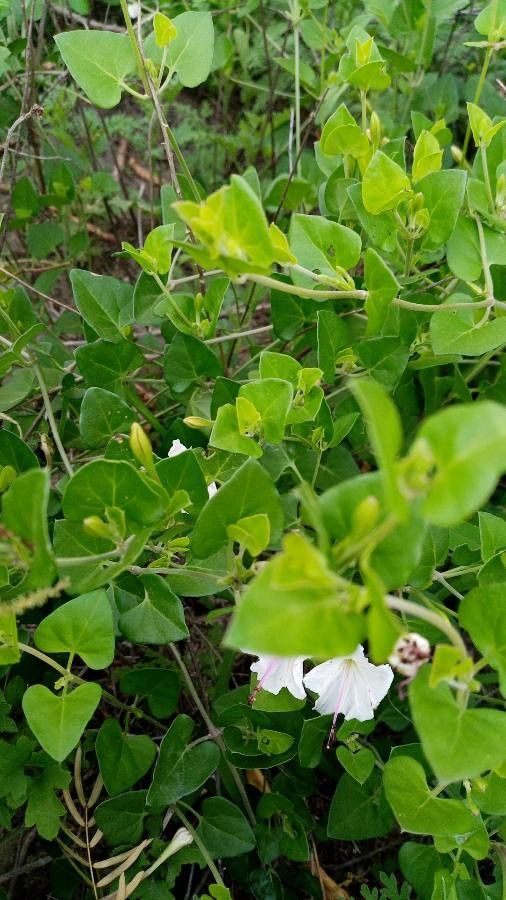
Acleisanthes obtusa, commonly known as the Tucson trumpet or desert moonflower, is a perennial plant species belonging to the Nyctaginaceae family. It is native to the southwestern United States and northern Mexico, where it thrives in arid regions such as deserts, rocky slopes, and canyons.
This plant features a woody stem that can grow up to 1 meter in height with numerous branches. Its small, oval-shaped leaves have a grayish-green color. The flowers are trumpet-shaped with white or pale pink petals that bloom at night from May to September.
Acleisanthes obtusa is essential for pollinators such as moths and bats due to its nocturnal blooming habit. It also has medicinal properties that have been utilized by Native American tribes to treat various ailments, including fever, coughs, colds, and headaches.
The Tucson trumpet prefers well-drained soil and full sun exposure but can tolerate partial shade. While it is drought-tolerant, occasional watering during prolonged dry spells is beneficial.
Overall, Acleisanthes obtusa is an attractive desert plant species known for its unique nocturnal blooming, making it an important part of arid ecosystems. Its medicinal properties, valued by Native American tribes, add to its cultural significance.
How to keep Acleisanthes Obtusa.
Pruning
Berlandier's trumpet plants are known for their trumpet-shaped flowers and robust growth. To maintain their health and encourage blooming, prune them in early spring by removing any dead or diseased branches. Regular trimming helps control the plant's size, improves air circulation, and prevents fungal problems. Be sure to use clean, sharp tools for the best pruning results.
Botanical profile.
- Life Cycle
- Perennial
- Genus
- Acleisanthes
- Family
- Nyctaginaceae
- Mature Height
- 91 cm to 1.8 m
Other names.