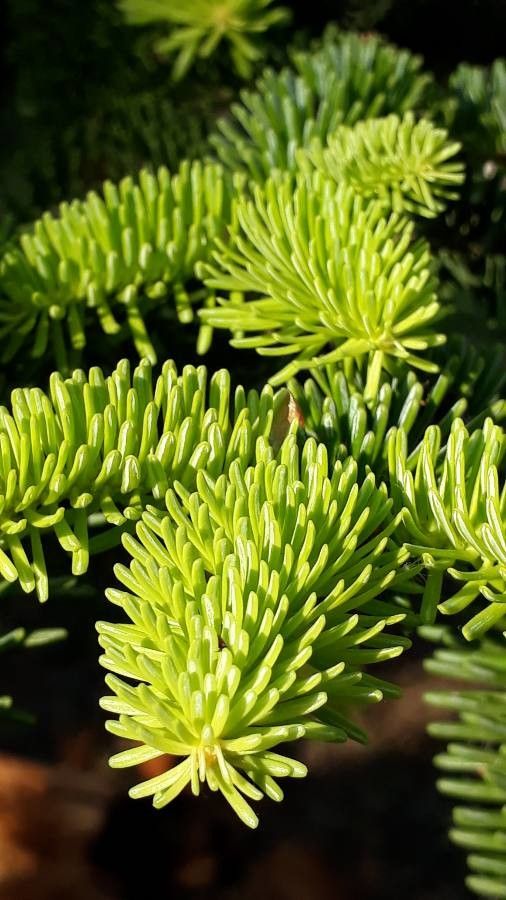
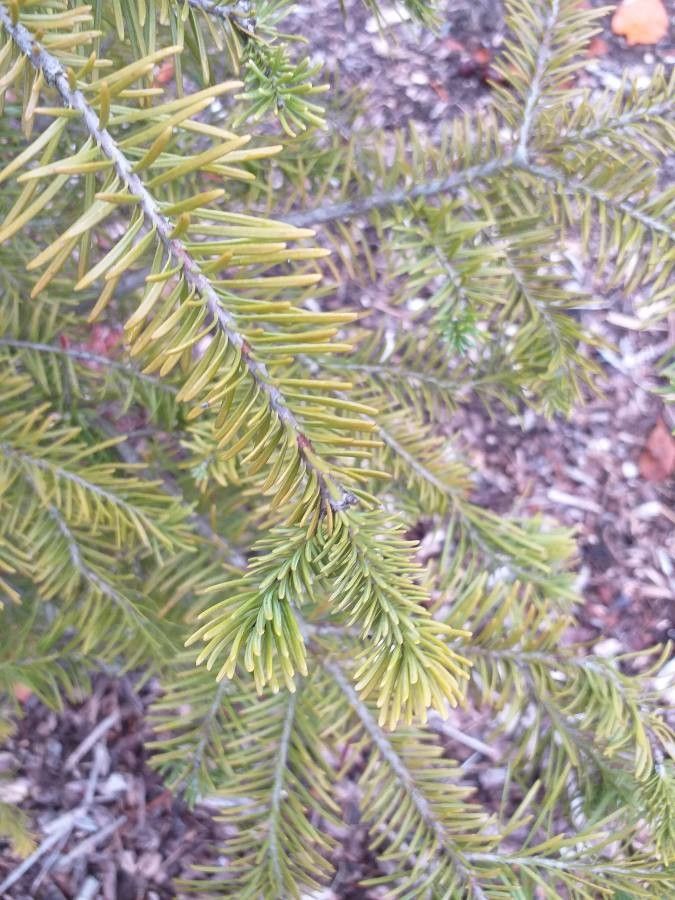
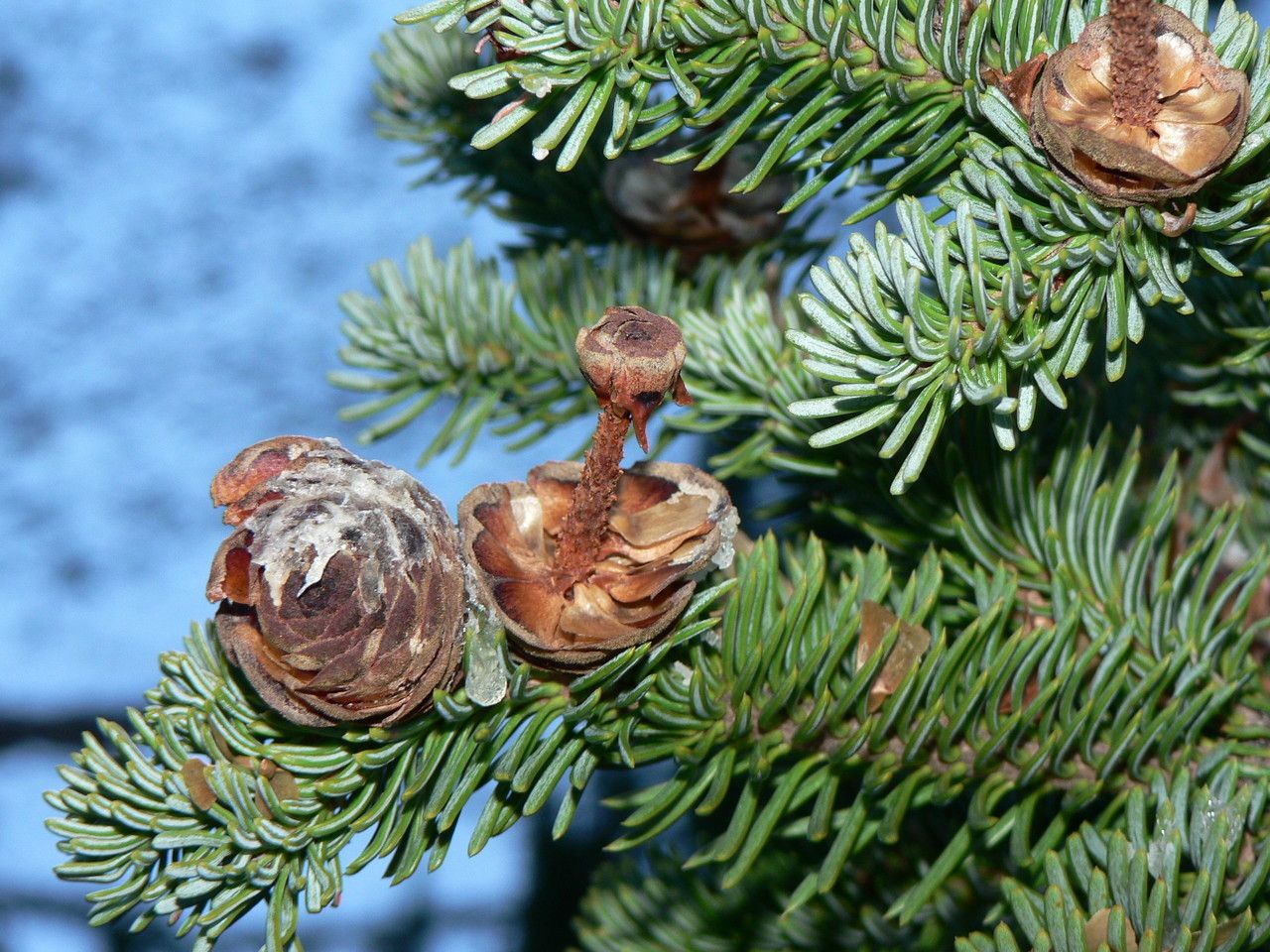
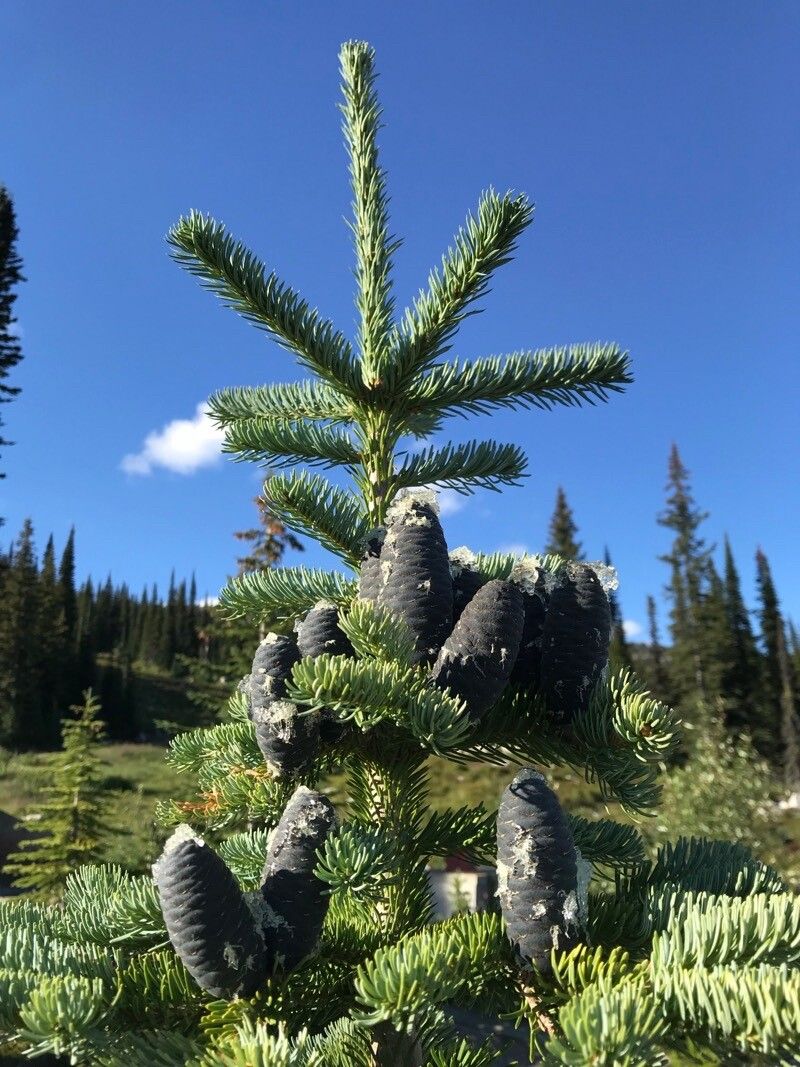
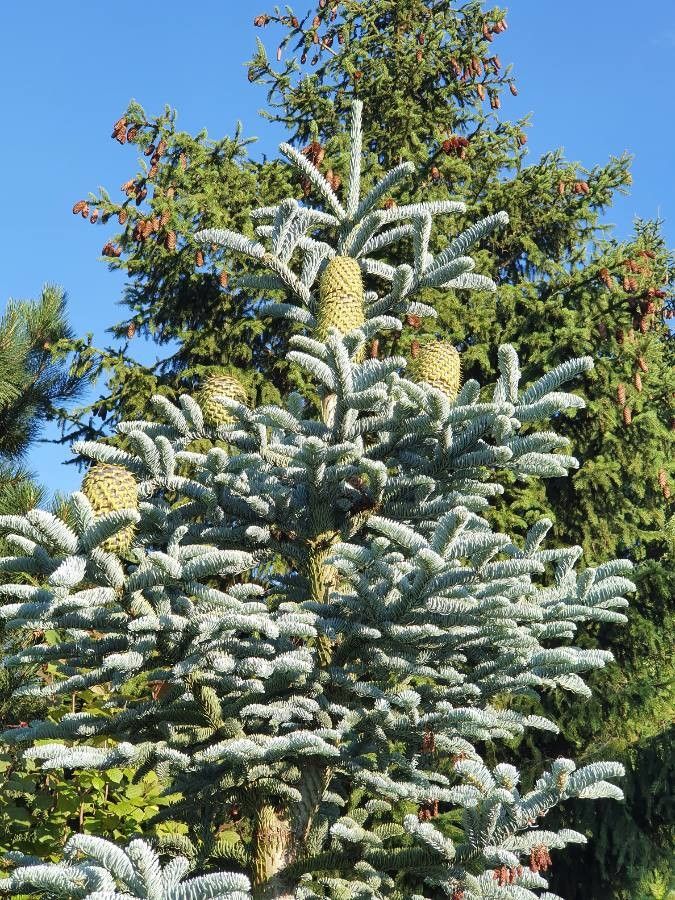
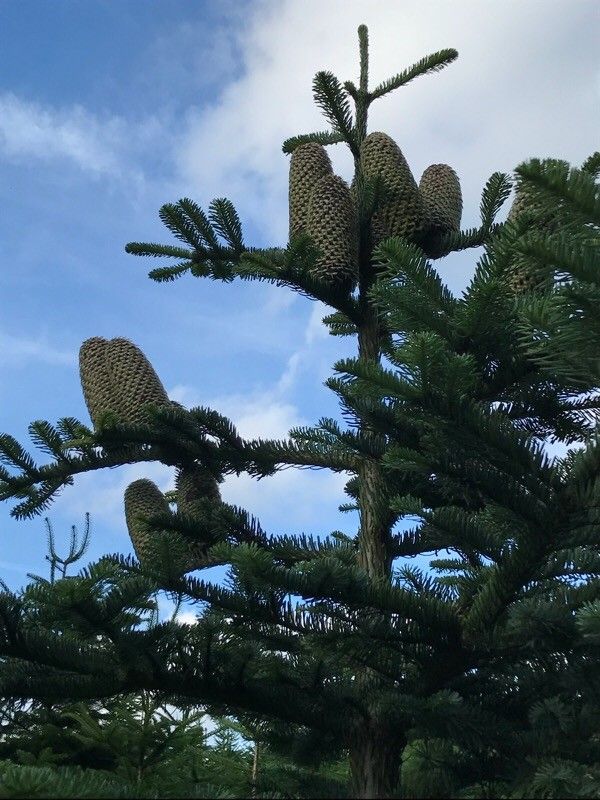
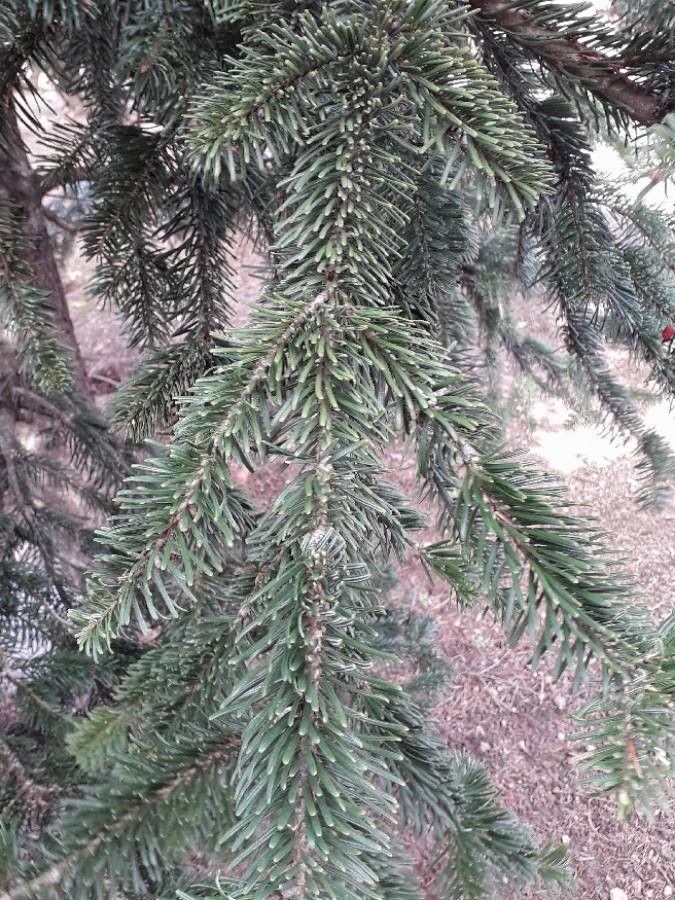
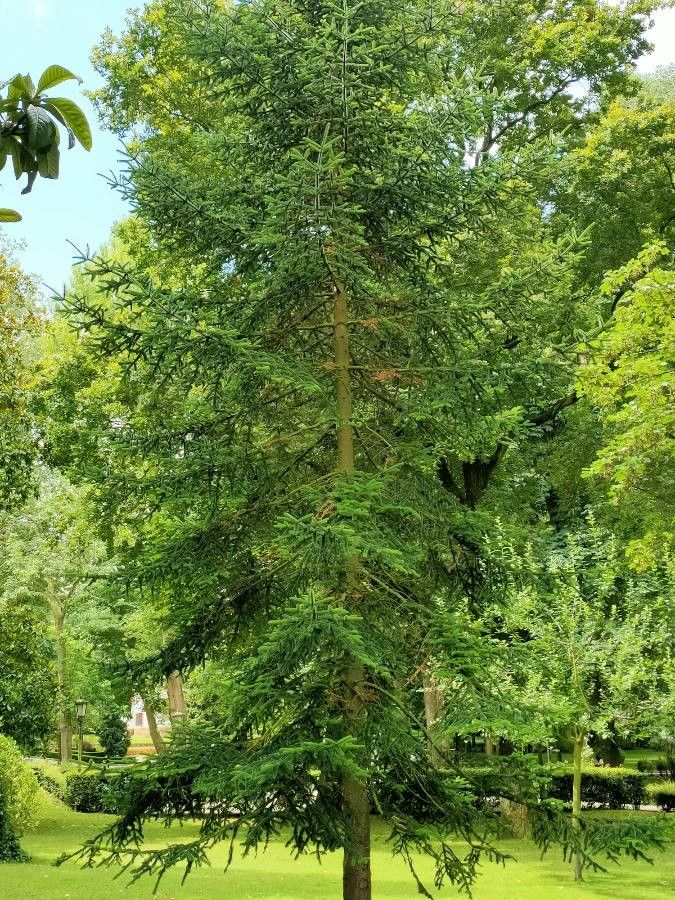
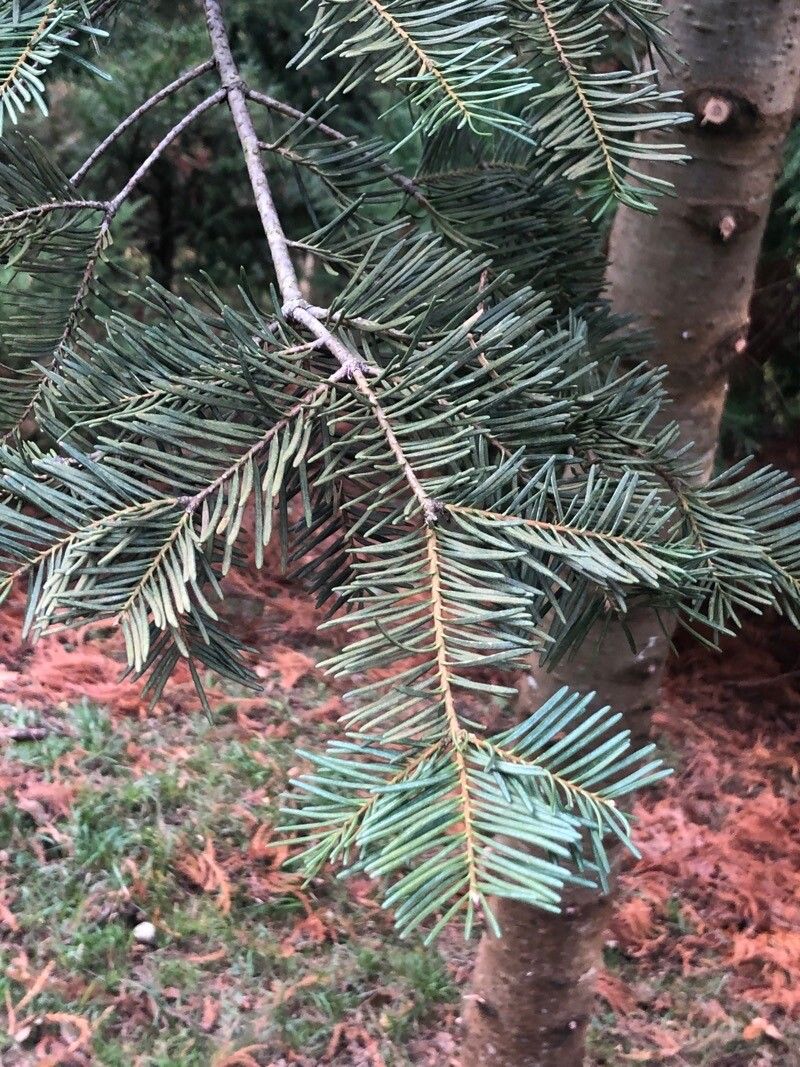
Abies lasiocarpa, also known as the subalpine fir, is a species of coniferous tree native to the western United States and Canada. Typically, it grows to a height of 20-40 meters and exhibits a narrow, conical shape with dense foliage. The flat needles are about 2-3 centimeters long and feature two white stripes on their underside. The tree produces cylindrical cones that can grow up to 15 centimeters in length.
Subalpine fir trees are commonly found in subalpine forests at elevations ranging from 1,500 to 3,500 meters above sea level. They thrive in moist, well-drained soils that are neither too dry nor too wet.
The wood of Abies lasiocarpa is used for construction lumber and pulpwood in paper production. The tree also provides essential habitat for wildlife, including birds and small mammals.
Overall, Abies lasiocarpa is an important species in the forests of western North America, valued for both its ecological significance and its economic contributions.
Grand Fir shows strong resistance to disease and is usually not susceptible to illnesses. Regarding care, this plant is fairly low-maintenance. When grown outdoors it needs only minimal watering, and larger specimens typically don't require pruning. Smaller plants, however, should be trimmed after they have finished blooming. Grand Fir is suitable for anyone who has outdoor space, like a garden or a deck, and it doesn't demand much experience in plant care.
How to keep Abies Lasiocarpa.
Light
Grand Fir does best in full sunlight but can adjust to spots with less light. Native to dense forests, the plant has adapted to a variety of light levels yet prefers ample sun. Insufficient light can stunt its growth, and too much light may cause foliage to burn.
Water
The subalpine fir thrives in mountainous regions, where it prefers consistent moisture but can tolerate short periods of dryness. It needs to be watered every 1-2 weeks. As an evergreen, the subalpine fir retains its foliage throughout the year, which results in a steady rate of water usage. This means fewer adjustments in watering are needed compared to deciduous plants.
Humidity
This plant prefers dry conditions, so don't mist it. However, watering it less often can also thrive in higher humidity.
Temperature
Native to the cool, moist areas of the Pacific Northwest, the grand Fir grows best in temperatures between 41 and 77 ℉ (5 to 25 ℃). To thrive, it needs frequent rainfall and temperatures that remain cool throughout the growing season.
Fertilizer
Grand Fir has specific nutrient needs and does not require heavy fertilization. Spring is the best time to apply fertilizer for optimal growth. Providing nutrients improves its health, strengthens its resistance to pests and diseases, and helps maintain a long lifespan.
Pruning
The Subalpine fir is a conical-shaped evergreen tree featuring soft, flattened needles. To maintain its health and appearance, prune it during the early to late winter months. Focus on removing dead branches and controlling its growth. Regular trimming improves air circulation and allows more light to reach the inner branches. Always use clean, sharp tools to prevent damage to the tree.
Botanical profile.
- Plant Type
- Tree
- Life Cycle
- Perennial
- Genus
- Abies
- Family
- Pinaceae
- Hardiness Zone
- 5-6
- Mature Height
- 30.48 m to 76.2 m
- Mature Spread
- 7.92 m
- Leaf Color
- Green
- Leaf Type
- Evergreen
- Flower Color
- Yellow, Green
- Flower Size
- 3.30 cm
- Bloom Time
- Early summer, Mid summer
- Planting Time
- Spring, Autumn
- Harvest Time
- Mid summer, Late summer, Early fall
Other names.
Reader questions.
How should I water my Subalpine fir tree?
Watering your Subalpine fir tree is a simple task that can be done with a garden hose or a watering can. For larger trees, a garden hose is the best option as it can provide the necessary amount of water. However, for smaller trees, a watering can or another smaller watering tool will suffice. It's important to avoid overhead watering, as too much moisture on the leaves can cause disease, especially in young trees.
Why should I put fertilizer on my Subalpine fir tree?
To support the long-term health and growth of Subalpine fir, it is recommended to fertilize it in the spring. By adding nutrients to the soil, the plant's overall health improves, making it more resilient against pests and diseases that can hinder growth or reduce its lifespan.
What are the sunlight requirements for a Subalpine fir?
The Subalpine fir requires full sun or above 6 hours of sunlight for optimal growth, but it can also thrive in partial sun conditions, which means about 3-6 hours of sunlight. It's important to observe how sunlight moves through your garden to find the right balance of light and shade, ensuring the plant's well-being. Originally growing above the forest line, the Subalpine fir is accustomed to lots of light, and both overexposure and underexposure can affect its development adversely.
What is the natural habitat and preferential temperature range for Subalpine fir?
Subalpine fir is indigenous to regions with temperate climates, thriving best within a temperature range of 41 to 77 °F (5 to 25 °C). It adjusts its functions according to seasonal weather changes, requiring modifications in heat or cold in extreme temperatures. Despite its high cold tolerance, ensuring the soil is moist before the first freeze of autumn is recommended to mitigate drought and water scarcity during winter and early spring.
What should I do if I give my Subalpine fir too much or too little water?
Overwatering can occur if the soil does not drain well for Subalpine fir trees. To fix this issue, you can either improve the soil drainage or move the tree to a better location. If you have the tree in a pot, you may need to use looser soil and a container that promotes good drainage. Overwatering can lead to diseases, so it's important to treat them promptly. On the other hand, if the tree is underwatered, simply water it more often and it will recover. To determine if your Subalpine fir is overwatered, check the foliage, particularly the new growth. If the new growth is discolored or easily breaks, it's a sign of too much moisture. Standing water or slow drainage in the growing area also indicates excessive moisture. Underwatered trees will have sparse, brown leaves. Consider recent rainfall or high temperatures if you notice these symptoms.
When should I fertilize my Subalpine fir tree?
The growing medium may not provide sufficient nutrients for healthy growth, but Subalpine fir has different needs compared to garden plants. It doesn't need a lot of extra nutrients and the best time to fertilize it is in the spring before new growth starts.
How does artificial lighting benefit indoor Subalpine fir plants?
When natural sunlight is insufficient, especially during winter or in less sunny spaces, artificial lighting can provide a crucial solution for indoor Subalpine fir plants, promoting faster and healthier growth. LED lights are recommended for indoor plant lighting as they can be customized to the specific light wavelengths needed by the plant. The intensity of artificial light required varies depending on the plant's sunlight needs: full sun plants need 30-50W/sq ft, partial sun plants need 20-30W/sq ft, and full shade plants need 10-20W/sq ft. The artificial light source should be placed 12-36 inches above the plant and turned on for 8-12 hours per day to mimic natural daylight.
How does Subalpine fir react to low temperatures, and what measures should be taken?
Subalpine fir exhibits extreme tolerance to cold, with winter temperatures ideally remaining above -25°C. If temperatures fall below this, the fir may not show immediate damage in winter, but its branches could become brittle, dry out by spring, and fail to produce new shoots. The solution is to prune away any dead branches that haven't sprouted new leaves in the spring.
How often should I water my Subalpine fir tree?
A mature Subalpine fir is quite resilient to drought and can usually survive on rainfall alone. During the hottest months of the year, it may be beneficial to water the tree once per week. However, during other seasons, watering may not be necessary at all. The only exception to this is when the tree is newly planted, in which case regular watering is important to establish the roots. It's crucial to note that standing water is not tolerated by Subalpine firs, so it's better to avoid over-watering than risking the tree's health.
When should I not put fertilizer on my Subalpine fir?
While some plants benefit from regular fertilization, Subalpine fir does not require excessive nutrients and can be sensitive to too much fertilizer, which may lead to decline. It is recommended to only apply fertilizer during the spring season and avoid adding any in the summer, fall, and winter.
What are the symptoms of light deficiency in Subalpine fir?
Subalpine fir shows several symptoms when exposed to less than optimal light conditions, including smaller new leaves, leggy or sparse growth, faster leaf drop, slower or no new growth, lighter-colored new leaves, and conditions like chlorosis, sunscald, leaf curling, wilting, and leaf scorching. These symptoms indicate either an insufficient amount of light or too much exposure to sunlight which interferes with the plant's ability to photosynthesize and maintain its health.
What is the impact of high temperatures on Subalpine fir and how can damage be mitigated?
Subalpine fir struggles with high temperatures, particularly when the thermometer climbs above 25°C, potentially leading to significant leaf drop or even the plant's death in extreme cases. To counteract heat stress, trim sunburned or dried parts, ensure the plant has shade during peak sun exposure, and maintain soil moisture with morning and evening watering.