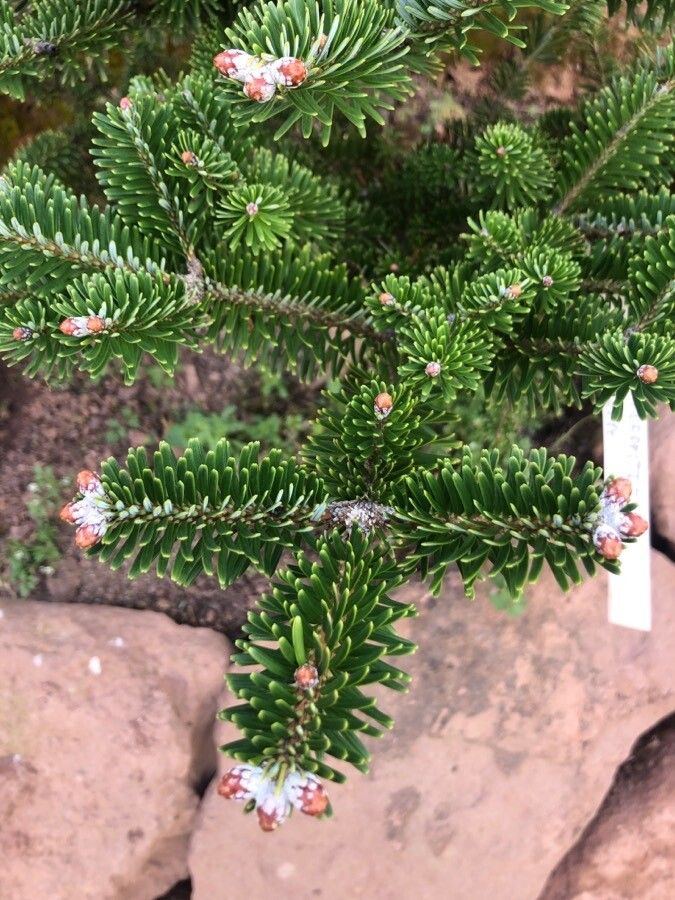
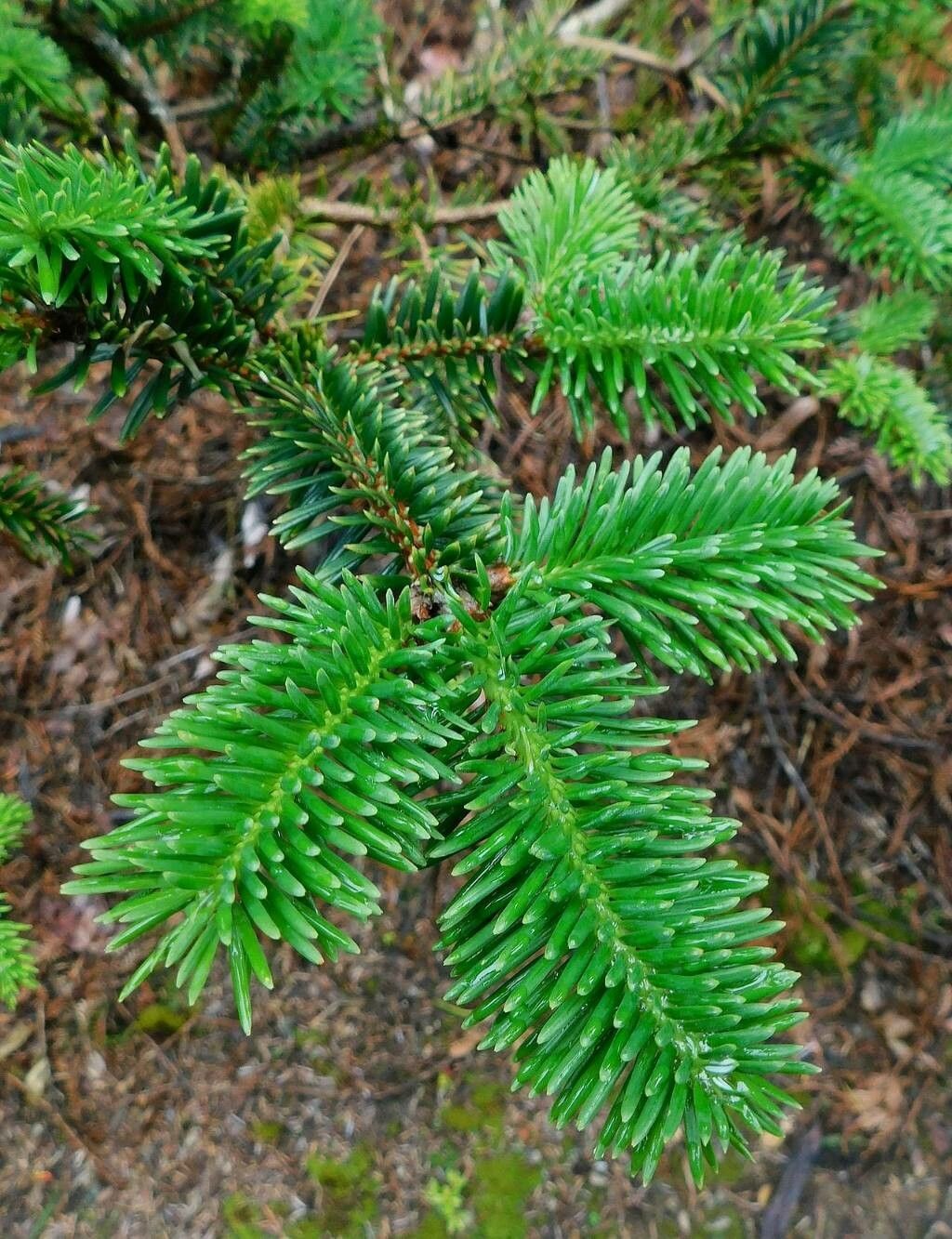
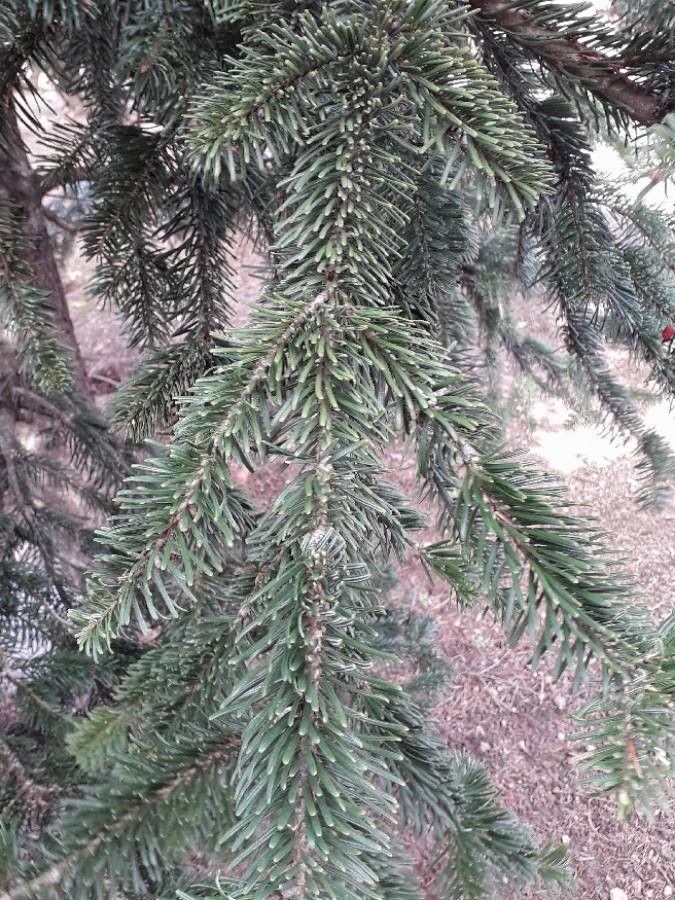
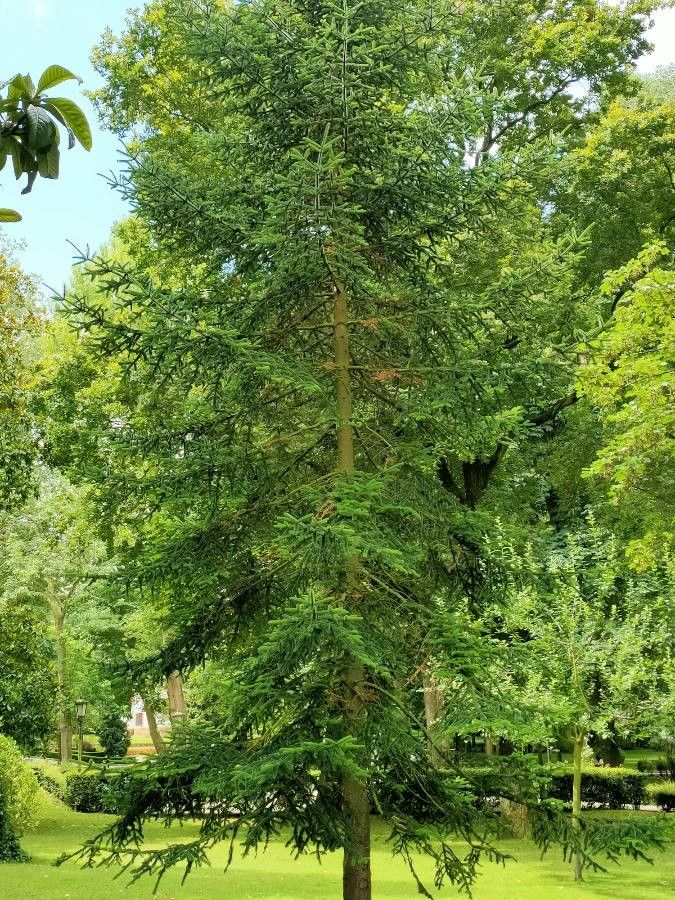
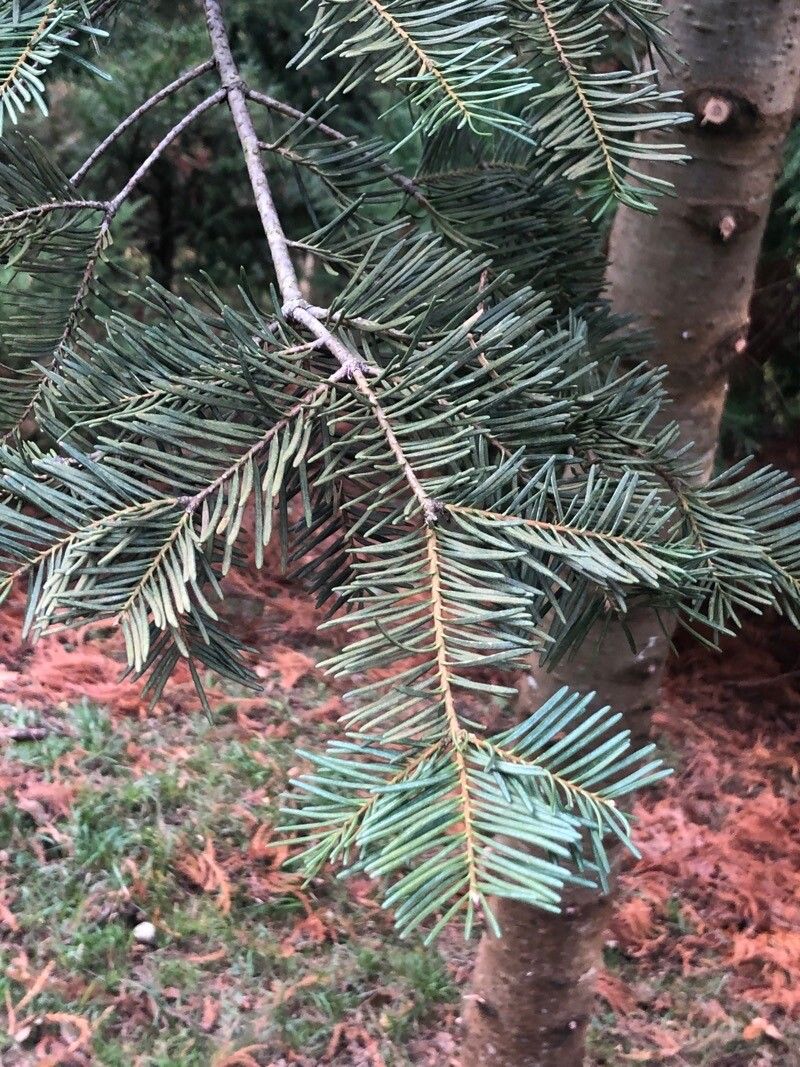
Abies forrestii is a species of conifer in the family Pinaceae, endemic to China. It is named after the Scottish botanist and plant-hunter George Forrest (1873–1932), who discovered it for western science in Yunnan province. Its common names include Forrest's fir.This species is variable in morphology, and there are several varieties. Some of these are treated as separate species. In general, it grows up to about 20 meters tall. The needles are 1.5 to 4 centimeters long and the purplish, brown, or black cones are 7 to 12 centimeters long.Varieties include: A. forrestii var. ferreana (syn. Abies chayuensis) A. forrestii var. forrestii (syn. Abies chengii) A. forrestii var. georgei – George's fir A. forrestii var. smithiiThis species grows in the mountains of southwestern China, sometimes at high altitudes. At lower elevations it grows in mixed forests with species such as Picea likiangensis, Larix potaninii, Tsuga dumosa, and Betula albosinensis. It is sometimes a dominant member of the canopy in rhododendron woodlands.This tree is used for construction wood and pulp.
Forrest's fir demonstrates strong resistance to disease and is typically not susceptible to illnesses. Regarding care, this plant is fairly low-maintenance. When grown outdoors it needs only light watering, and larger specimens normally do not require pruning. Smaller plants, however, should be pruned after they finish blooming. Forrest's fir is suitable for anyone with outdoor space, such as a garden or a deck, and does not demand much prior care experience.
How to keep Abies Forrestii.
Light
Forrest's fir naturally occurs in habitats like forest understories or rocky sites, where it is subject to natural shade. It prefers partial sun but can tolerate full sun or deep shade, which reflects its adaptable, hardy character.
Water
To maintain moist soil for the forest's fir trees, it's important to water them regularly, especially during the first two years. In the summer, water them twice a week, but allow the topsoil to dry out slightly between waterings. During spring and fall, reduce the frequency to once a week, and avoid watering during rainy periods and in the winter.
Fertilizer
Forrest's fir has specific nutrient needs and does not require heavy fertilization. Spring is the best time to fertilize for optimal growth. Providing nutrients improves its health, increases resistance to pests and diseases, and supports its long lifespan.
Pruning
Forrest's fir is characterized by its evergreen needles and pyramidal shape. To maintain its health and appearance, prune the tree in early spring, removing any dead branches to enhance air circulation. Be sure to use clean, sharp tools for precise cuts. Pruning at this time encourages healthy growth and minimizes the risk of infection.
Botanical profile.
- Plant Type
- Tree
- Life Cycle
- Perennial
- Genus
- Abies
- Family
- Pinaceae
- Hardiness Zone
- 4-7
- Mature Height
- 20.12 m to 29.87 m
- Mature Spread
- 4.88 m to 7.92 m
- Leaf Color
- Dark Green, Forest Green
- Leaf Type
- Evergreen
- Bloom Time
- Late spring, Early summer
- Planting Time
- Spring, Summer
- Harvest Time
- Early fall, Mid fall
- Native Area
- Myanmar, China
Other names.