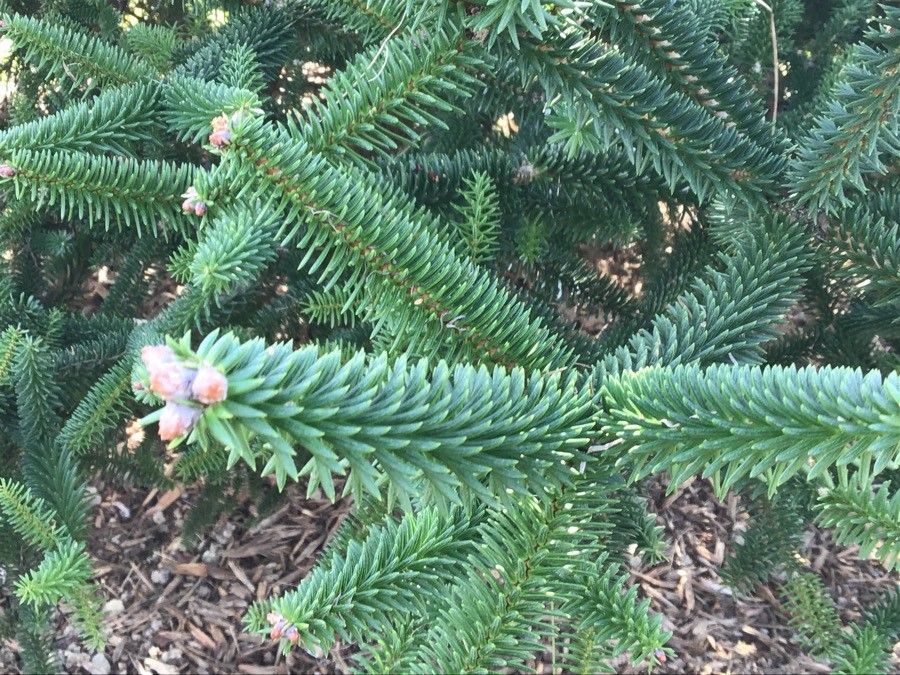
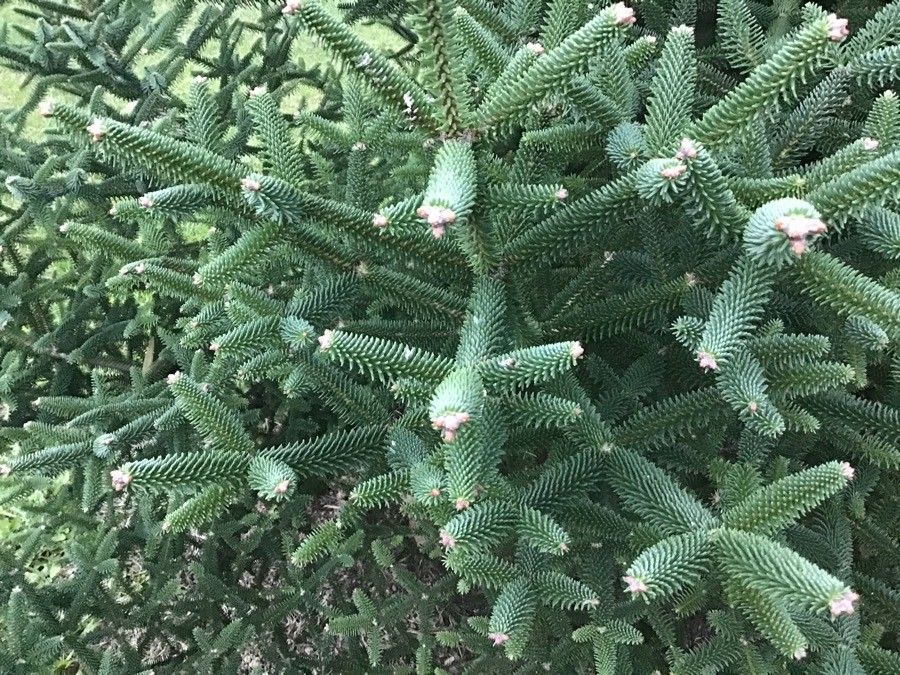
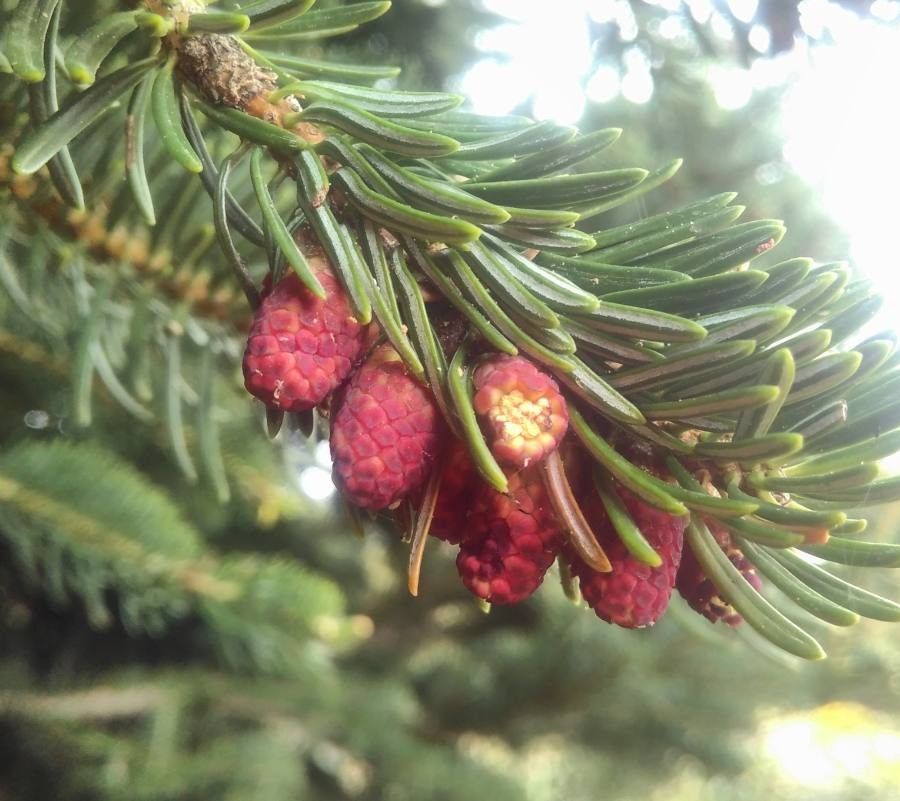
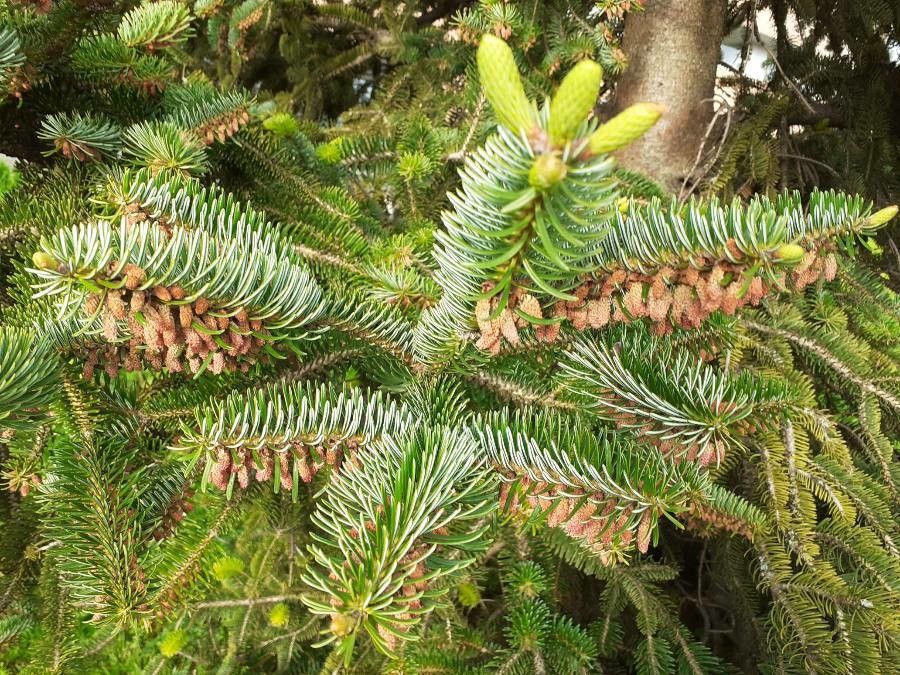
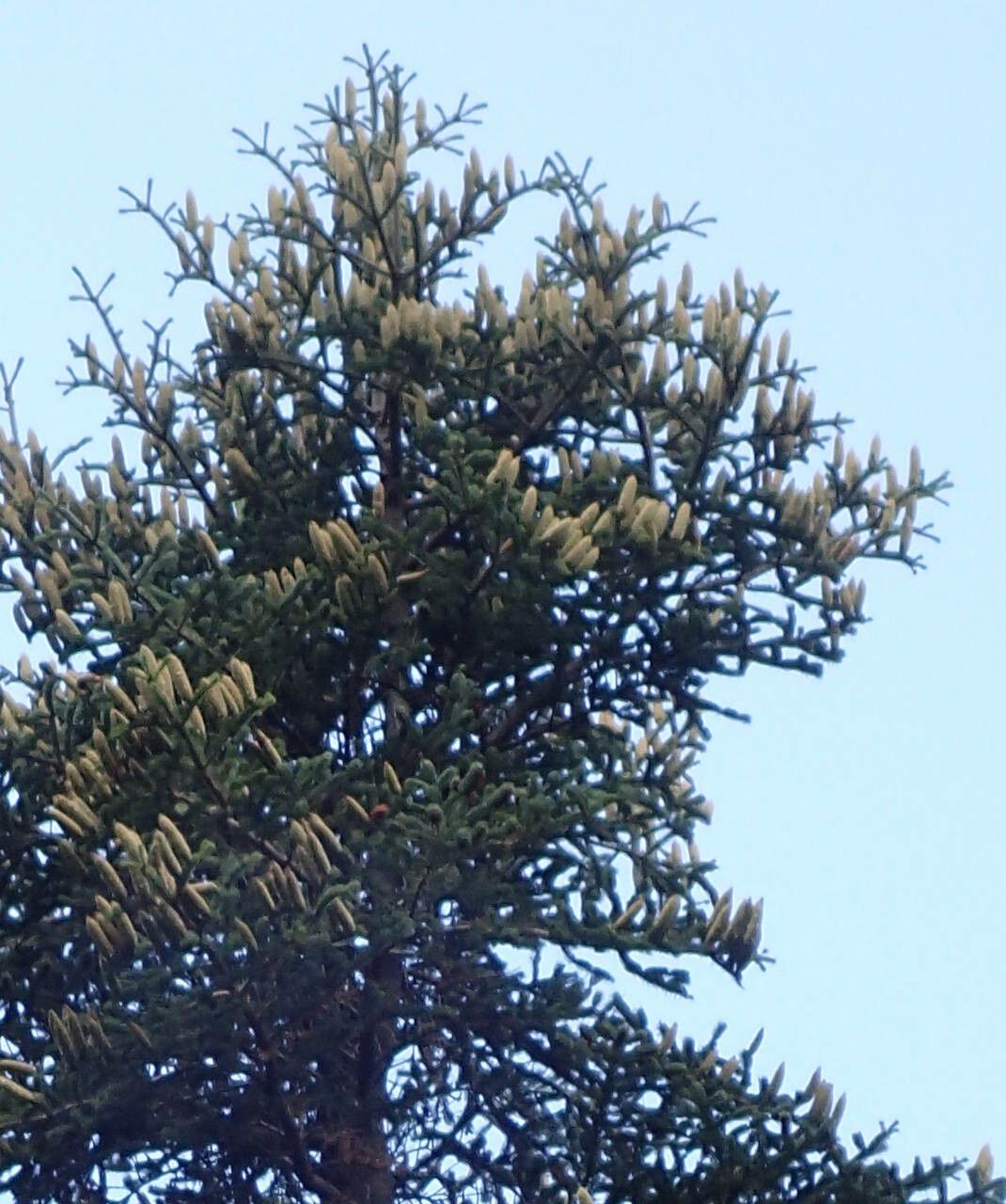
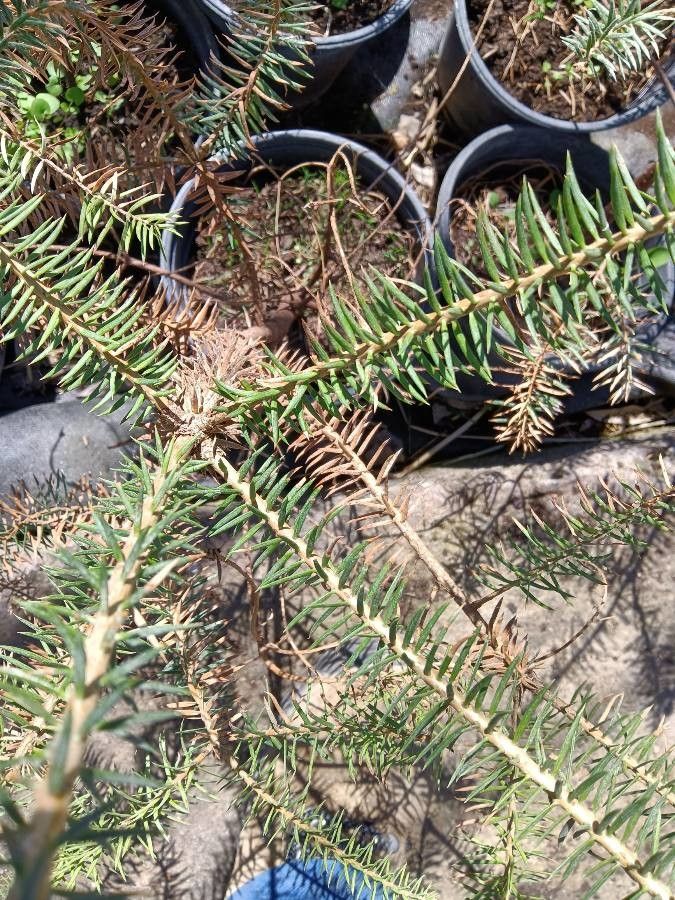
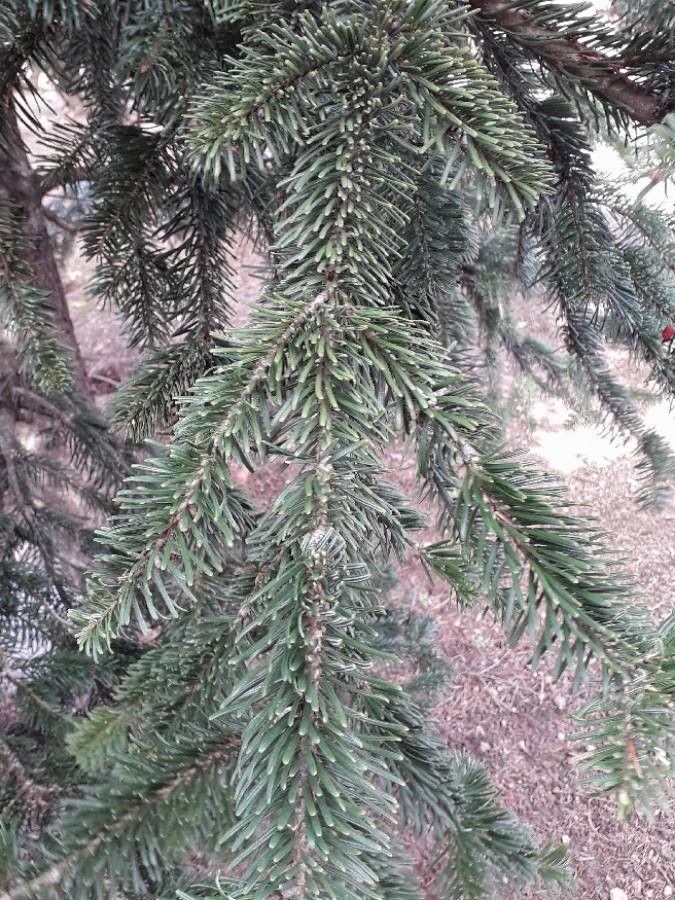
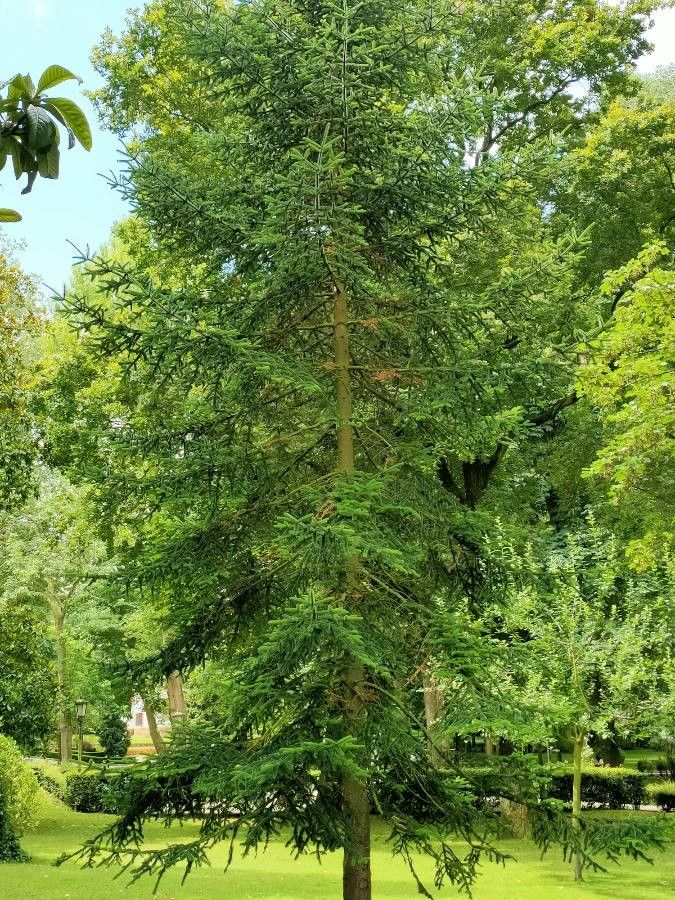
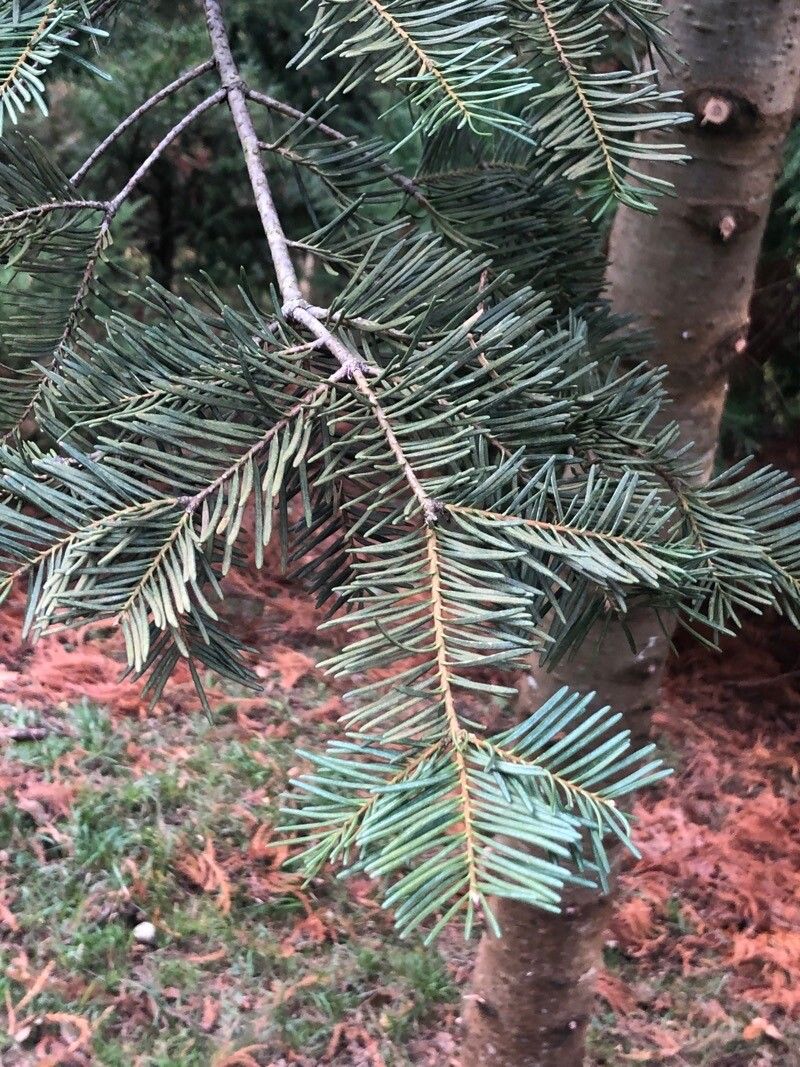
Abies cephalonica or Greek fir is a fir native to the mountains of Greece, primarily in the Peloponnesos and the island of Kefallonia, intergrading with the closely related Bulgarian fir further north in the Pindus mountains of northern Greece. It is a medium-size evergreen coniferous tree growing to 25–35 metres (82–115 ft) – rarely 40 m (130 ft) – tall and with a trunk diameter of up to 1 m (3 ft 3 in). It occurs at altitudes of 900–1,700 m (3,000–5,600 ft), on mountains with a rainfall of over 1,000 millimetres (39 in). The leaves are needle-like, flattened, 1.5–3.0 cm (0.6–1.2 in) long and 2 mm (0.08 in) wide by 0.5 mm (0.02 in) thick, glossy dark green above, and with two blue-white bands of stomata below. The tip of the leaf is pointed, usually fairly sharply but sometimes with a blunt tip, particularly on slow-growing shoots on older trees. The cones are 10–20 cm (4–8 in) long and 4 cm (1.6 in) broad, with about 150–200 scales, each scale with an exserted bract and two winged seeds; they disintegrate when mature to release the seeds. It is also closely related to Nordmann fir to the east in northern Turkey.
Greek fir is disease-resistant and generally not susceptible to illnesses. Regarding care, this plant is fairly low-maintenance. When grown outdoors it needs little watering, and larger specimens typically do not require pruning. Smaller plants, however, should be pruned after they finish blooming. Greek fir is appropriate for anyone who has an outdoor area, such as a garden or deck, and it does not call for extensive gardening experience.
How to keep Abies Cephalonica.
Light
Greek fir is native to open habitats, such as sunny meadows and forest margins, which provide plenty of light. It does best in Full Sun but can also tolerate Partial Sun, adapting well to a range of sunlight conditions.
Water
The Greek fir, which hails from the mountainous regions of Greece, prefers moderate moisture and can tolerate short periods of dryness. To ensure the soil remains evenly moist, water the tree every 1-2 weeks. As an evergreen, the Greek fir retains its foliage throughout the year, so it's important to water it carefully during the growing season to maintain its optimal health.
Temperature
The Greek fir is highly adaptable to a variety of climate conditions, whether facing scorching summers or cold winters. However, it still has a preferred temperature range for optimal growth. If temperatures become excessively high, the plant can experience stress from heat and humidity, which may cause its death. In regions where temperatures approach the lower limit of its cold tolerance, it is important to apply insulating measures to protect the plant.
Fertilizer
Greek fir has specific nutrient needs and does not require excessive fertilization. Fertilizing in spring is best for promoting optimal growth. Providing nutrients improves its health, strengthens resistance to pests and diseases, and supports a long lifespan.
Pruning
The Greek fir, characterized by its pyramidal shape and dense, dark green needles, benefits from pruning between early and late winter. During this time, concentrate on removing any dead or crowded branches, but be careful to avoid the central leader. This practice improves air circulation, reduces the risk of fungal diseases, and promotes strong, healthy growth throughout the year.
Botanical profile.
- Plant Type
- Tree
- Life Cycle
- Perennial
- Genus
- Abies
- Family
- Pinaceae
- Hardiness Zone
- 6-8
- Mature Height
- 20.12 m to 29.87 m
- Mature Spread
- 4.88 m to 7.92 m
- Leaf Color
- Dark Green
- Leaf Type
- Evergreen
- Bloom Time
- Mid spring, Late spring
- Planting Time
- Spring
- Harvest Time
- Late summer, Early fall, Mid fall
- Native Area
- Greece
Other names.
Reader questions.
What are the sunlight requirements for a Greek fir?
The Greek fir (Abies cephalonica) thrives in various sunlight conditions. For optimal growth, it requires 'Full sun', meaning it should receive above 6 hours of sunlight daily. It can also tolerate 'Partial sun', which entails about 3-6 hours of sunlight. It's important to observe the movement of sunlight through your garden to identify spots that offer an ideal balance of light and shade, ensuring the best conditions for your Greek fir's growth. This careful placement helps in promoting the plant's happiness and well-being.
What is the Greek fir?
The Greek fir, known botanically as Abies cephalonica, is a species of fir native to the mountains of Greece. It is recognized for its unique botanical characteristics and plays a vital role in its native ecosystems.